Ancient Egypt
Egypt kept reimagining eternity.
For more than two thousand years, Egypt's kings kept finding new ways to build for eternity, and each age answered the one before. Here are four chapters of that story, each told through places you can stand in, and the tours that take you there.
Chapter 1 · c. 2600 BC
They built to be seen
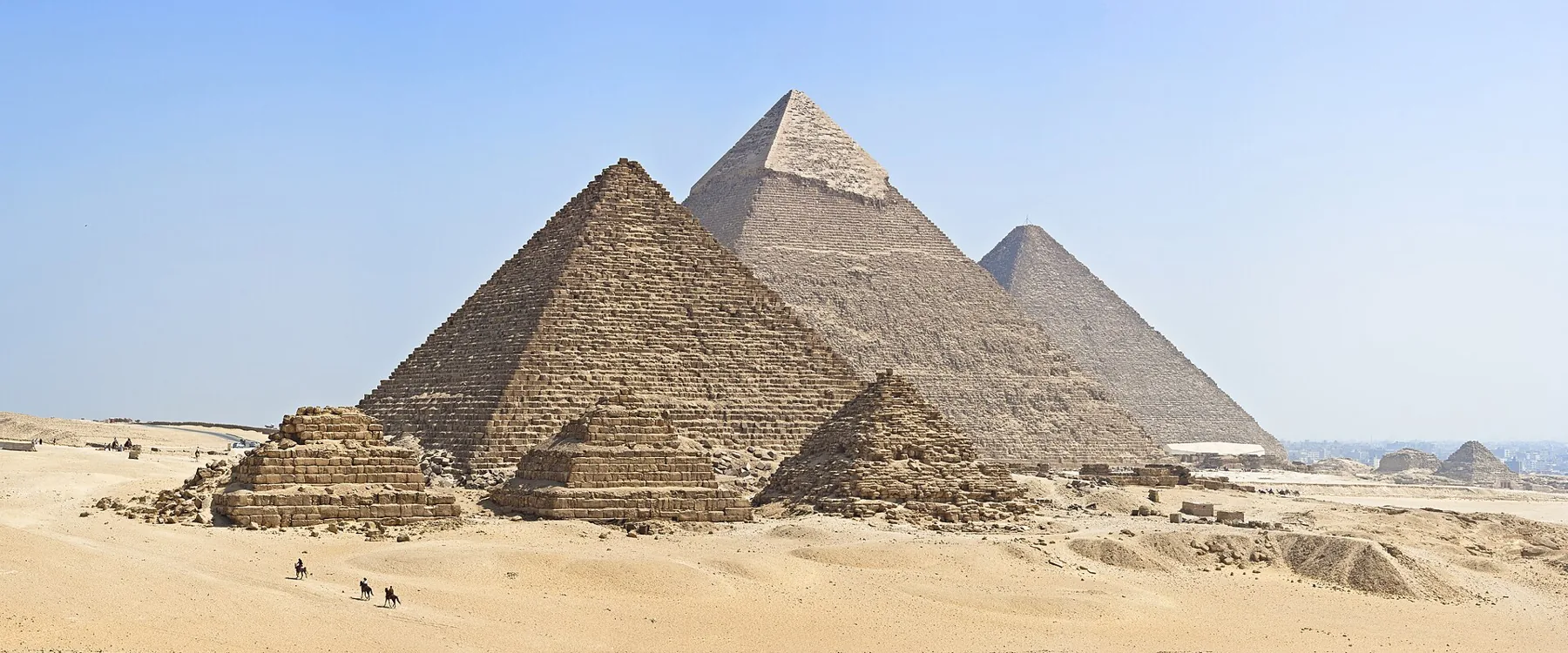
At Giza and Saqqara, royal tombs became monumental landmarks. Their scale made the relationship between kingship and the afterlife visible across the landscape.
The paperwork
Its sides are aligned to true north within a twentieth of a degree. We know how part of it was supplied because an inspector named Merer kept a logbook: in Khufu’s twenty-seventh year his team of about 200 men worked the limestone quarries at Tura and moved the stone to the pyramid.
The Great Pyramid of KhufuPlaces in this chapter
- Dahshur
Where the Egyptians learned how to build a pyramid, by getting it wrong first.
- Giza Plateau
Three generations of kings built here; the plateau asks who did the building, and how they lived.
- Pyramid Complex of Khafre
The pyramid that looks tallest at Giza and isn't.
- Pyramid Complex of Menkaure
The smallest of the three Giza pyramids, and the most revealing, because it was never finished.
- Pyramid Complex of Teti
From outside, a heap of rubble; inside, one of the oldest libraries of religious writing.
- Saqqara
If Giza is a single statement, Saqqara is a conversation that lasts nearly four thousand years.
- Step Pyramid Complex of Djoser
The first building in Egypt of truly monumental scale built throughout of stone.
- The Bent Pyramid
A pyramid that changes its mind halfway up.
- The Great Pyramid of Khufu
The largest pyramid in Egypt, and the last of the Seven Wonders still standing.
- The Great Sphinx
A king's head on a lion's body, cut from the living rock at the foot of Khafre's causeway.
- The Red Pyramid
The first pyramid that worked.
Tours that walk through this chapter
- Giza Pyramids and the Grand Egyptian Museum
Full day · about 7 hours
- Giza Pyramids Half-Day Private Tour
Half day · about 4 hours
- Inside the Great Pyramid: Giza Private Tour
About 5 hours
- Saqqara, Memphis and Dahshur: The First Pyramids
About 6 hours
- 10 Days in Egypt: Cairo and a Nile Cruise, with Flights
10 days · 9 nights
- Dahshur
Chapter 3 · c. 1264 BC
Power carved into a cliff
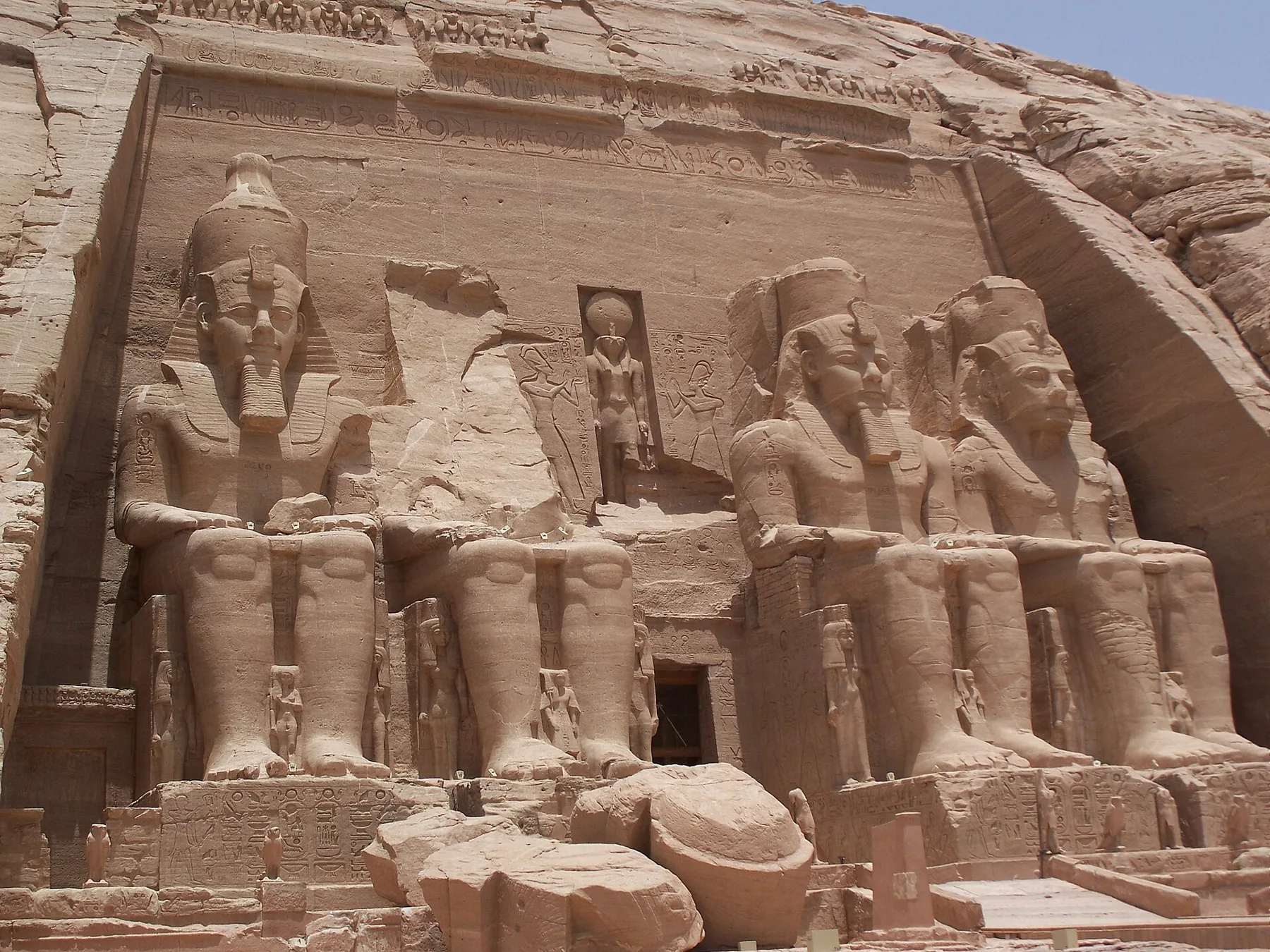
Royal tombs and public temples served different purposes. At Abu Simbel, Ramesses II made a monumental statement in stone: kingship and the gods, facing the river.
The announcement
Four seated colossi of the king, each nearly 21 m high, above rows of foreign captives carved on their pedestals. Between 1964 and 1968 both temples were dismantled and rebuilt on higher ground, above the lake of the Aswan High Dam.
Abu SimbelPlaces in this chapter
- Abu Simbel
Two temples cut into a cliff above the Nile, taken apart and rebuilt higher to save them.
Tours that walk through this chapter
- Abu Simbel Day Trip from Aswan
About 10 hours
- 10 Days in Egypt: Cairo and a Nile Cruise, with Flights
10 days · 9 nights
- Abu Simbel
Chapter 4 · c. 200 BC
They built to remember
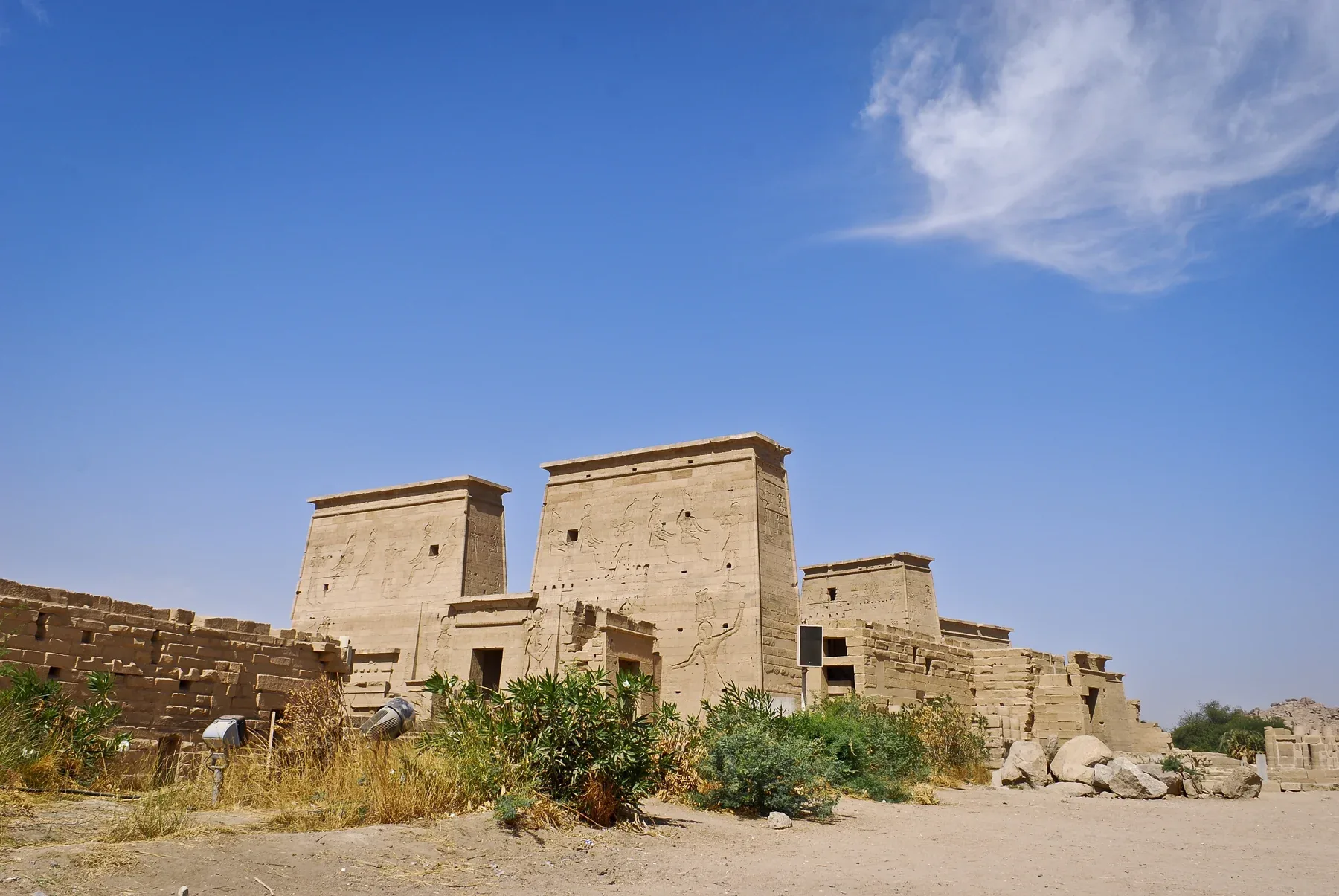
At Edfu, Kom Ombo and Philae, temple building continued under the Ptolemies. Greek rule did not end Egyptian religious traditions: old forms found new patrons.
Places in this chapter
- Edfu Temple
The temple of Horus, whose walls are a library turned outwards.
- Kom Ombo Temple
A temple built twice over, side by side, for the crocodile and the falcon.
- Philae
The island that was moved.
Tours that walk through this chapter
- Nile Cruise from Aswan to Luxor: 3 Nights
4 days · 3 nights
- Philae Temple, the Unfinished Obelisk and the High Dam
About 4.5 hours
- 10 Days in Egypt: Cairo and a Nile Cruise, with Flights
10 days · 9 nights
- Edfu Temple
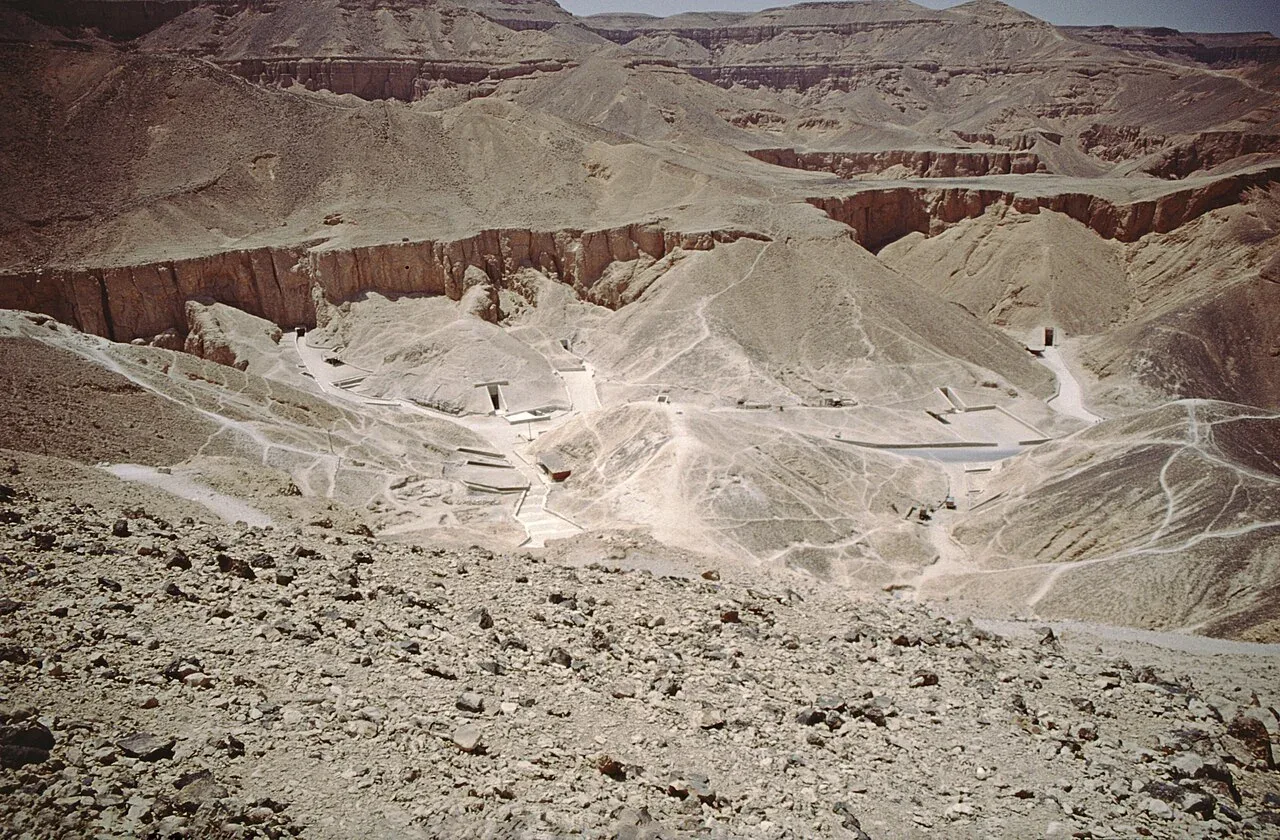
Every place in the story has its own page: who built it, what happened there, and what you actually see.
All landmarksPhotos: KennyOMG, CC BY-SA 4.0; Zezinho68, CC BY-SA 4.0; Mohammed Moussa, CC BY-SA 4.0


