What it is
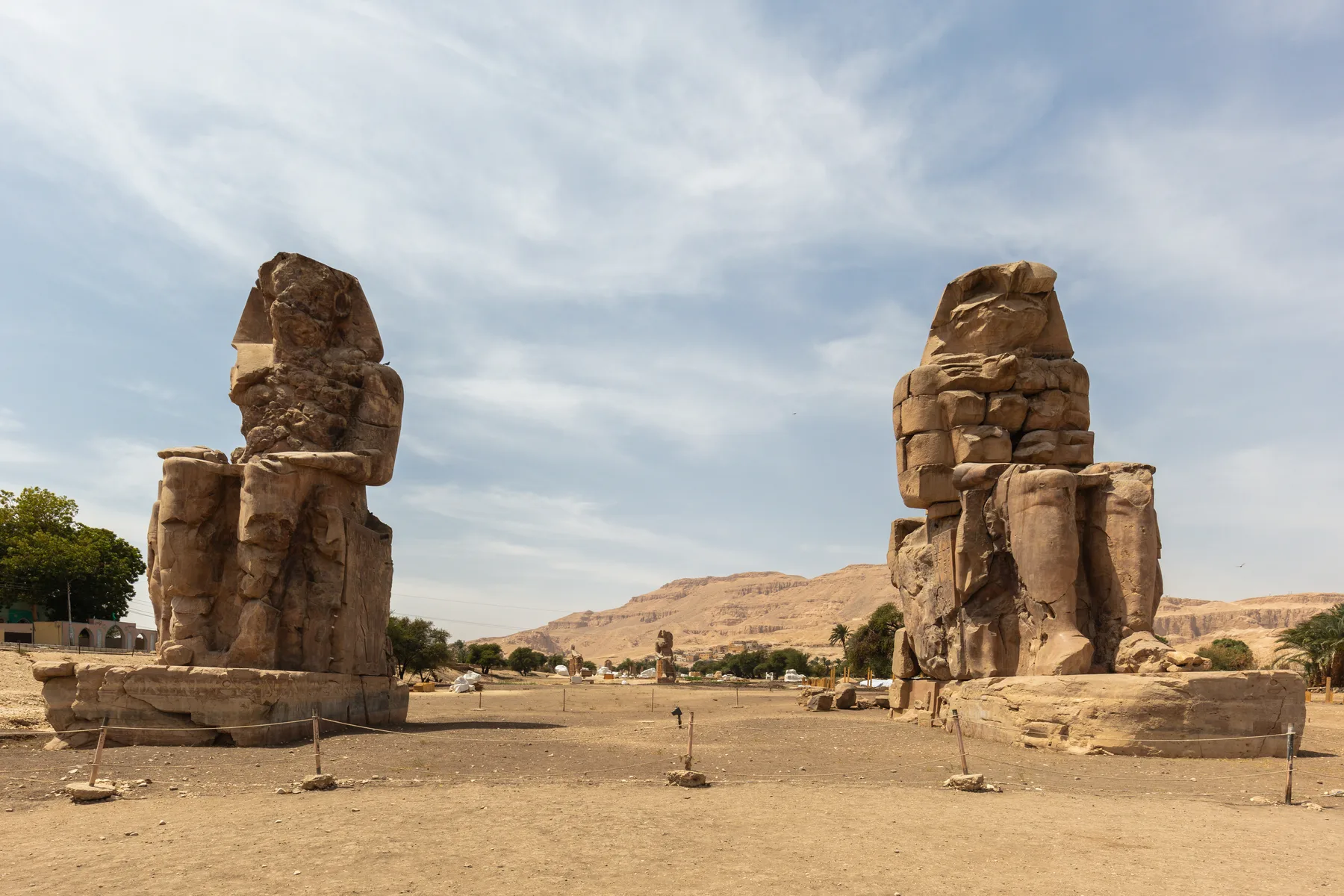
Two seated kings, each about 18 metres high, facing the Nile across the fields of the west bank. They are Amenhotep III, and they are almost all that is left of what was once the greatest temple on this side of the river. Everything behind them has gone: flooded, quarried, carried off for other buildings. The gatekeepers stayed.
The question they raise is why a king would build a temple that went under water every year, and why, nearly fifteen centuries later, travellers of the Roman empire came to hear one of his statues sing.
History
Amenhotep III built his mortuary temple at Kom el-Hettan on the flood plain, and Richard Wilkinson describes that location as apparently unique: the ground was low, and the temple seems to have been built so that the annual flood filled its outer courts and halls, perhaps leaving only the inner sanctuary dry. As the water went down, the building re-enacted the first land rising from the waters of creation. Toby Wilkinson reads the colossi the same way: partly submerged for months each year, they emerged again as symbols of rebirth, and their size led people to treat them as gods in their own right, living images of the king as "ruler of rulers".
The temple was the largest royal temple known from ancient Egypt, and more fragments of colossal statues have been found in it than in any other sacred precinct. The official in charge was Amenhotep son of Hapu, the king's "Chief of all works", whose duties included carving and moving obelisks and statues, the Colossi among them. The stone is quartzite, believed to come from Gebel Ahmar near Cairo, at the other end of the country.
After an earthquake in 27 BC, the northern statue began to give out a sound at sunrise. Greek visitors identified it with Memnon, son of Aurora, the dawn, and through the Ptolemaic and Roman periods travellers came to hear it. They left Greek and Latin inscriptions on the statue, among them poems by Balbilla, a poet at the court of the emperor Hadrian, written during his visit. Repairs under the emperor Septimius Severus silenced the sound for good.
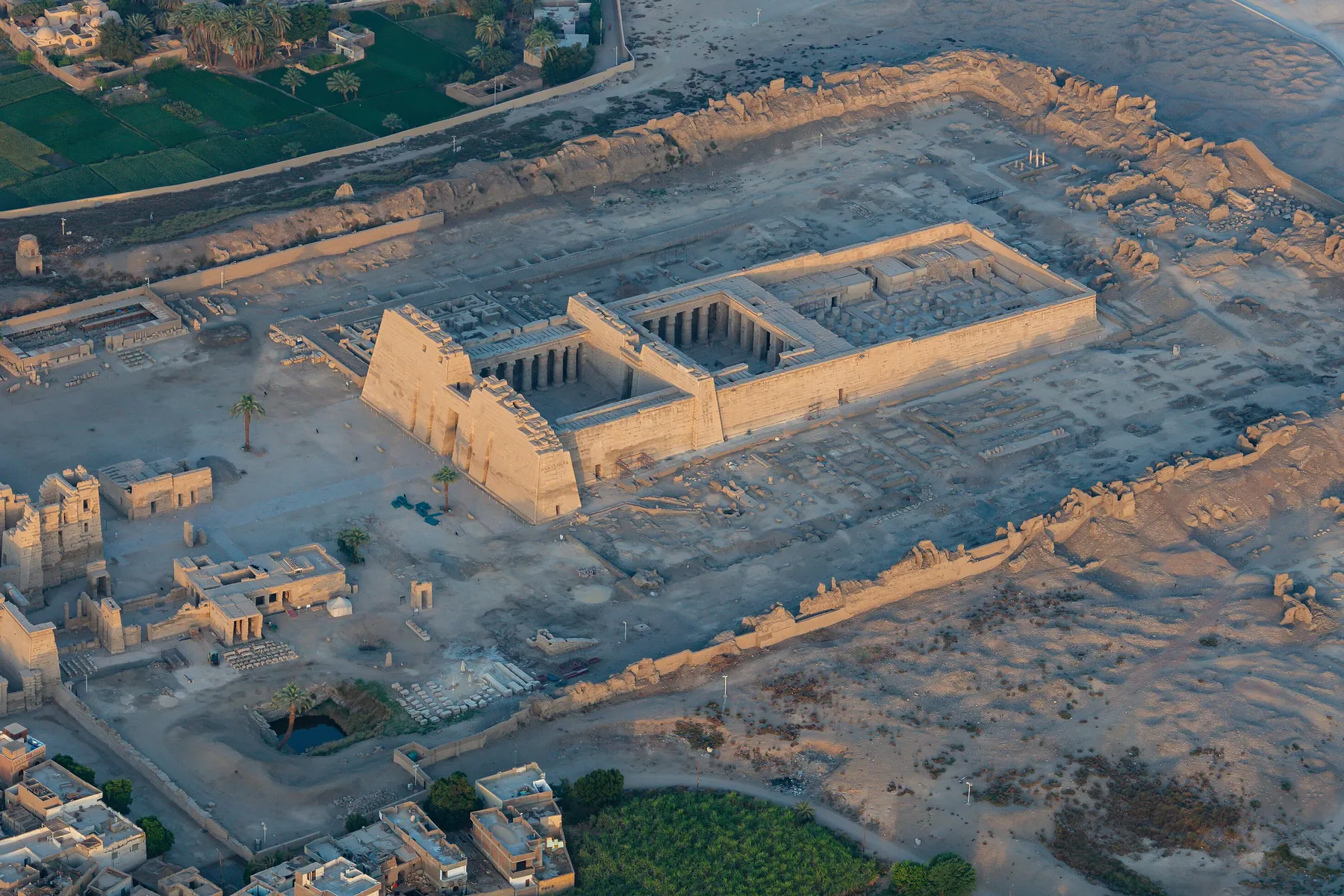
The temple behind them is being recovered. A restoration project of the Ministry of Tourism and Antiquities and the German Archaeological Institute began in 1998. Its Egyptian–German mission has since found colossal limestone sphinxes of the king, black granite busts of the goddess Sekhmet and the bases of more columns, showing that the great pillared hall was larger than was known. The pieces are being restored to be set back in their original places.
What you actually see
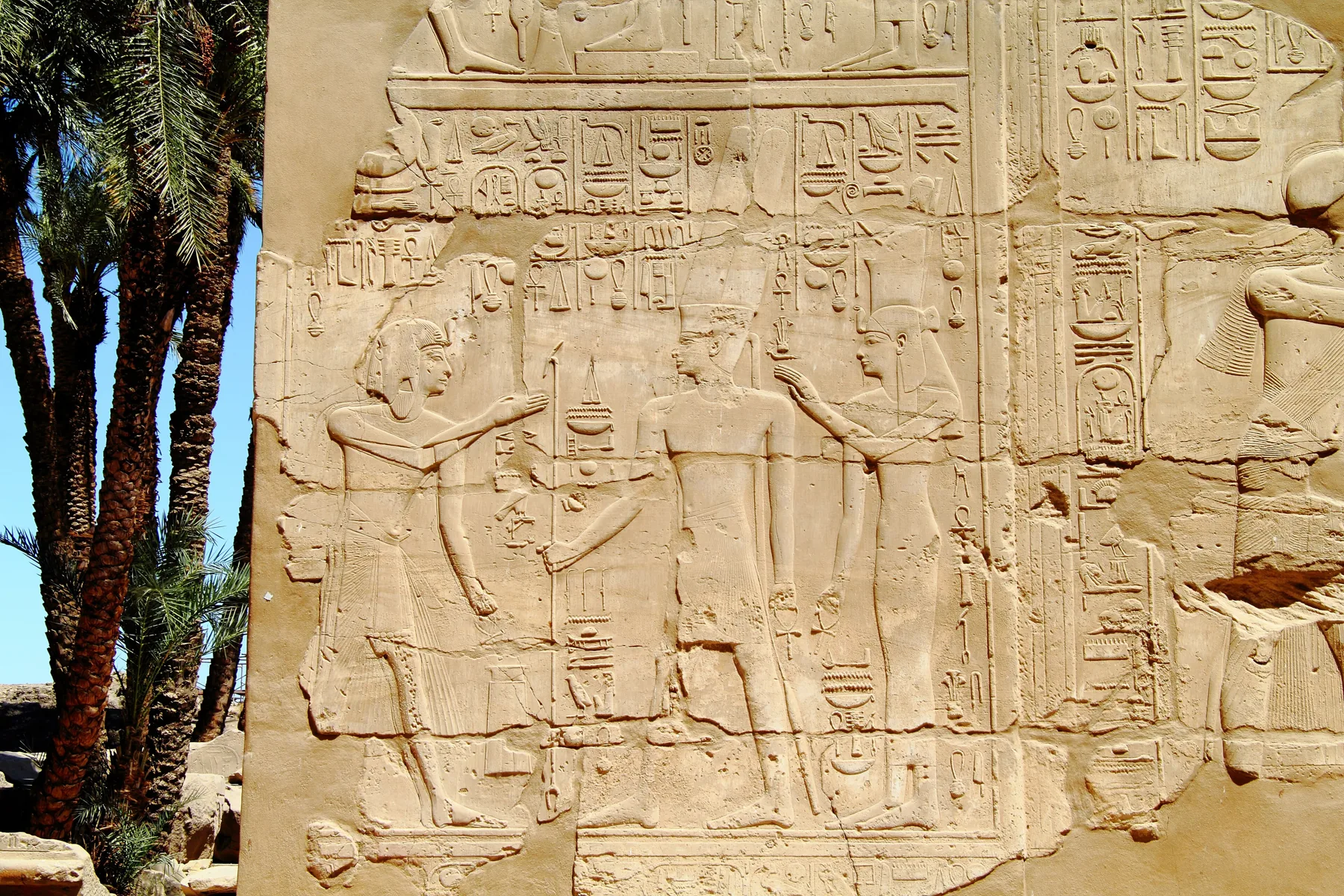
Start with scale, then look down. The much smaller standing figures beside the king are his mother and his wife, Tiye; Toby Wilkinson adds a daughter. Then look for the Greek and Latin inscriptions on the northern statue: the notes of visitors who came to hear it sing nearly two thousand years ago. Behind the statues, the field and scattered blocks are the temple itself. Very little stands, and our suggestion is to picture it at flood, with water lapping at the thrones.
Practical
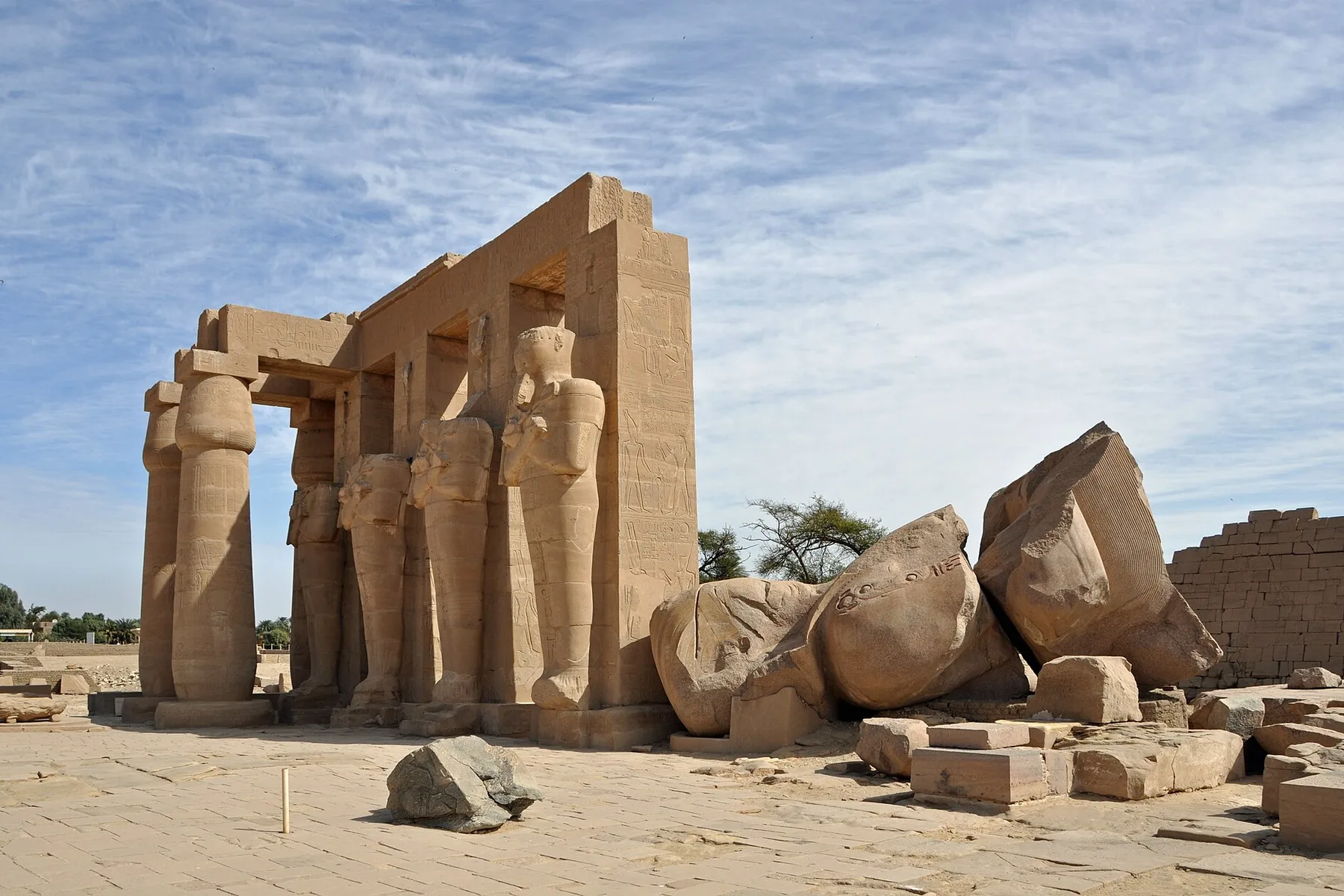
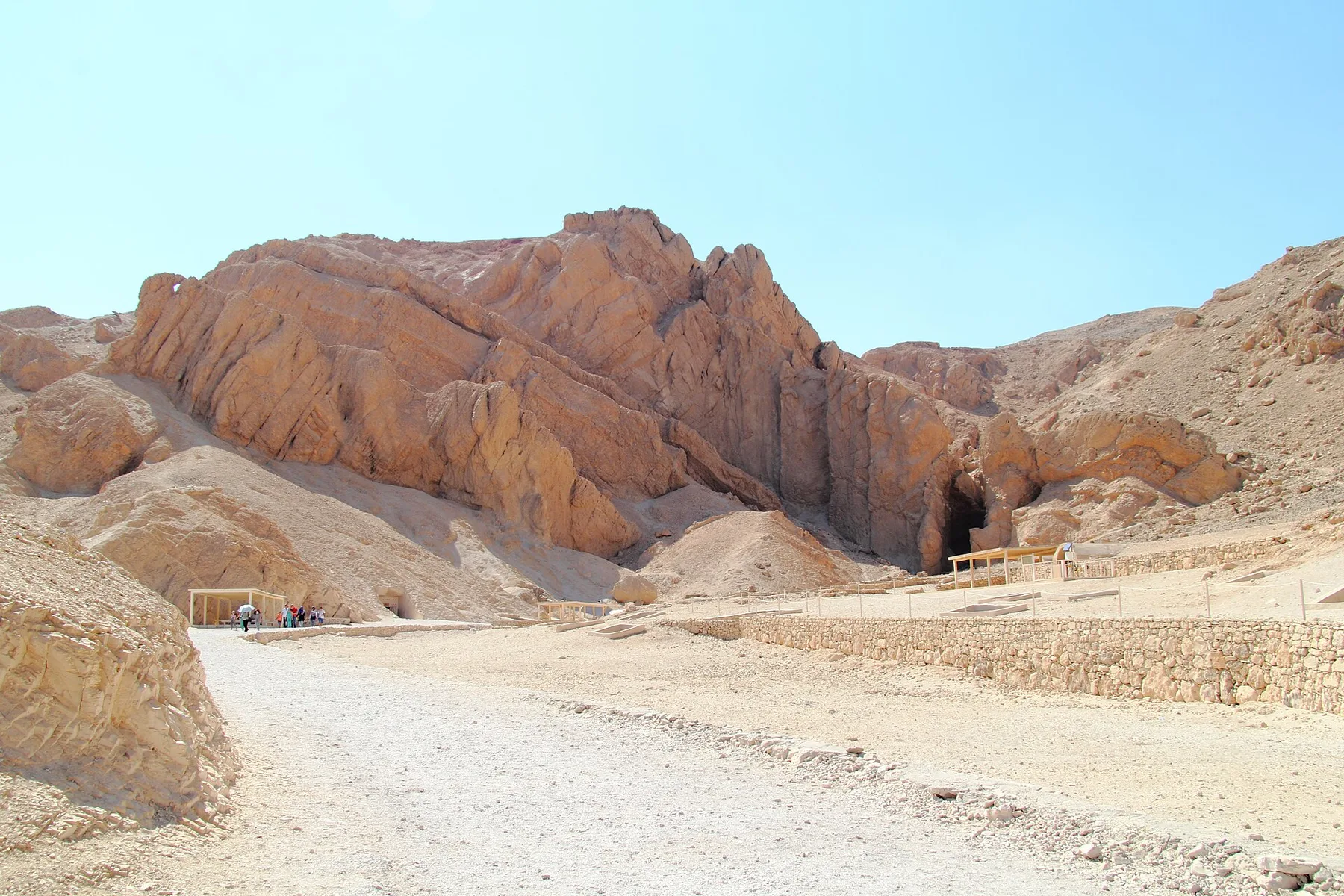
The Colossi are not in the Ministry of Tourism and Antiquities catalogue of ticketed sites, and we do not publish a ticket price for them. The Ministry lists them among the monuments of Ancient Thebes and its Necropolis, a World Heritage property since 1979. They stand beside the road on the way into the west bank, and most visits here are short. In our judgement they make most sense as the first stop of a west-bank morning, before the Valley of the Kings, with The Ramesseum close by.
Tickets, hours and planning guides
- Valley of the Kings tickets
- Official prices, which tombs to choose, and when to go.
- Site tickets and opening hours
- Fifteen great sites in one dated table.
- Cairo to Luxor
- Flight, sleeper train, day train or road, with times and fares.
- Luxor to Aswan
- Cruise, train or road via Edfu and Kom Ombo, compared.