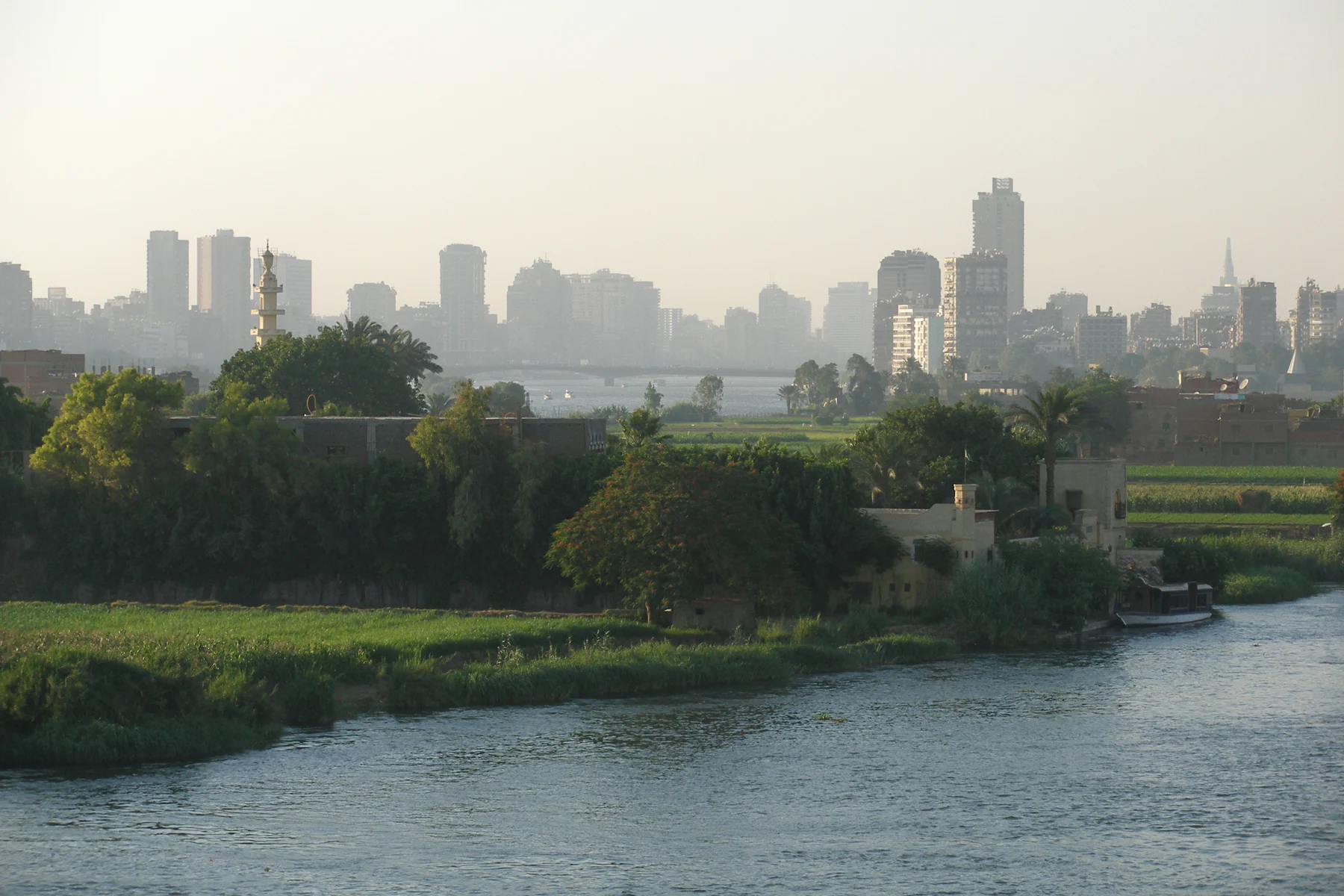
Saqqara is about 25 km south of Cairo; short drives between the three sites
At the sites
Most of the 6 hours across three sites
6 stops
How the day runs
The invention of the pyramid, in one day. At Saqqara you begin with Djoser's Step Pyramid, the first building in Egypt of truly monumental scale built throughout of stone. At Memphis you see the city all these cemeteries served. At Dahshur you end with Sneferu's two attempts: the pyramid that changes its mind halfway up, and the first one that worked. This is how the first chapter of the story began: kings who built to be seen, learning how as they went.
Stop 1
Hotel pickup
Collection from your hotel in Cairo or Giza.
Cairo setting; pickup and return locations are confirmed separately.
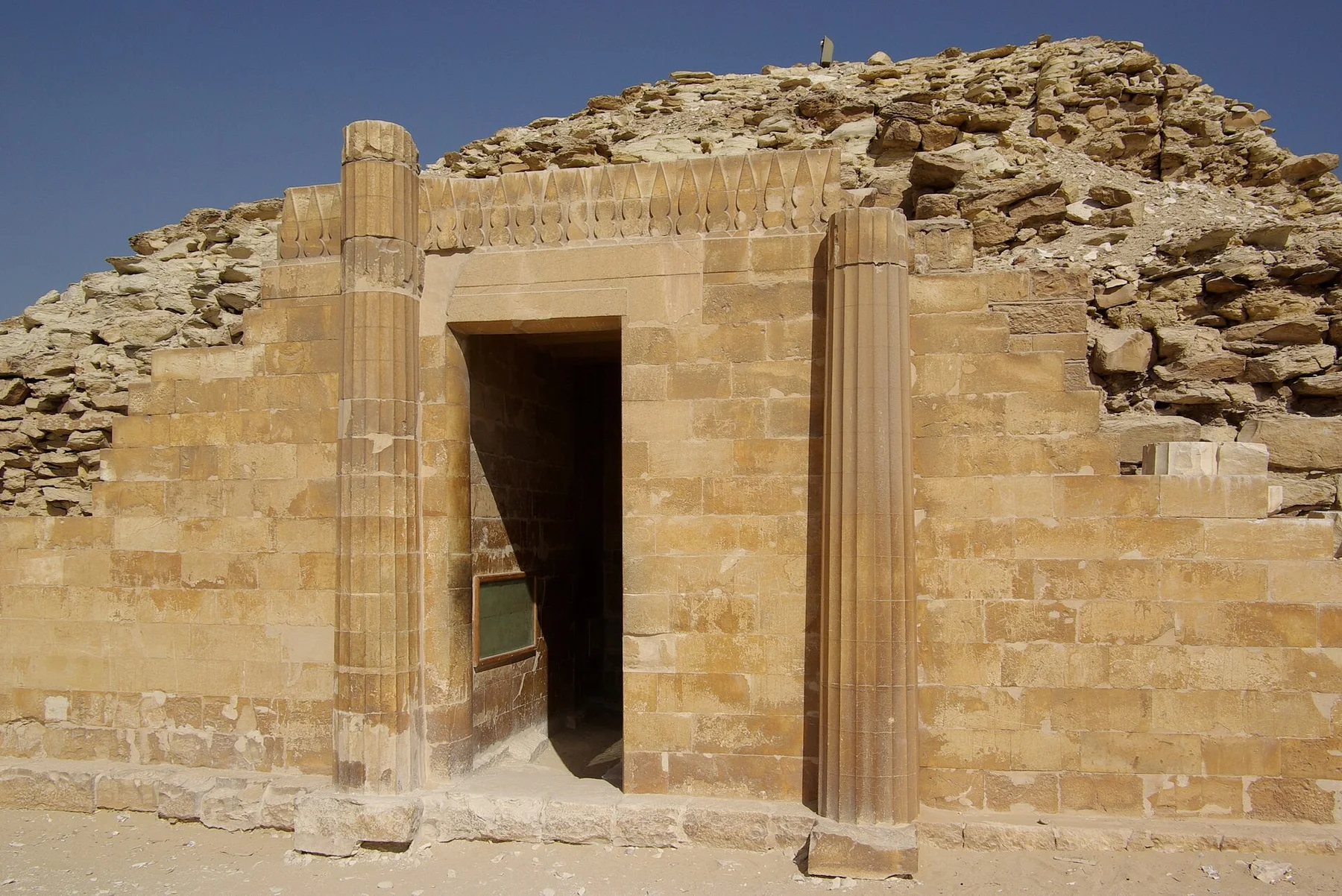
The Step Pyramid of Djoser, the tombs of Ptahhotep and Idut, the Pyramid of Teti and the Serapeum. Saqqara comes first because it holds the beginning: before Djoser, the great tombs here were built of mud brick.
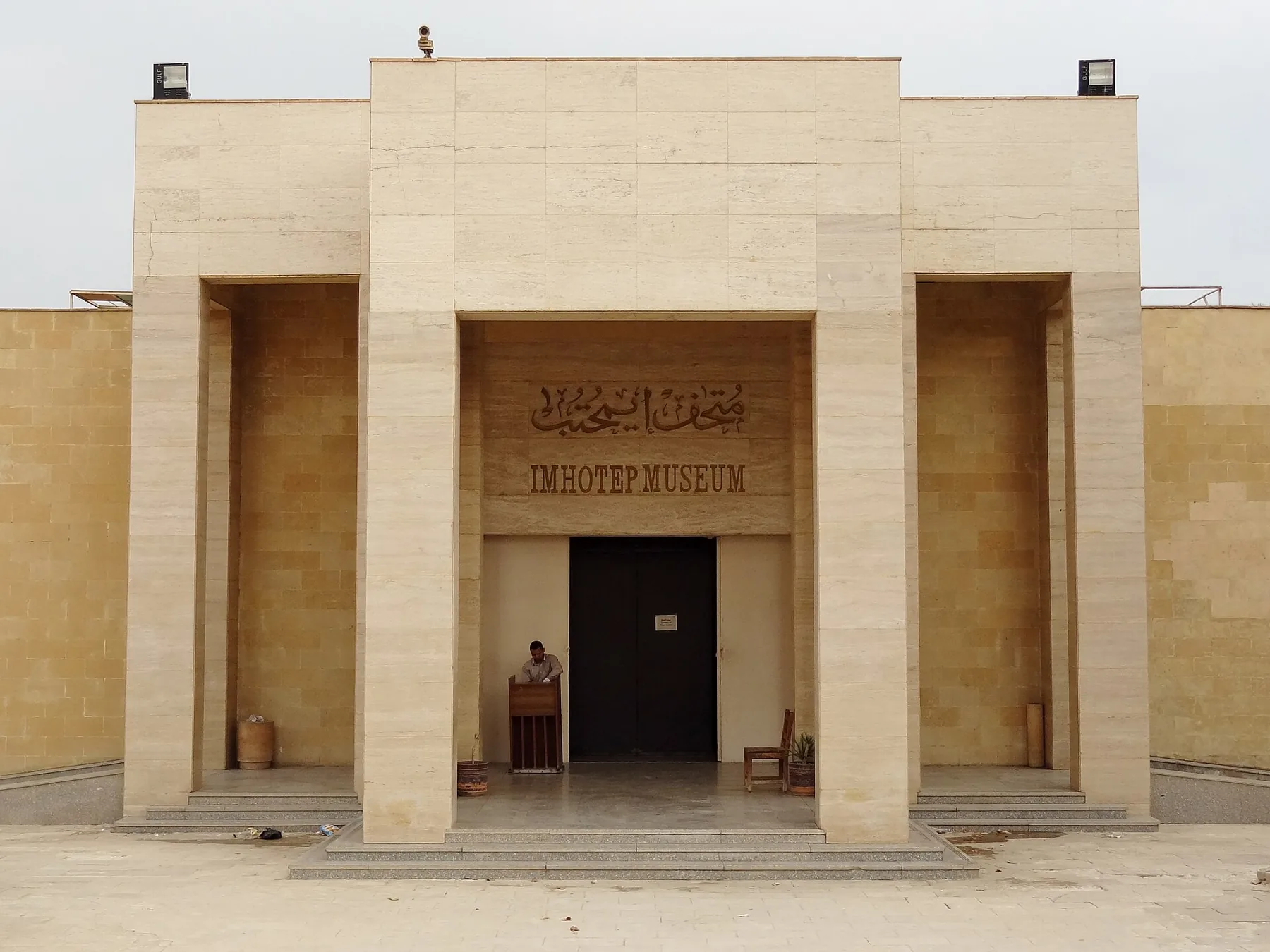
Imhotep Museum: The museum at the gate of Saqqara, named after the first person in history to whom a great building can be credited.
Stop 4
Memphis
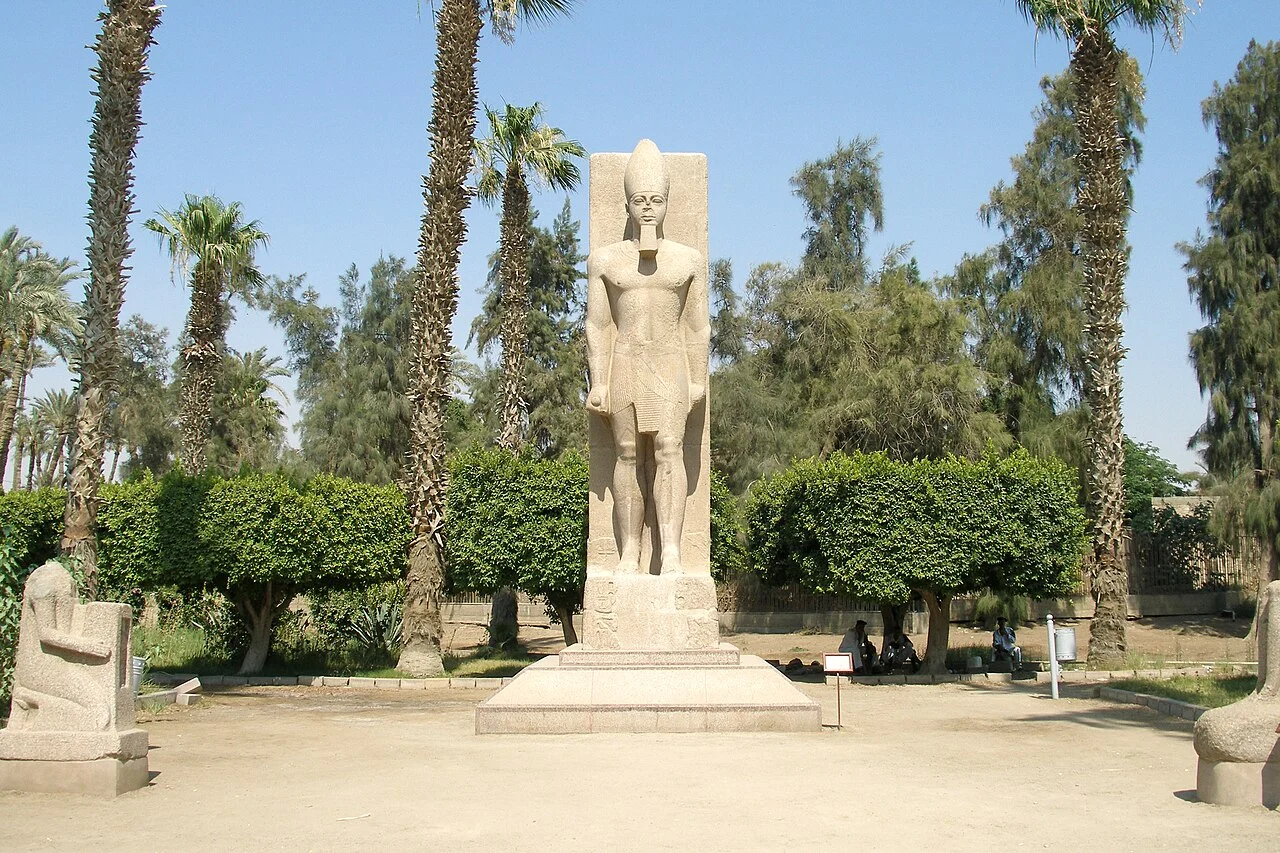
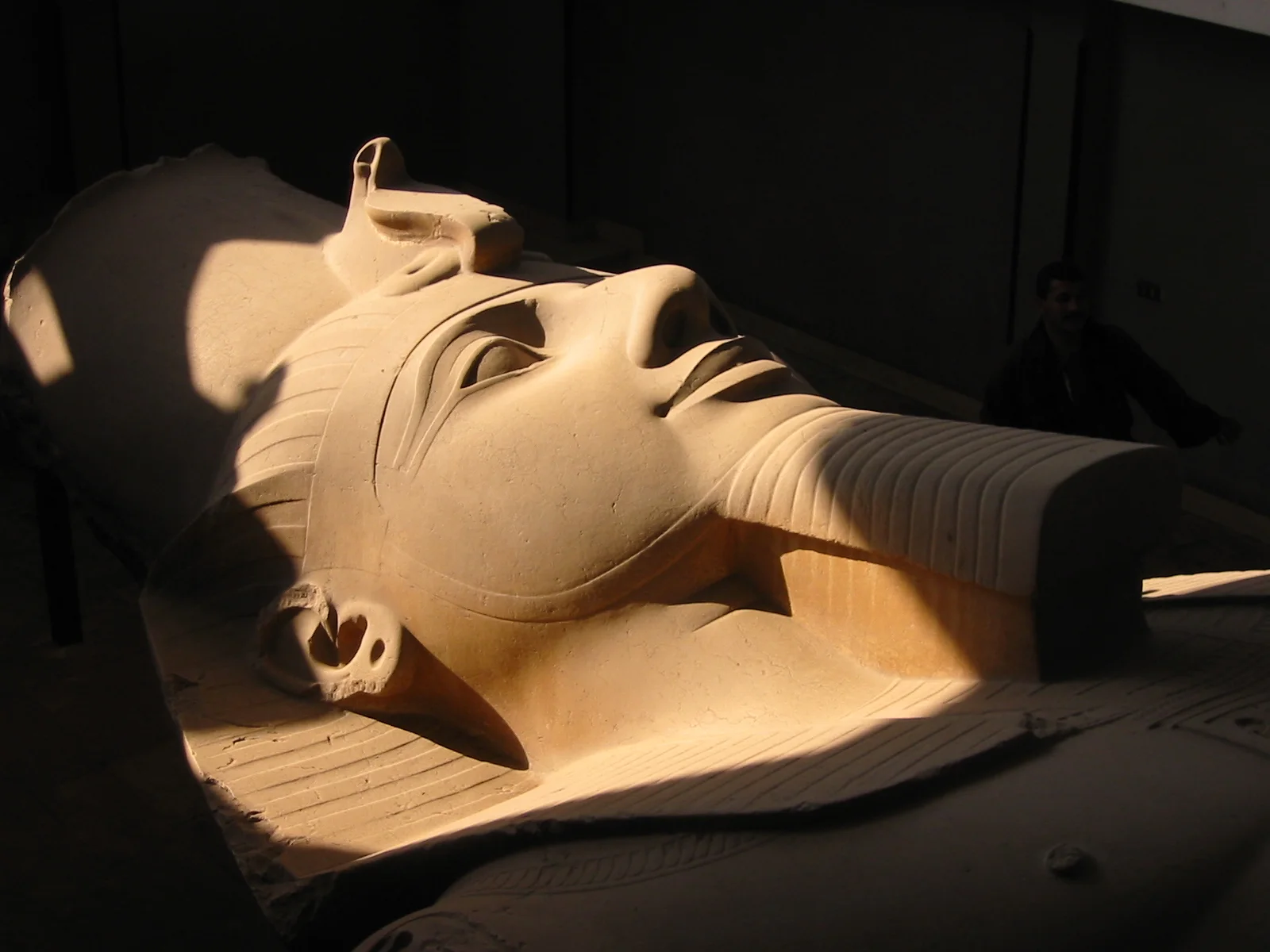
The first capital and the colossal statue of Ramses II. In our judgement it is an important stop: every pyramid you see today was built as part of this city's cemetery. Memphis is where the living were.
Day and time labels describe the planned sequence, not confirmed departures. Your written quote confirms pickup, flights, sailing and return times for your date.
The first time anyone built in stone at this scale
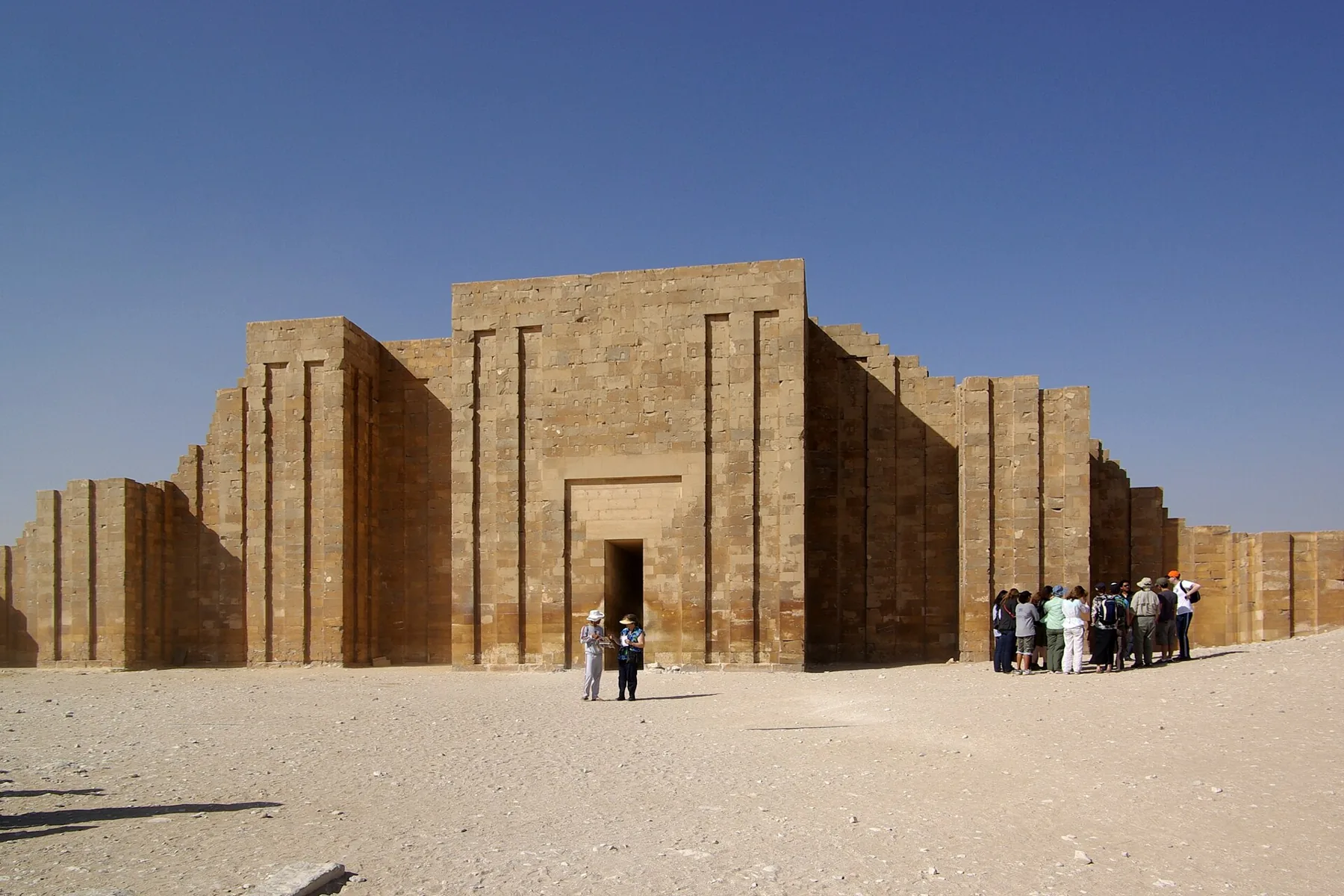
A narrow gap in a long panelled wall. You squeeze through, into a corridor of stone.
Everything here is pretending. Blocks the size of mud bricks, chapels copying pavilions of wood and reed, pillars painted red like timber. Nobody had built in stone this big before.
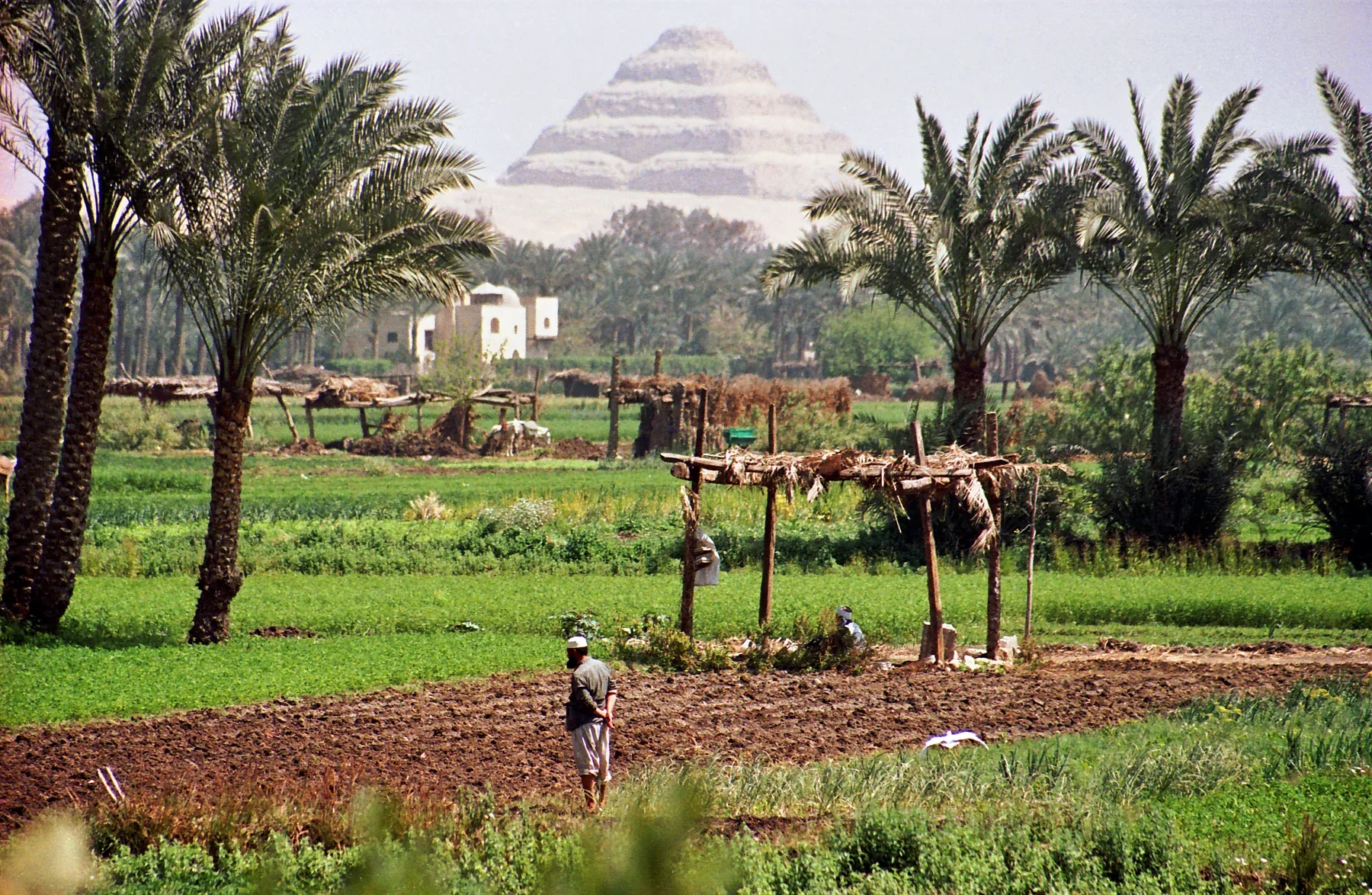
Then you come out into the sun, and there it is: six steps, about sixty metres high. The first pyramid.
The king's name on its walls is Netjerykhet. Djoser is what visitors called him, more than a thousand years later.
Look for: On the north side, the serdab: a stone box with two eyeholes, through which the king's statue watched the stars that never set.
Sources: Mark Lehner, The Complete Pyramids (1997), pp. 84–92; Barry J. Kemp, Ancient Egypt: Anatomy of a Civilization (2018), p. 100; Ian Shaw and Elizabeth Bloxam (eds.), The Oxford Handbook of Egyptology (2020), pp. 432–435.
Imhotep's name appears beside his king's on a statue base. The Step Pyramid is the first great building in history credited to a known person.
Later Egyptians made him a sage. Later still, a god of healing, whom the Greeks matched with their own Asklepios.
One hall belongs to Jean-Philippe Lauer, who came in 1926 for eight months, and stayed seventy years putting the complex back together.
Sources: Toby Wilkinson, The Rise and Fall of Ancient Egypt (2011), p. 57; Barry J. Kemp, Ancient Egypt: Anatomy of a Civilization (2018), pp. 158–159; Mark Lehner, The Complete Pyramids (1997), p. 62.
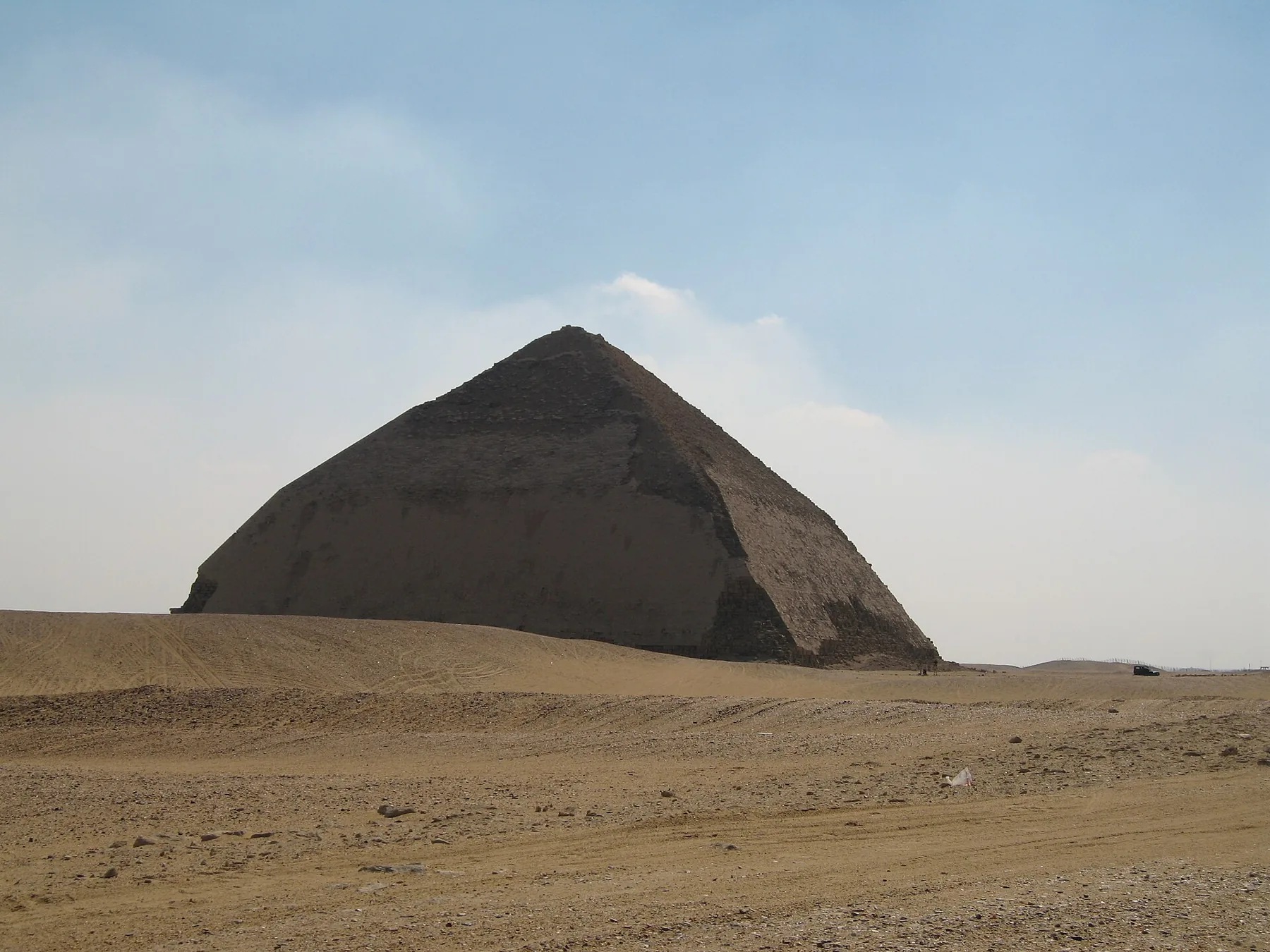
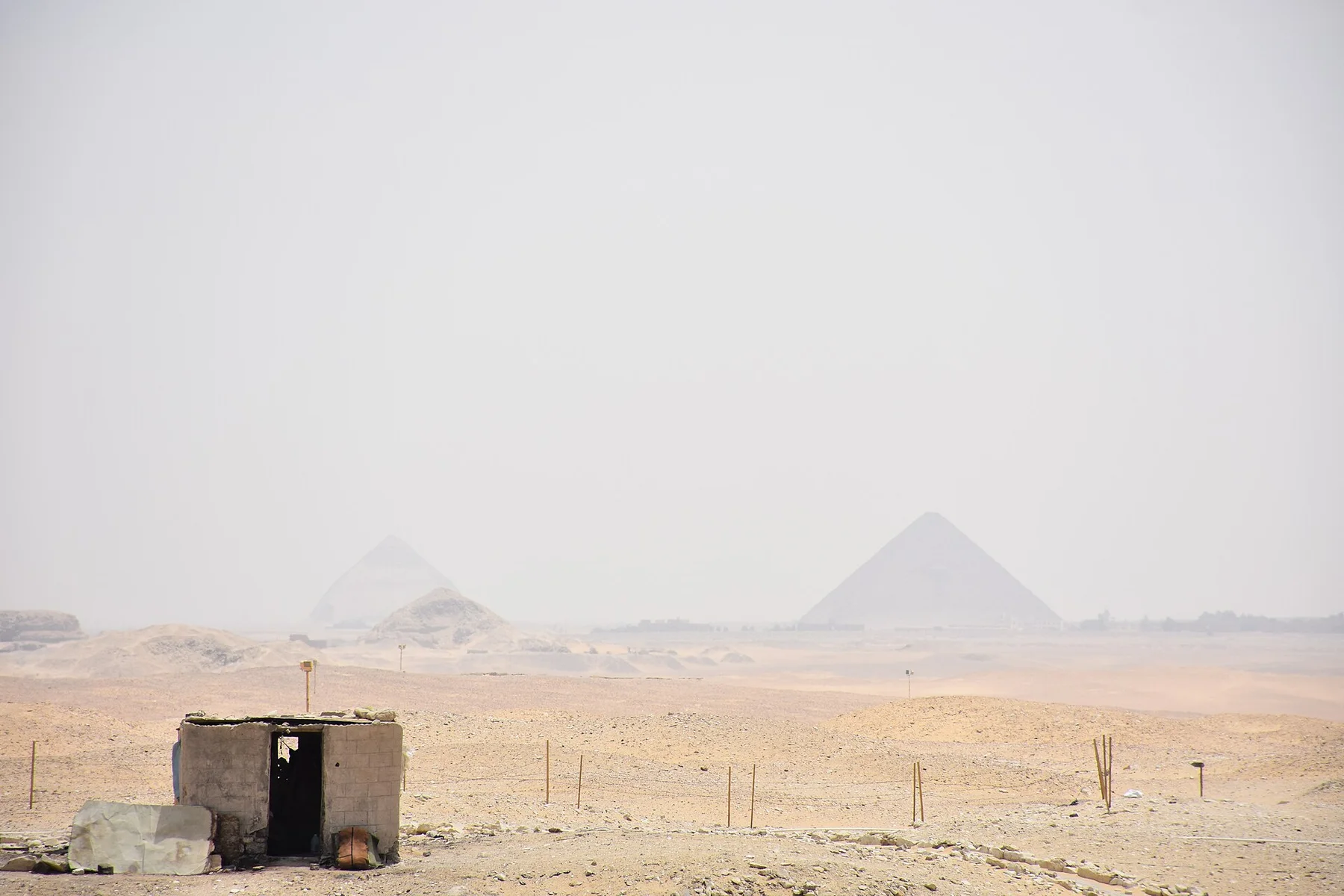
Two shapes on the horizon, about a kilometre apart. Between them, a king learning the hard way how to build a pyramid.
Sneferu's first try began steep, about fifty-five degrees. The ground shifted. Partway up, they changed the angle to forty-three.
“a completed pyramid, but a seriously botched job”
The historian Toby Wilkinson, on the Bent Pyramid
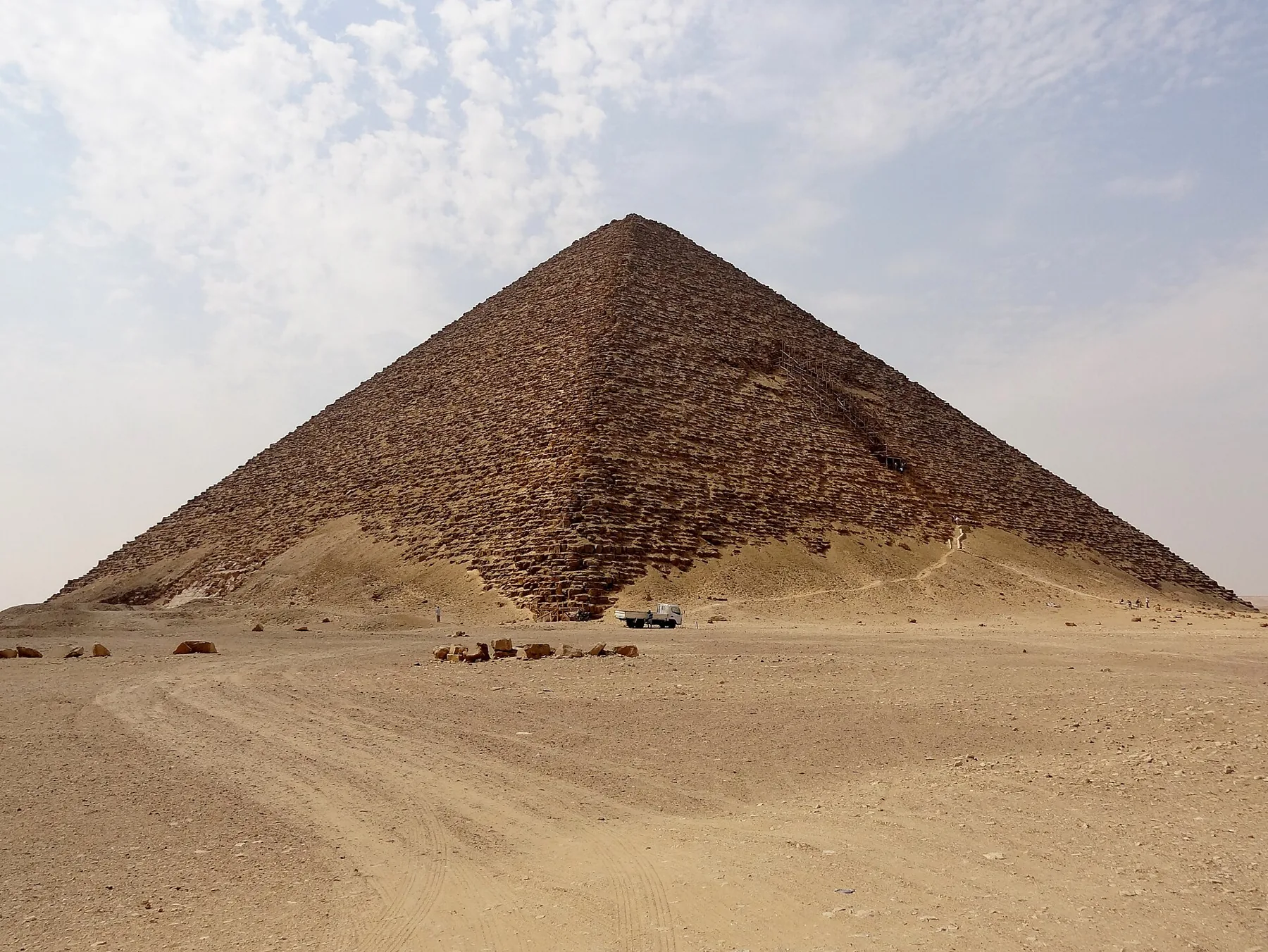
So he started again, at the gentle angle from the first stone. The Red Pyramid rose clean and true, probably as his tomb.
His son Khufu built Giza on what was learned in this desert.
Look for: On the Bent Pyramid, much of the smooth casing is still in place, stripped only from the corners.
Sources: Mark Lehner, The Complete Pyramids (1997), pp. 101–105; Toby Wilkinson, The Rise and Fall of Ancient Egypt (2011), p. 64.
Times of day set the scene; your written quote confirms the timetable. Facts come from the sources named under each chapter, and where we give an opinion, it reads as ours.
Why go
Who loves this tour
This Saqqara, Memphis and Dahshur private tour tells the part of the pyramid story that Giza leaves out: how it began. It starts at Saqqara, about 25 km south of Cairo, at the Step Pyramid of Djoser, built around 2650 BC by the architect Imhotep. It marks the beginning of monumental building in stone.
Saqqara is more than one pyramid. Your Egyptologist takes you into the decorated tombs of officials such as Ptahhotep and Idut, whose walls show daily life in carved detail, to the Pyramid of Teti, and down into the Serapeum, the underground galleries where the sacred Apis bulls were buried in huge stone sarcophagi. The Imhotep Museum holds finds from the site.
At Memphis, the first capital of Egypt, you see the colossal statue of Ramses II. The day ends at Dahshur, where King Sneferu's builders learned their craft: the Bent Pyramid, whose angle changes halfway up, and the Red Pyramid, the first true smooth-sided pyramid. These sites are far quieter than Giza, which makes them a good day for questions.
Our tip
Do this before Giza if you can: the Great Pyramid makes more sense once you have seen the attempts that came first.
The highlights
The Step Pyramid of Djoser at Saqqara
Decorated tombs of Saqqara's officials and the Serapeum
The colossus of Ramses II at Memphis
The Bent and Red Pyramids of Sneferu at Dahshur
The details
What is included
Included
Hotel pickup and drop-off in Cairo or Giza
Entrance fees to all sites listed
Private air-conditioned vehicle
Qualified Egyptologist guide
Taxes and service charges
Not included
Tips
Travel insurance
Personal expenses
Places you visit
Step Pyramid of Djoser
Saqqara
Serapeum of Saqqara
Imhotep Museum
Memphis
Bent Pyramid
Red Pyramid
Dahshur
Before you go
Good to know
Meeting point
Your hotel in Cairo or Giza
Best time to go
Morning; Saqqara's open ground is hot by early afternoon
Entrance tickets
Included: entrance to all sites listed
Cancellation
Free cancellation up to 24 hours before the tour for a full refund.
Your price
Set in your written quote for your party, dates and pickup, with the payment and cancellation terms.
Questions
Before you ask
Why visit Saqqara and Dahshur as well as Giza?
They show how pyramid-building developed, from Djoser's stepped design to the bent and then true pyramids of Sneferu, Khufu's father, before the Great Pyramid was built at Giza.
Are these sites crowded?
Much less than Giza, especially Dahshur.
How much does it cost for my group?
Prices are per person and fall as the group grows: 1 person $120; 2–4 people $70 each; 5–7 people $60 each; 8–10 people $45 each. All prices are in US dollars.
What should I wear?
Light, modest clothing and comfortable walking shoes. Shoulders and knees covered is the safe choice at every site; bring a hat, sunscreen and water.
Local tips matched to this route
Complete this day
We place these around the tour’s real timing. Anything that cannot fit cleanly stays an untimed request until we confirm it.
Grand Egyptian Museum
An Egyptian lunch without leaving the museum
The museum is large enough that leaving for lunch can break the day. Its public dining area gives you a proper pause before returning to the galleries.
Lunch · 45–75 minutes. Use it between the plateau and the galleries, not after a rushed final room.
We recheck the open outlets, museum entry window and dietary request.
Fits at its stated time
Wekalet El Ghouri, Islamic Cairo
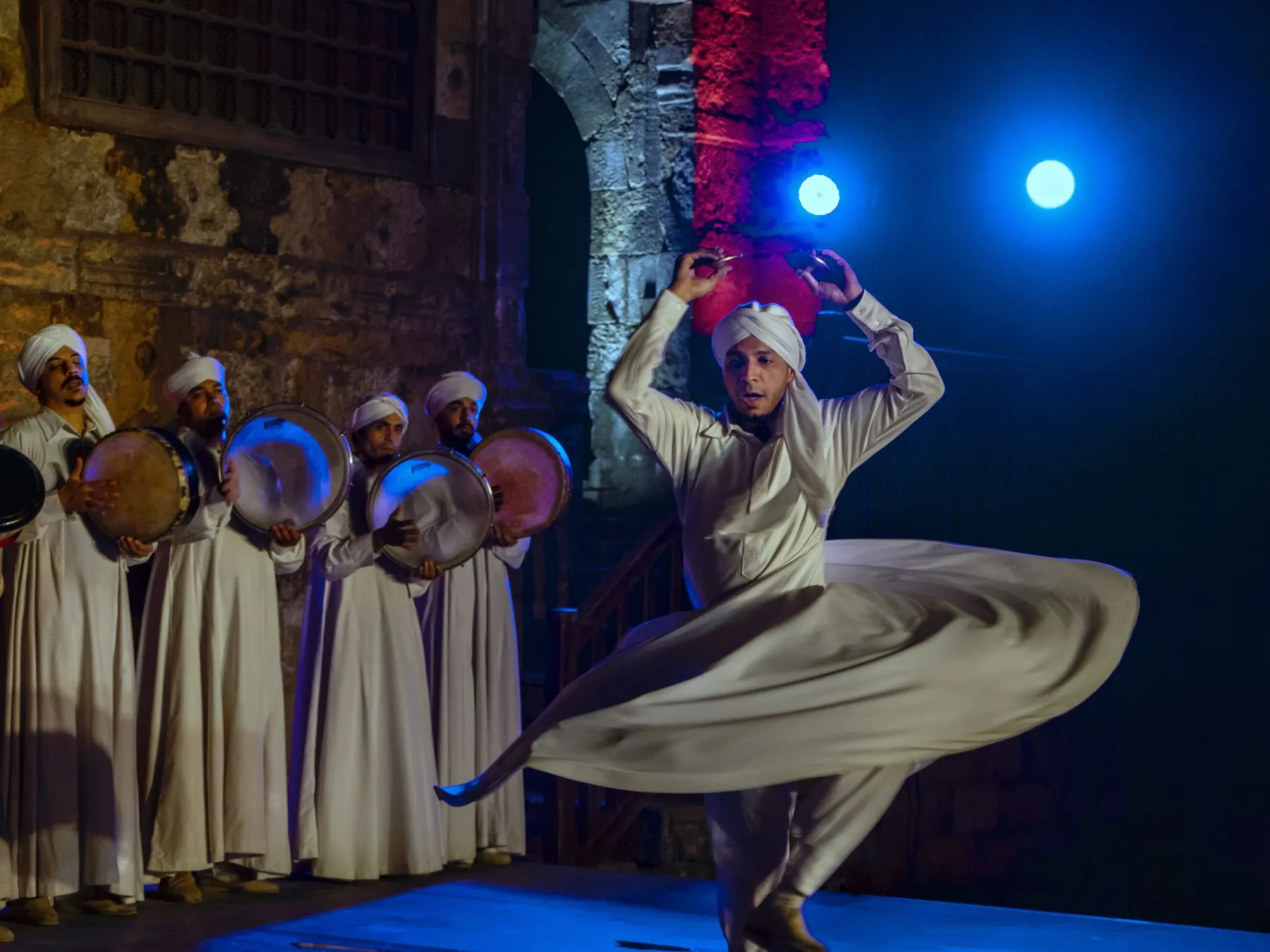
The Tanoura show in Islamic Cairo
A whirling Sufi dance and a folk orchestra in a sixteenth-century caravanserai: the one evening show Cairo visitors mention most.
Evening · About 90 minutes, plus arriving early. On its performance evenings only, usually a few nights a week; we confirm the night.
We confirm the performance night, the start time and the arrival plan for seating.
Add as a request
Giza plateau, the Sphinx terrace
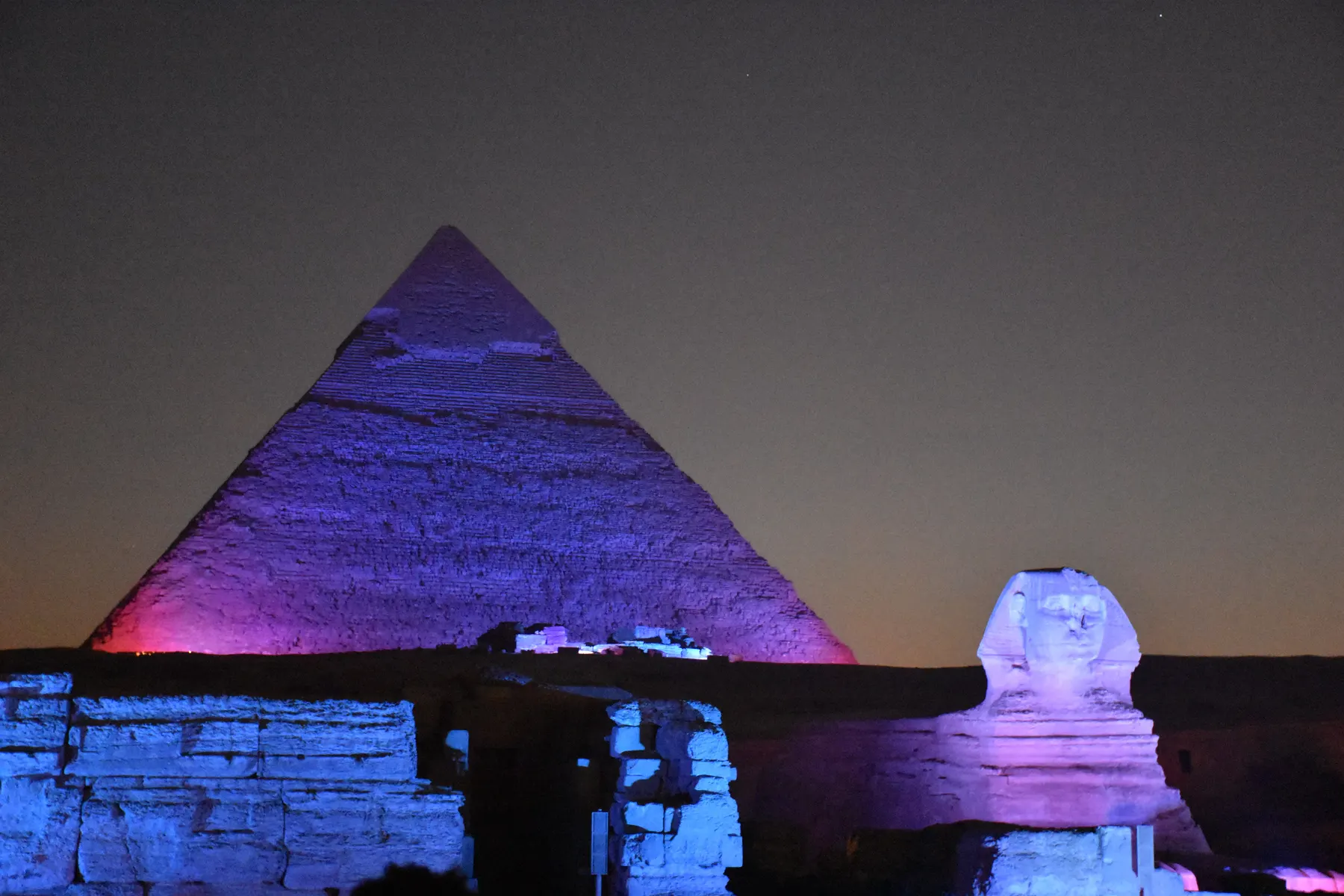
The Sound and Light show at the pyramids
The pyramids after dark, lit in colour with a narrated story. The script is old-fashioned; the setting is not.
Evening · About an hour. Evenings, with sessions in different languages; start times change with the season.
We confirm the session language, the start time and your seats.
The only Giza tour with the ticket into Khufu's pyramid already in the price.
Length: About 5 hours
Style: Private
Active pace
from USD 60 per person
Deluxe Trips Egypt
Ask for this tour, for your dates.
Send your dates and party size here. We reply with a written quote: the price for your party, what is included and the terms. Nothing is booked until you accept it.
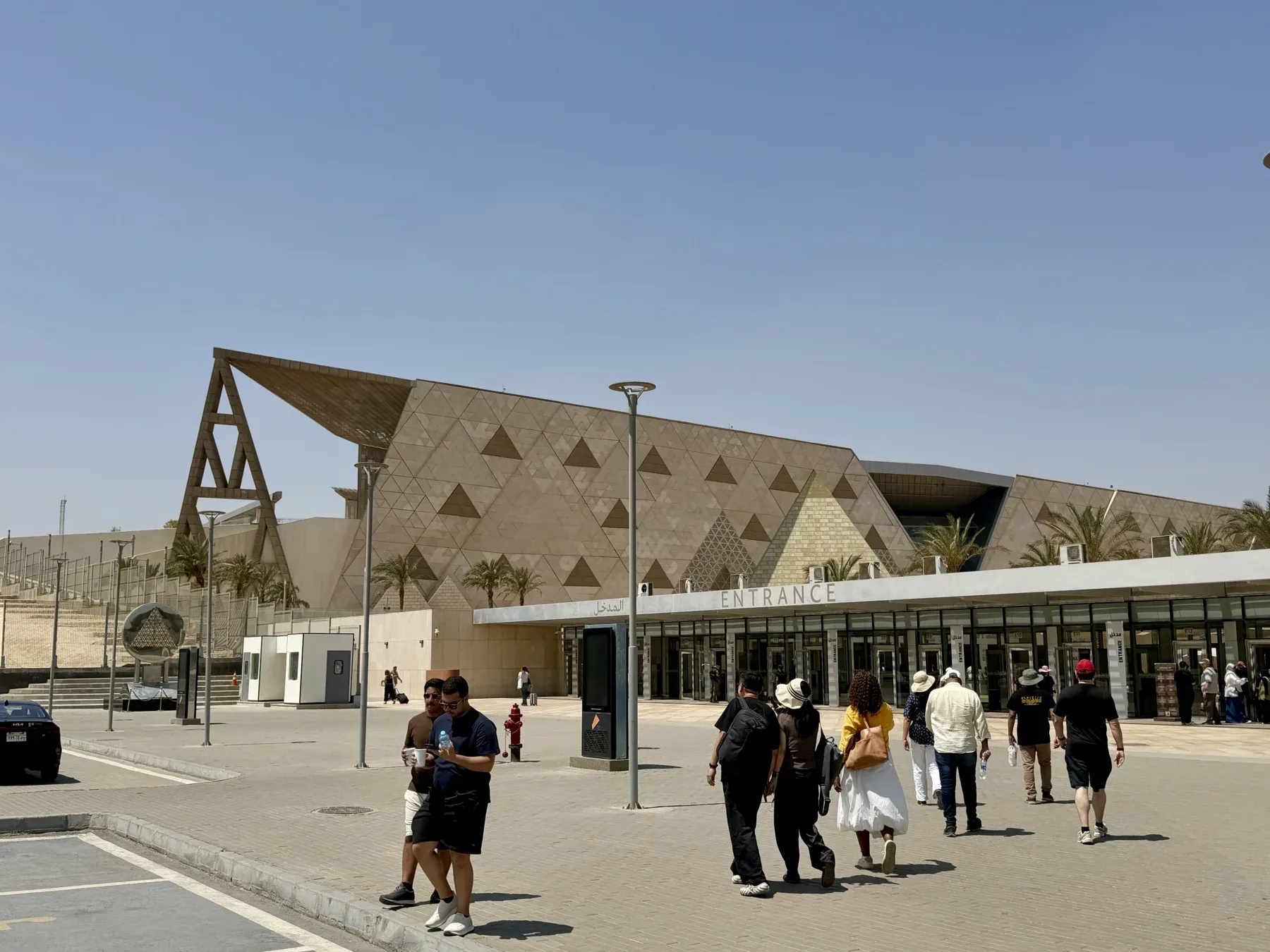 Grand Egyptian Museum