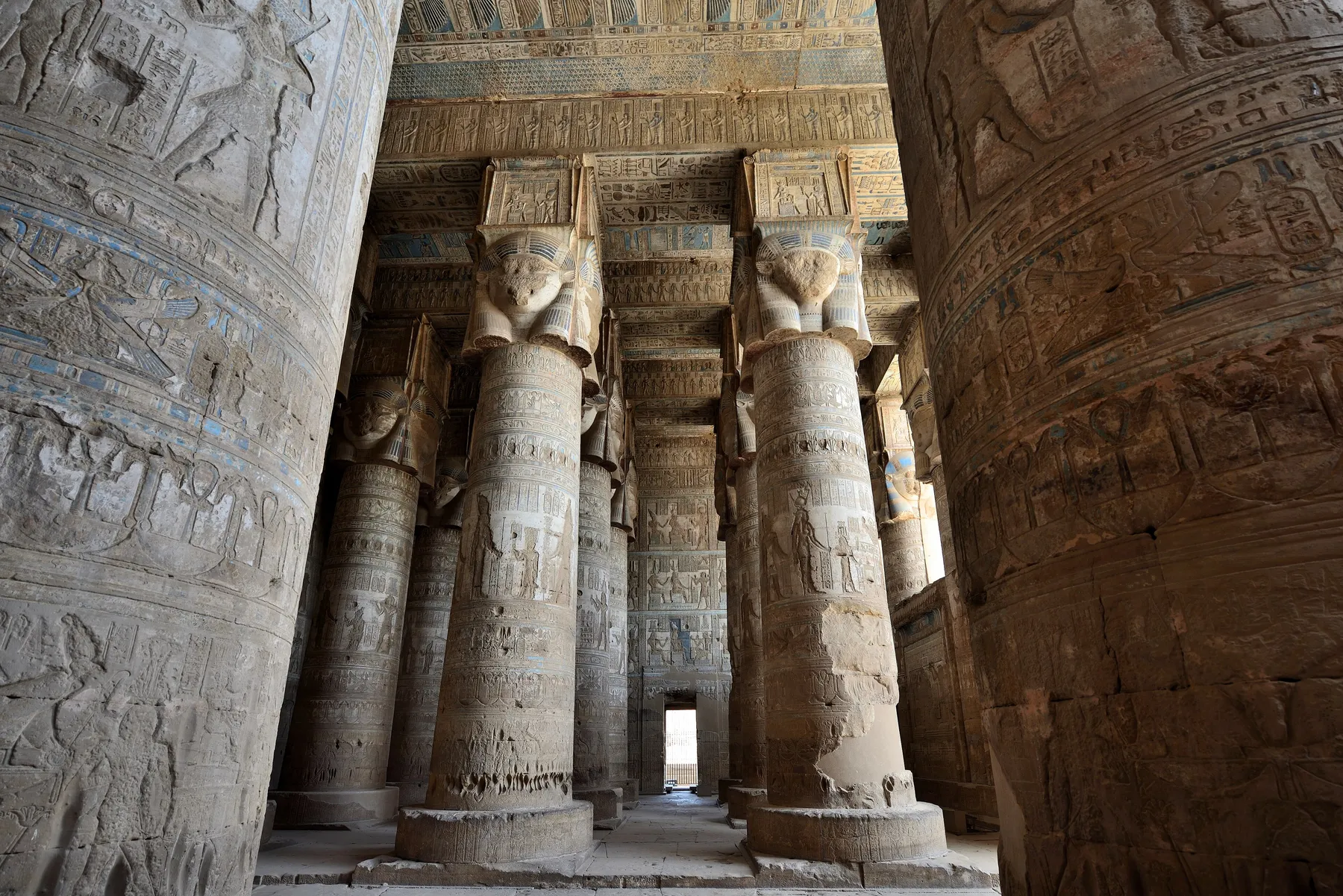
Two banks, one idea. In the morning, on the west bank, the Valley of the Kings shows kings preparing for eternity, hidden in the hills. In the afternoon, on the east bank, Karnak and Luxor Temple show kings speaking to the gods, and every year Amun's own festival joined the two temples. By evening you have seen how Egypt kept reimagining eternity, in one day.
Morning
Pickup
From your hotel or Nile cruise in Luxor.
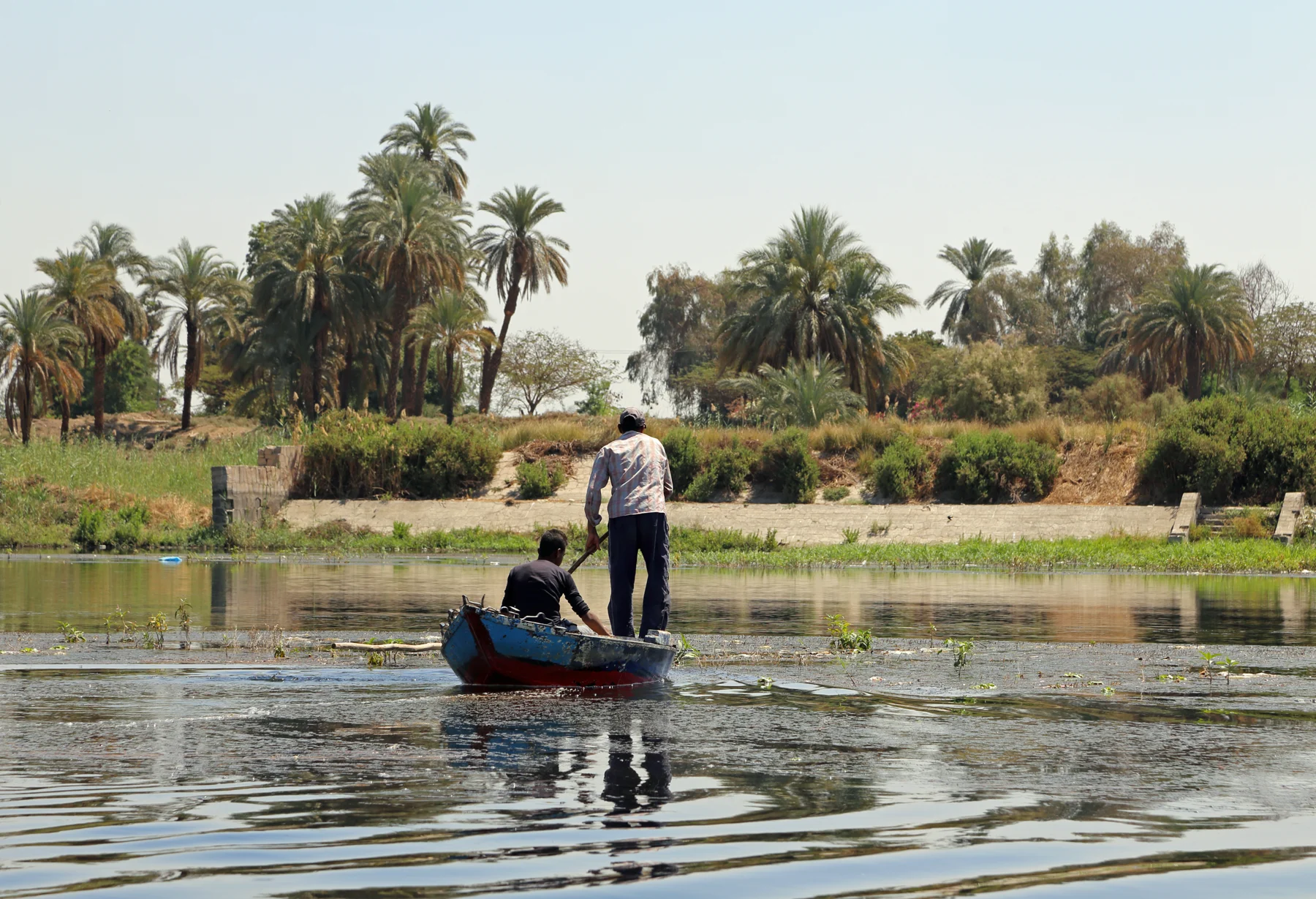
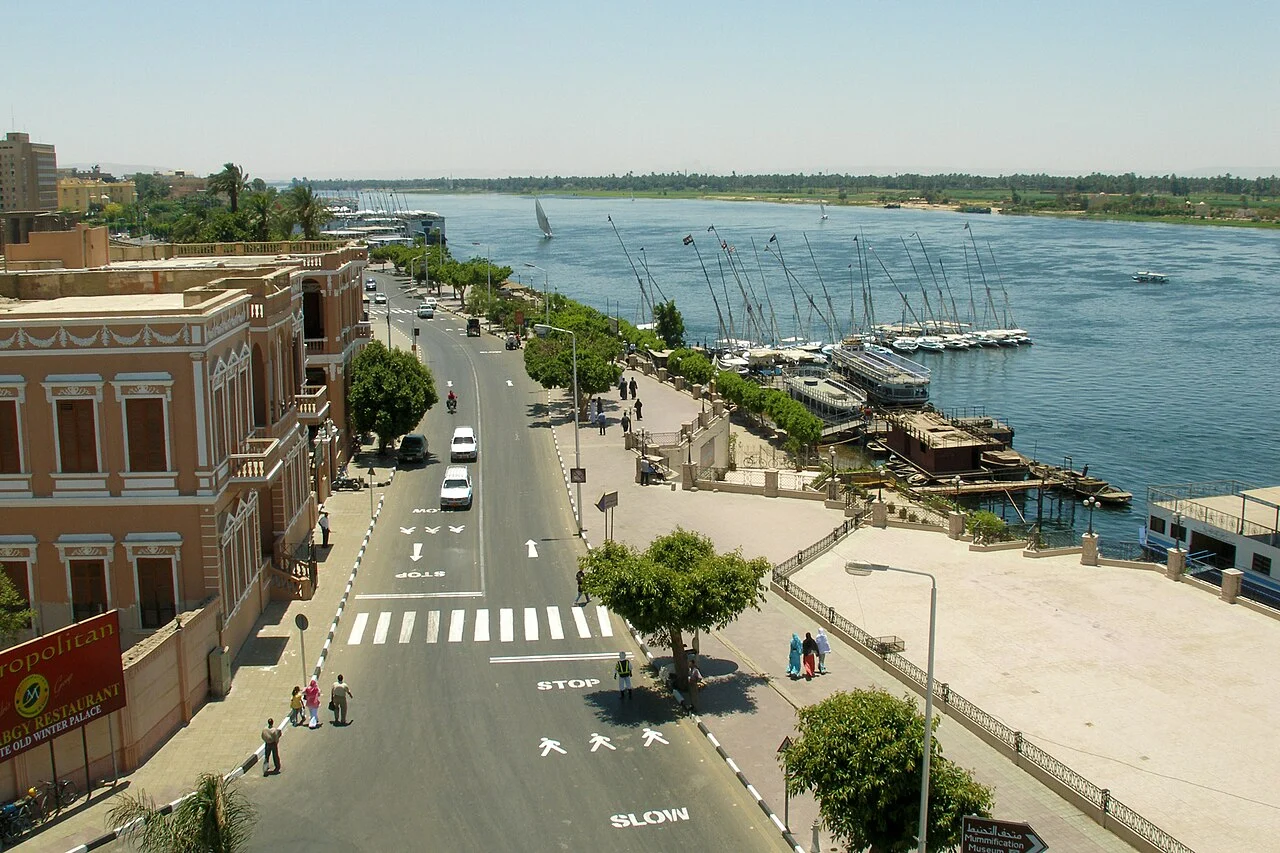
Luxor's river setting; this does not depict a contracted transfer.
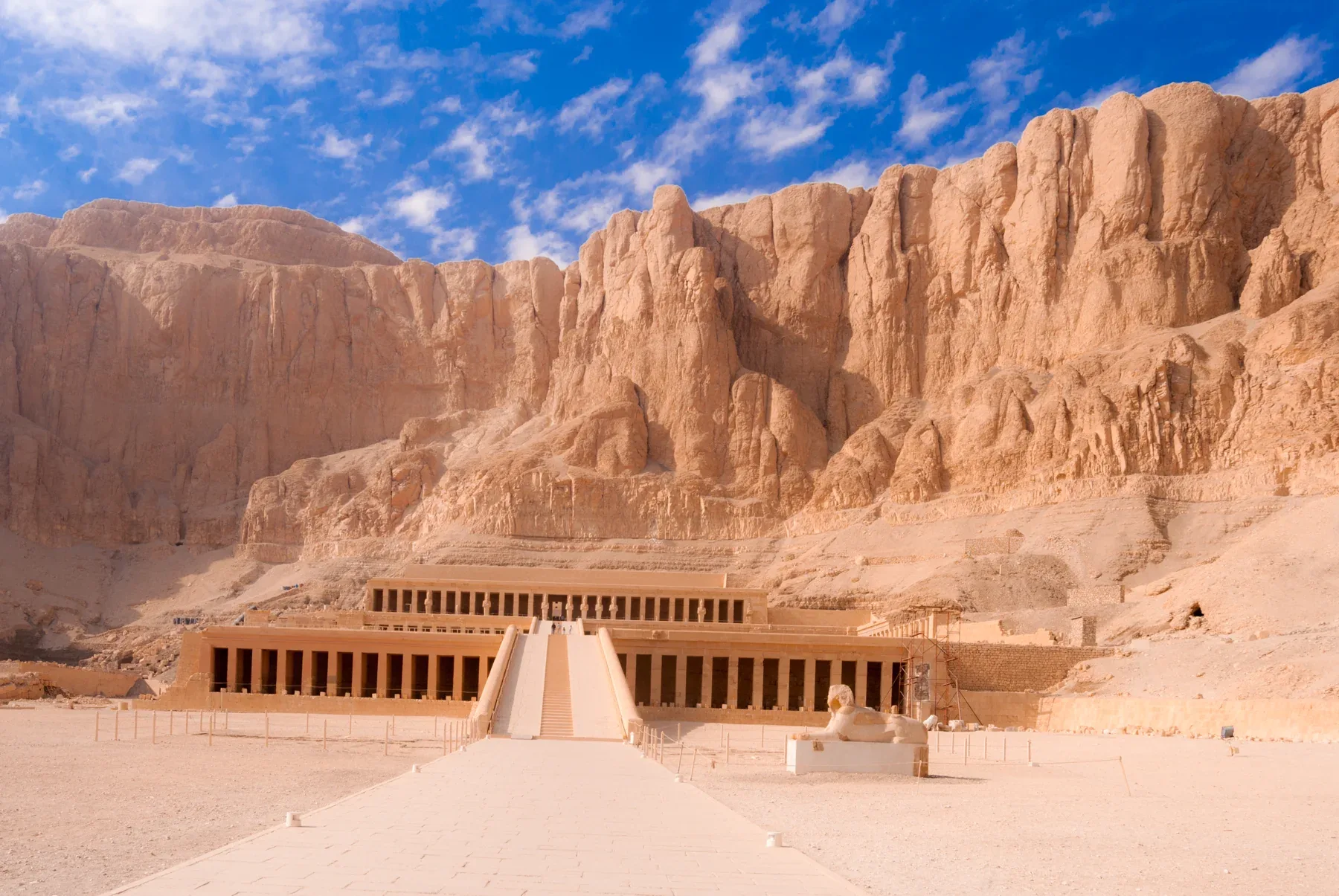
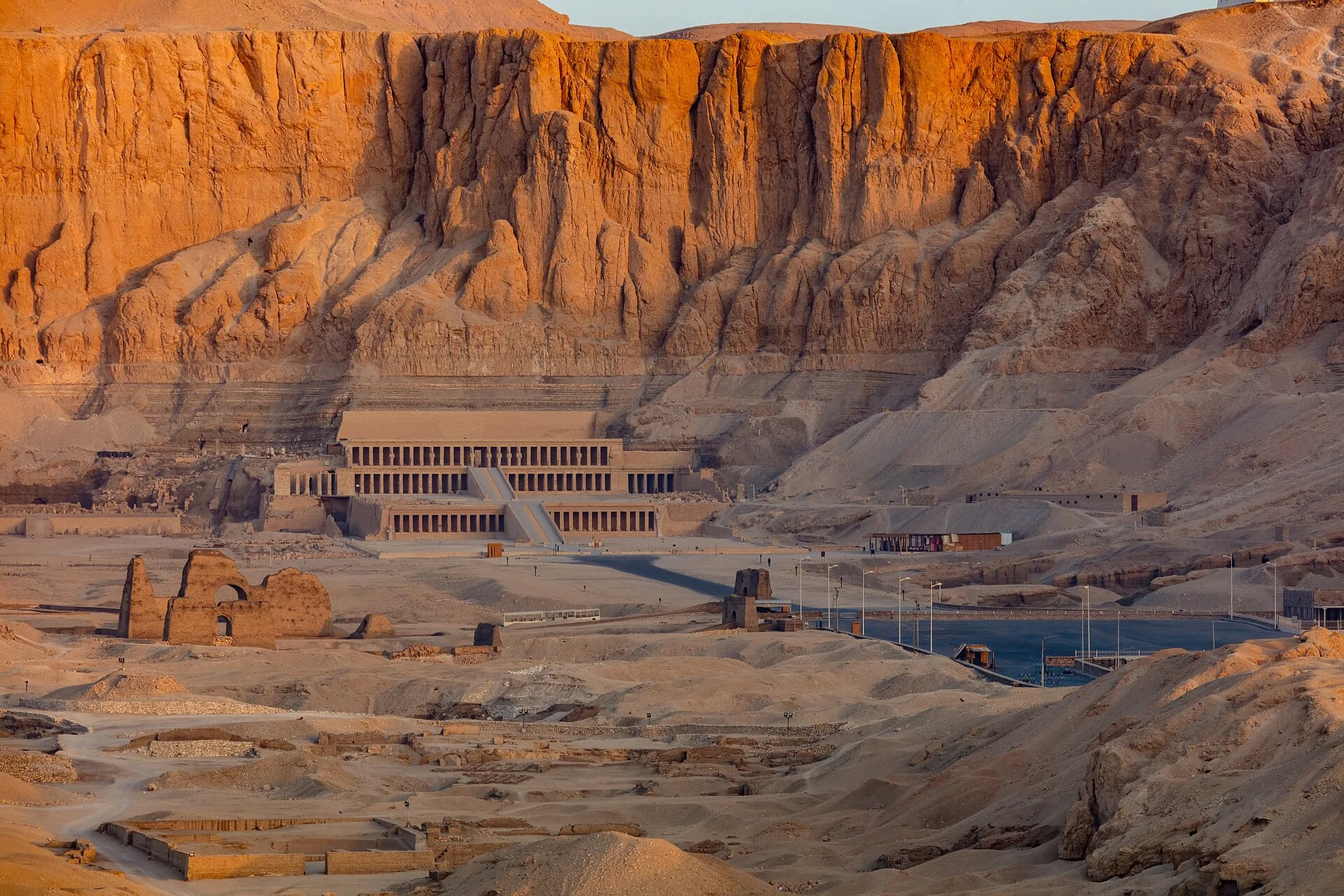
Temple of Hatshepsut: Hatshepsut's terraced temple against the cliffs, facing Karnak across the river.
Afternoon
Karnak Temple
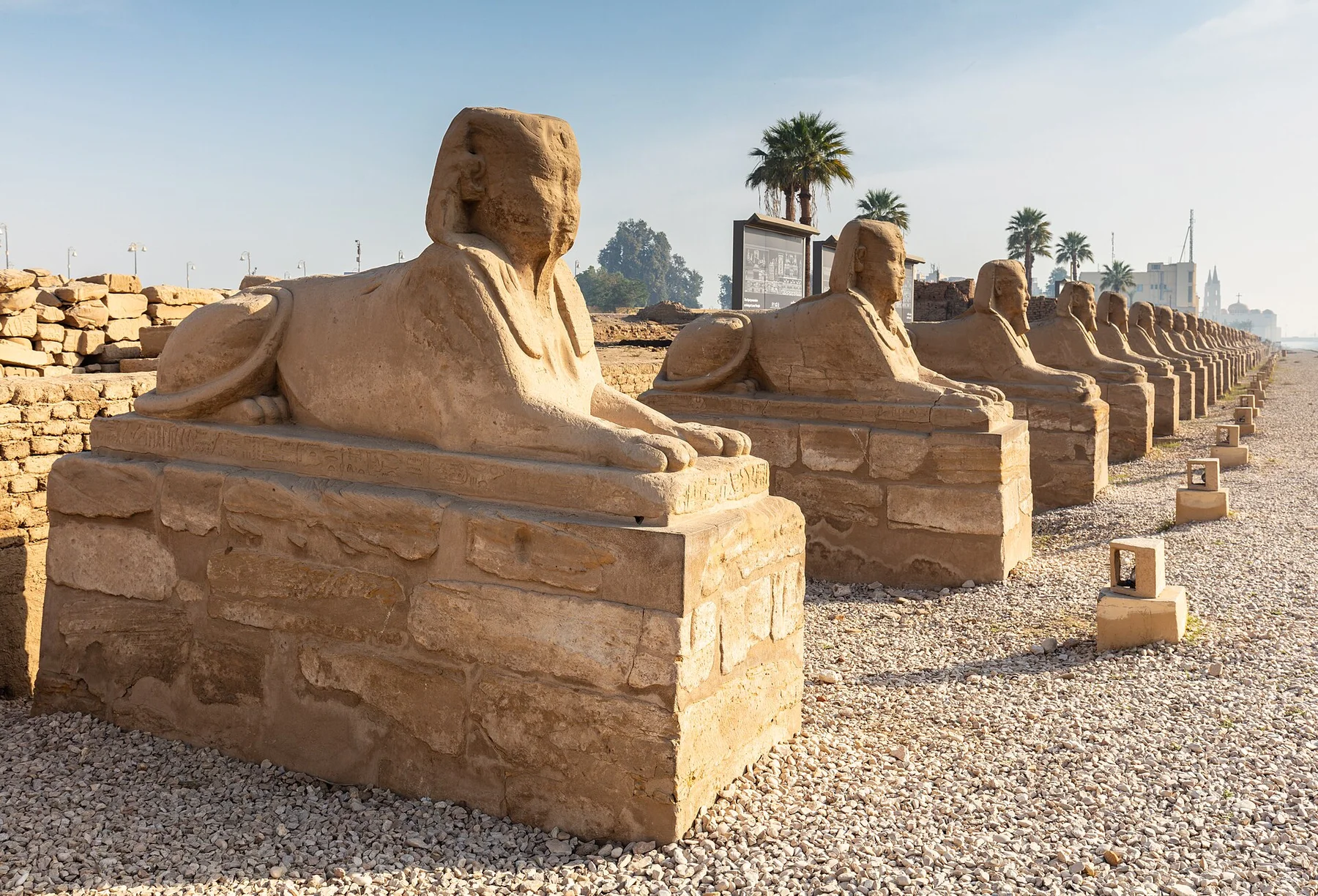
The Avenue of Sphinxes, the Hypostyle Hall, the sacred lake and obelisks. Across the river the story changes: this is where kings spoke to the gods. By the end of Ramesses III's reign, its god Amun held three-quarters of all the land Egypt's temples owned.
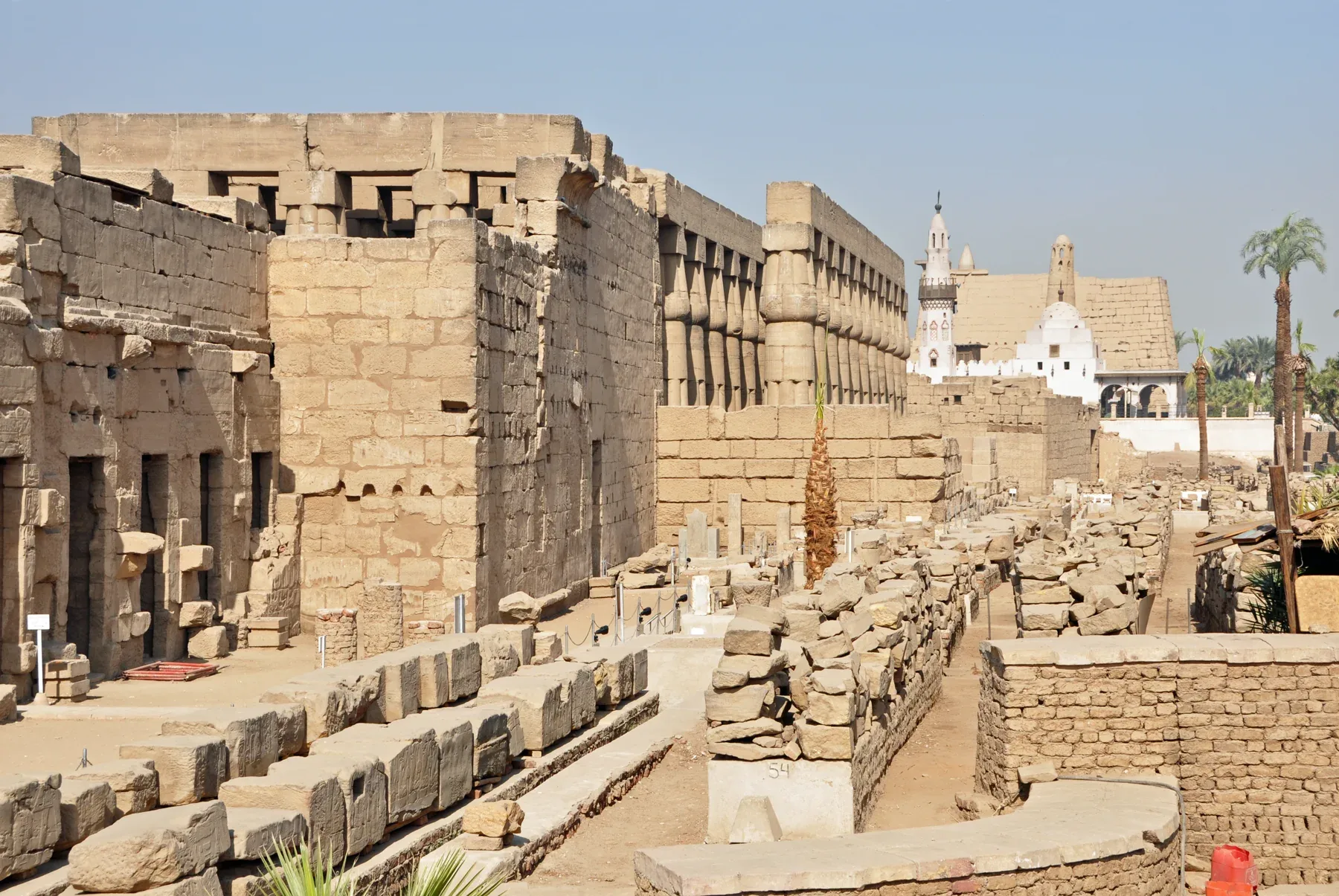
The temple of royal renewal, with its Roman and Islamic layers. It ends the day because it was the end of the god's own journey: every year, in the Opet Festival, Amun travelled here from Karnak to renew the power of the king.
Day and time labels describe the planned sequence, not confirmed departures. Your written quote confirms pickup, flights, sailing and return times for your date.
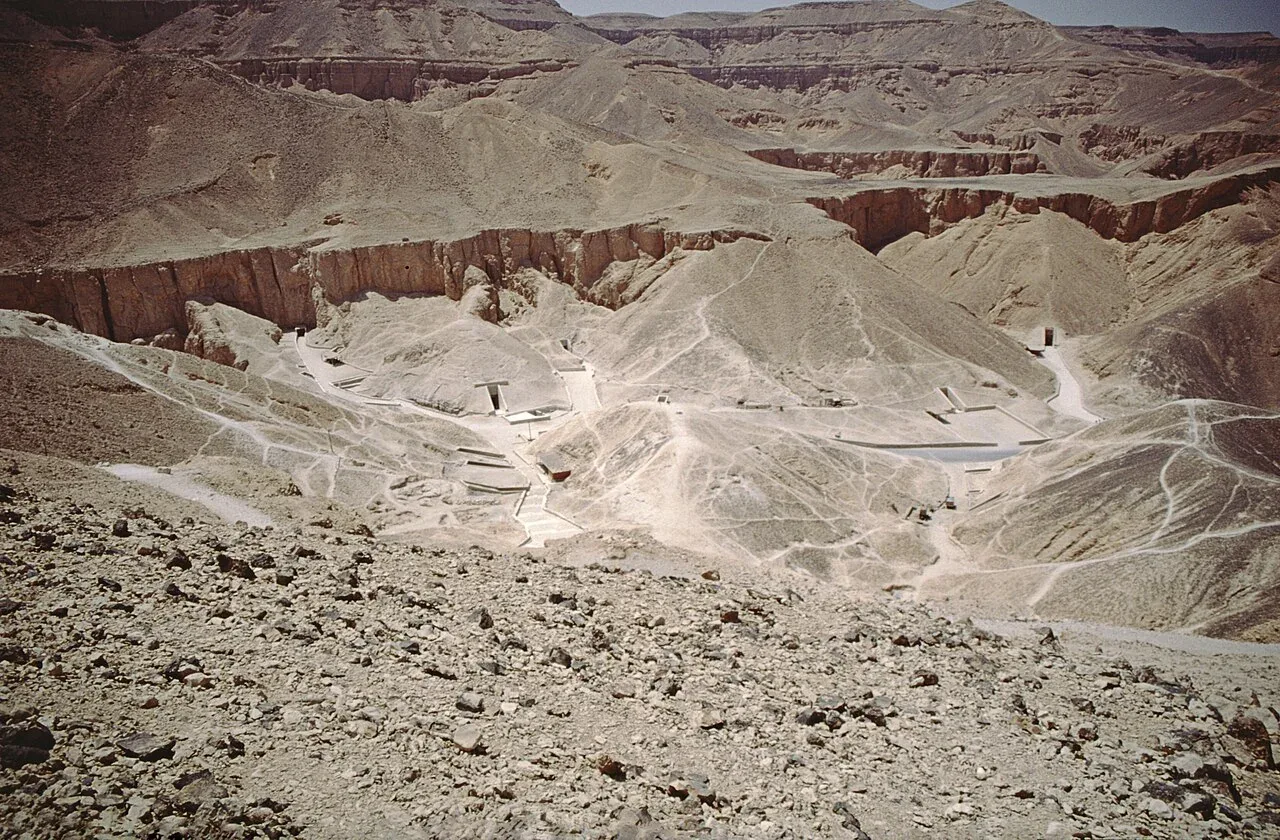
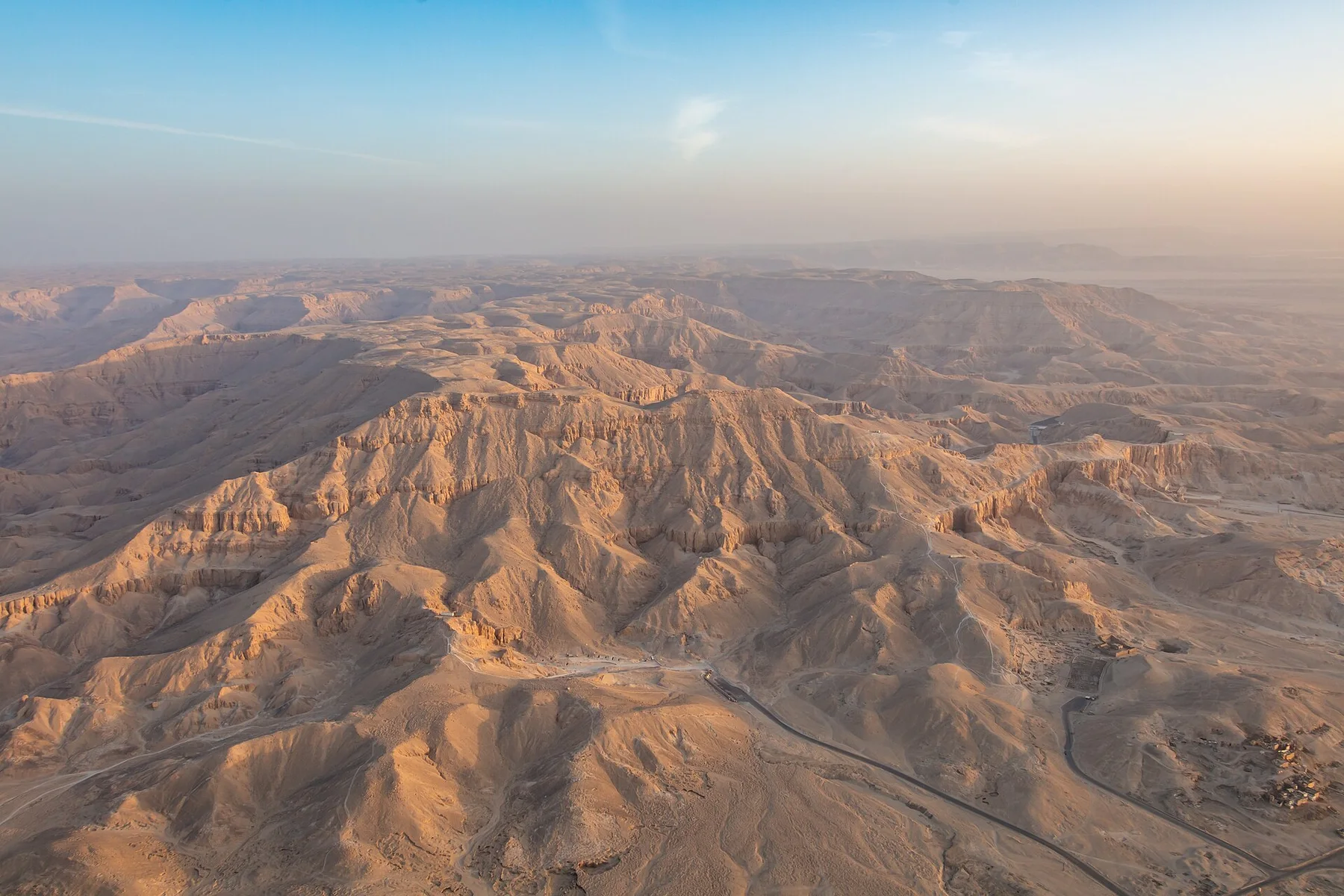
The road runs out in a bowl of pale limestone. No river. No town. Just a peak shaped like a pyramid, standing guard.
For nearly five hundred years, Egypt's kings were not raised above the ground. They were cut into it.
“Alone, no-one seeing, no-one hearing.”
Ineni, architect of Thutmose I, the first king known to be buried here
You step down into the hill. The corridor slopes away from the daylight, and the walls turn to night.
Twelve hours of darkness are painted here: the night the sun must cross to be born again at dawn.
But the secret does not keep. A decade after one king is sealed in, robbers break through, and some of them are the tomb-builders' own neighbours.
Around 1050 BC the kings' bodies are gathered up, and hidden all over again in secret caches.
Look for: In the burial halls, the twelve hours of the night through which the sun travels to be reborn.
Sources: Ministry of Tourism and Antiquities, site pages (read 2026), Valley of the Kings; Barry J. Kemp, Ancient Egypt: Anatomy of a Civilization (2018), p. 269; Nicholas Reeves and Richard H. Wilkinson, The Complete Valley of the Kings (1996), p. 91; Toby Wilkinson, The Rise and Fall of Ancient Egypt (2011), pp. 253, 267–268; Jan Assmann, Death and Salvation in Ancient Egypt (2005), pp. 183, 402.
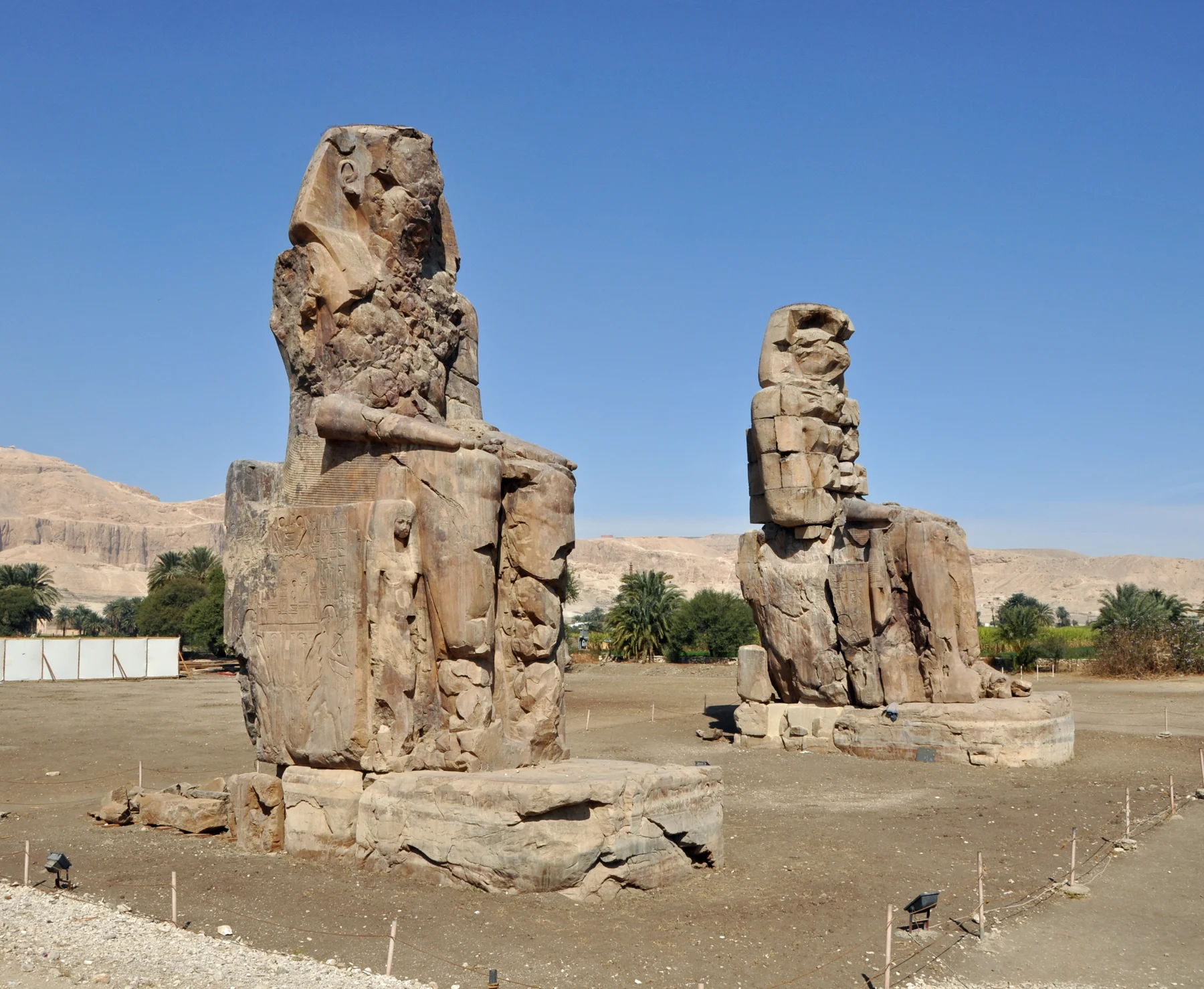
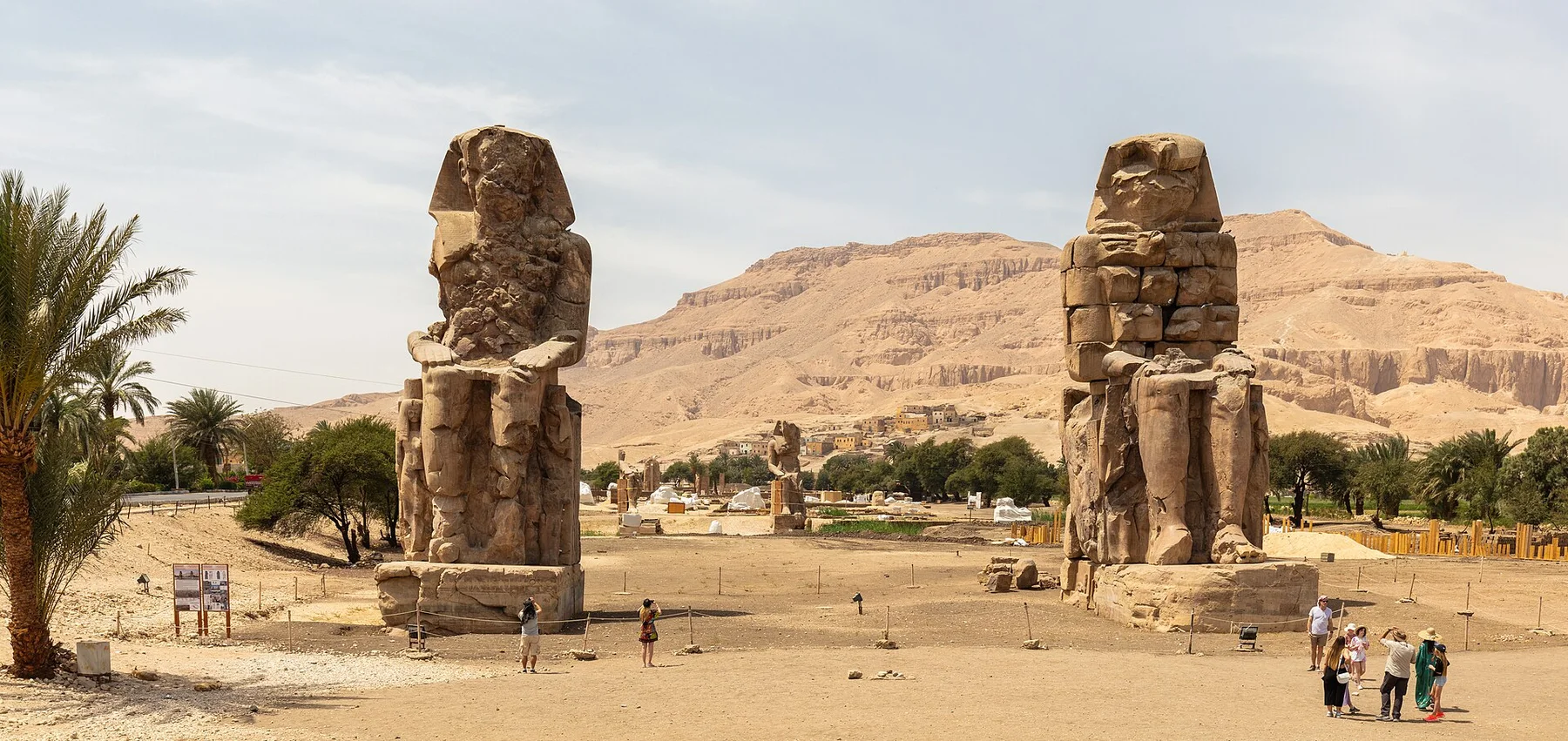
Two giants sit in the fields, each about eighteen metres high, with nothing behind them.
There was something. The largest royal temple known. Amenhotep the Third built it on the flood plain, so every year the river came in.
The colossi stood in the water, like the first land rising.
After an earthquake in 27 BC, the northern statue began to sound at sunrise. Greek and Roman visitors came to hear it.
Then an emperor's repairs silenced it for good.
Look for: On the northern colossus, graffiti left by Roman-era visitors, among them verses by Balbilla, a poet in Hadrian's court.
Sources: Richard H. Wilkinson, The Complete Temples of Ancient Egypt (2000), pp. 188–189; Toby Wilkinson, The Rise and Fall of Ancient Egypt (2011), p. 183; Ian Shaw (ed.), The Oxford History of Ancient Egypt (2003), p. 257; Ian Shaw and Elizabeth Bloxam (eds.), The Oxford Handbook of Egyptology (2020), p. 1122.
Turn the corner and the cliff fills your sight. At its foot, three terraces climb towards it, one above the other.
The cliff is the point. Across the river stands Karnak, and once a year the god Amun crossed over to rest here.
The king who built it was a woman. Hatshepsut ruled first for a boy, Thutmose the Third, then as king in her own right.
She had herself shown as a man. Decades after her death, her names and faces were cut away.
Probably not out of hatred, scholars now argue, but to secure the next king's claim.
“a garden for my father Amun”
Hatshepsut, of the courts she planted here, as rendered by Richard H. Wilkinson
Look for: On the middle terrace, the voyage to Punt: ships on the Red Sea, and trees brought home for the god's garden.
Sources: Richard H. Wilkinson, The Complete Temples of Ancient Egypt (2000), pp. 175–178; Barry J. Kemp, Ancient Egypt: Anatomy of a Civilization (2018), pp. 262, 269; Ian Shaw (ed.), The Oxford History of Ancient Egypt (2003), pp. 228–241; Ian Shaw and Elizabeth Bloxam (eds.), The Oxford Handbook of Egyptology (2020), p. 660.
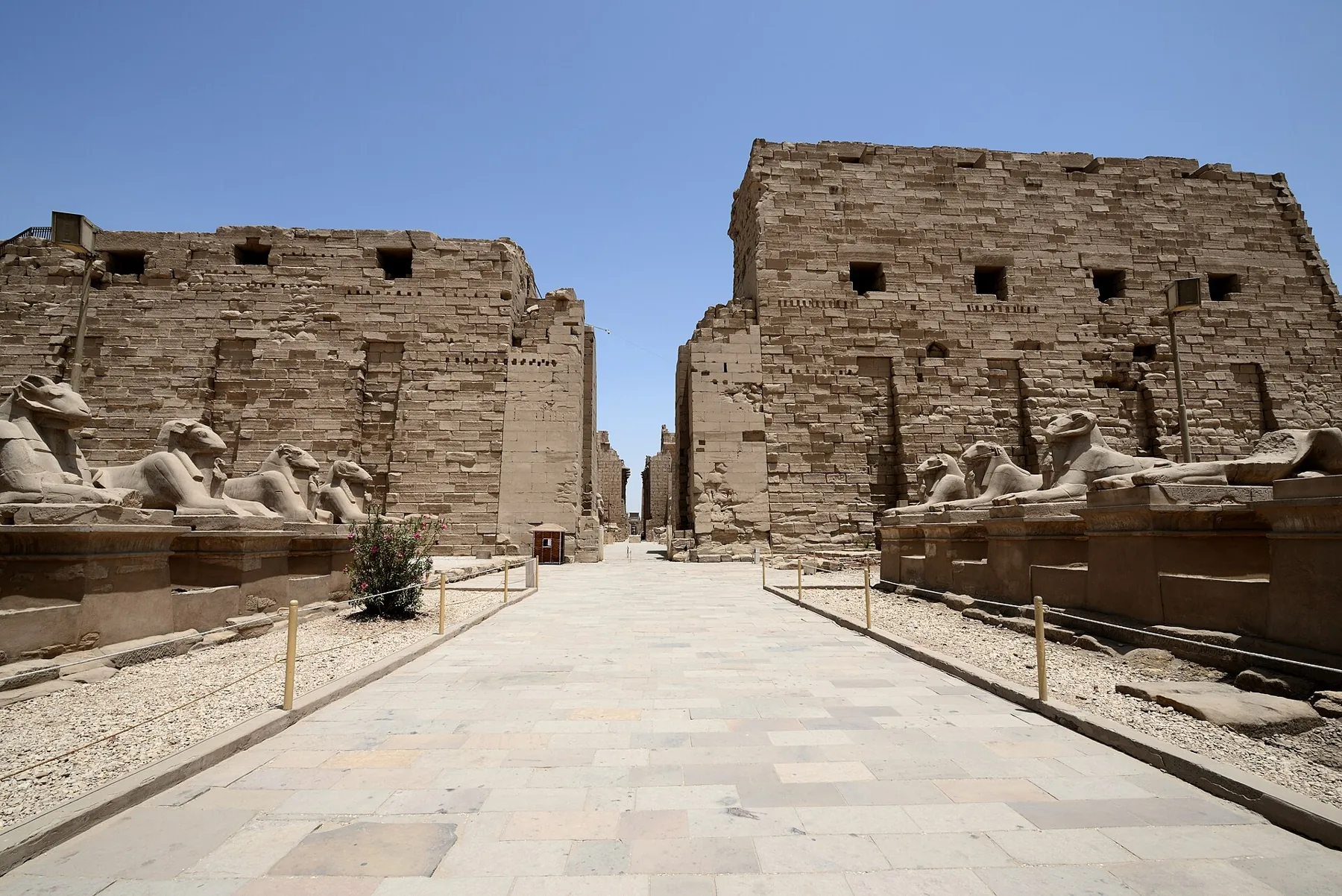
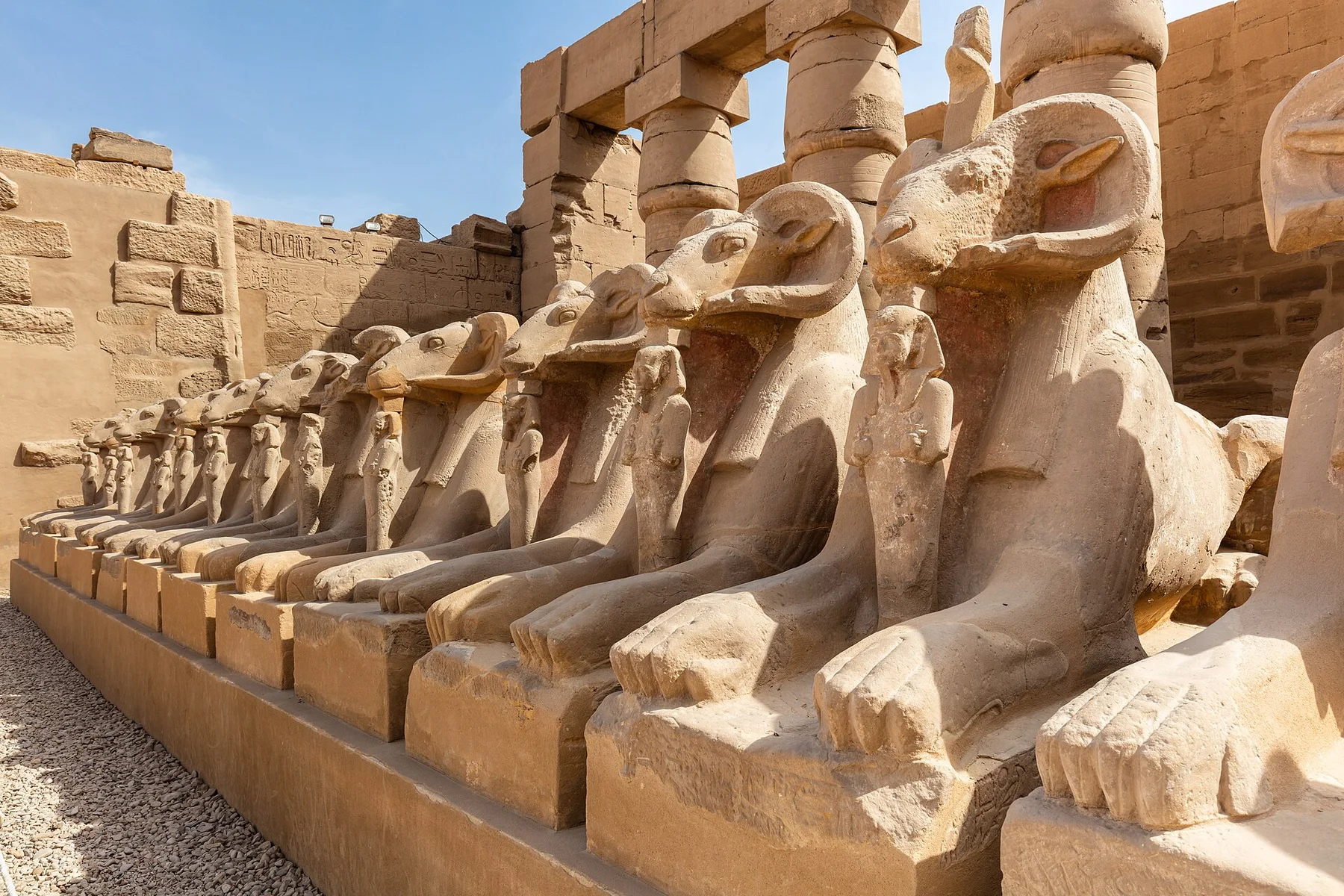
You walk between two rows of rams, towards a gate its builders never finished. Their mud-brick ramps are still inside.
Karnak grew for more than fifteen hundred years. By Ramesses the Third, the god who lived here held about a quarter of Egypt's farmland.
When the painter David Roberts sketched it in 1838, the columns still showed their paint above the fallen stone.
Then the hall. One hundred and thirty-four columns. The central twelve rise twenty-one metres over your head, lit through stone grilles high above.
“Now my heart turns to and fro, in thinking what will the people say”
Hatshepsut, on the obelisks she raised here; one still stands
Some three and a half thousand years later, here you are, saying it.
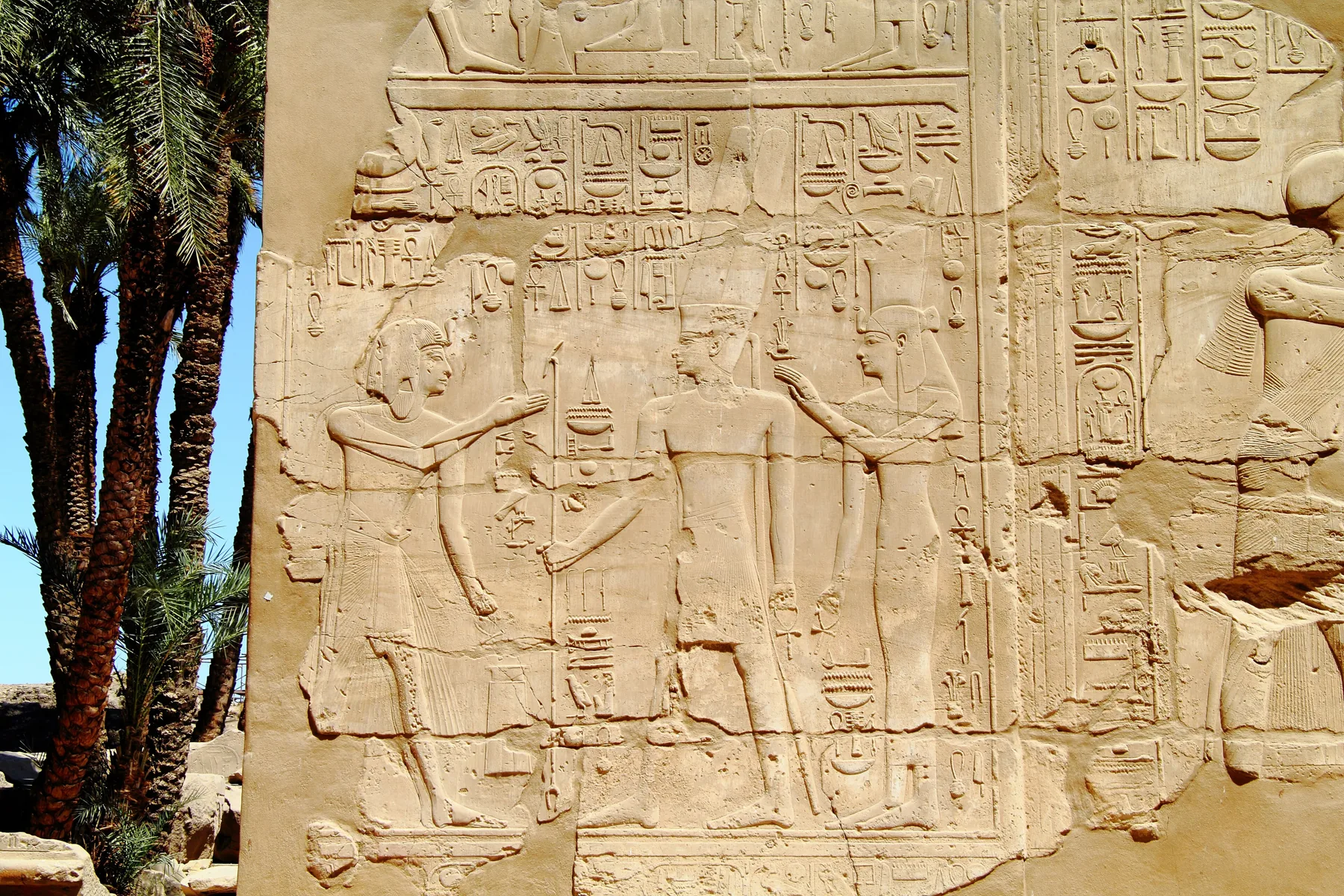
Look for: In the hall, find where Seti the First's raised carving gives way to Ramesses the Second's deeper cuts: two kings, one wall.
Sources: Elaine A. Sullivan, “Karnak: Development of the Temple of Amun-Ra”, UCLA Encyclopedia of Egyptology (2010), pp. 1–21; Ian Shaw (ed.), The Oxford History of Ancient Egypt (2003), p. 298; Ministry of Tourism and Antiquities, site pages (read 2026), Karnak; Miriam Lichtheim, Ancient Egyptian Literature (2019 edition), vol. II, Hatshepsut's obelisk inscription; Wikimedia Commons file records for the photographs shown (read 4 October 2026), David Roberts, Karnac, sketch dated 1838.
This avenue of sphinxes runs some 2,700 metres, all the way back to Karnak. Once a year, the gods came along it in procession.
At the Opet festival Amun came here to be renewed, and the king's own divine power was renewed with him. By Ramesses the Third, it lasted twenty-four days.
Look at the gate. One obelisk. Its twin has stood in the Place de la Concorde in Paris ever since France was given it, in return for a clock.
The temple never closed. Alexander the Great appears here as pharaoh. Roman soldiers turned a hall into a chapel of their emperors.
And inside the first court, a 13th-century mosque still holds prayers.
Look for: On the colonnade walls the Opet procession is carved in full: setting out on the west wall, coming home on the east.
Sources: Richard H. Wilkinson, The Complete Temples of Ancient Egypt (2000), pp. 166–170; John C. Darnell, “Opet Festival”, UCLA Encyclopedia of Egyptology (2010), p. 1; Ministry of Tourism and Antiquities, site pages (read 2026), Muhammad Ali Mosque.
Times of day set the scene; your written quote confirms the timetable. Facts come from the sources named under each chapter, and where we give an opinion, it reads as ours.
Why go
Who loves this tour
This Luxor East and West Bank private tour covers ancient Thebes on both sides of the Nile in one day, in the order that works: the necropolis in the cool morning, the great temples in the afternoon.
Your Egyptologist collects you from your hotel or Nile cruise and crosses to the West Bank. In the Valley of the Kings you enter three royal tombs, their painted walls meant to guide the king through the night to rebirth. Then come the Colossi of Memnon, the twin statues of Amenhotep III, and the terraced temple of Hatshepsut at Deir el-Bahari.
After crossing back to the East Bank, you walk the Karnak temple complex, the largest religious site built in ancient Egypt, where the columns of the Hypostyle Hall dwarf everyone beneath them. The day ends at Luxor Temple in the late-afternoon light, a temple that has layers of Pharaonic, Roman and Islamic history built one upon another.
The vehicle and guide are private, so the day moves at your pace. It is a full day on foot in the sun; with more time, split it across two mornings.
Our tip
Both banks of ancient Thebes in one day: royal tombs in the cool morning, Karnak and Luxor Temple in the afternoon light. With two mornings, linger longer.
Also consider: With two days in Luxor, take the West Bank morning tour one day and explore Karnak at leisure the next.
The highlights
Three royal tombs in the Valley of the Kings
The Colossi of Memnon and Hatshepsut's temple
The Hypostyle Hall at Karnak
Luxor Temple in the late afternoon
The details
What is included
Included
Hotel or cruise pickup and drop-off in Luxor
Private air-conditioned vehicle
Professional Egyptologist guide
Entry fees to all listed monuments
Taxes and service charges
Not included
Tips
Travel insurance
Food, drinks and souvenirs
Places you visit
Valley of the Kings
Colossi of Memnon
Temple of Hatshepsut
Karnak Temple
Luxor Temple
Before you go
Good to know
Meeting point
Your Luxor hotel or Nile cruise
Best time to go
October to April; in summer, split the two banks over two mornings
Entrance tickets
Included: all monuments listed
Optional extras
Tomb of Tutankhamun and other special tombs
Cancellation
Free cancellation up to 24 hours before the tour for a full refund.
Your price
Set in your written quote for your party, dates and pickup, with the payment and cancellation terms.
Questions
Before you ask
Is one day enough for Luxor?
It covers the essential sites. It is a long day on foot, and two mornings are more comfortable, especially from May to September.
Is Tutankhamun's tomb included?
No. The standard Valley of the Kings ticket covers three tombs; Tutankhamun's tomb needs an extra ticket.
How much does it cost for my group?
Prices are per person and fall as the group grows: 1 person $150; 2–4 people $100 each; 5–7 people $85 each; 8–10 people $75 each. All prices are in US dollars.
What should I wear?
Light, modest clothing and comfortable walking shoes. Shoulders and knees covered is the safe choice at every site; bring a hat, sunscreen and water.
Local tips matched to this route
Complete this day
We place these around the tour’s real timing. Anything that cannot fit cleanly stays an untimed request until we confirm it.
Karnak and the West Bank
A photoshoot in Luxor's temples
A photographer who knows Karnak's columns and quieter corners, and the hours when the light comes through them.
Late afternoon · About 2 hours. At opening time or in the last hours before closing.
We confirm the photographer and their portfolio, temple permissions, the edited set and the delivery date.
North of Luxor in a day: Seti I's temple in the holy city of Osiris, then the house of Hathor at Dendera.
Length: Full day · about 8 hours
Style: Private
Moderate pace
from USD 80 per person
Deluxe Trips Egypt
Ask for this tour, for your dates.
Send your dates and party size here. We reply with a written quote: the price for your party, what is included and the terms. Nothing is booked until you accept it.
 Karnak and the West Bank