What it is
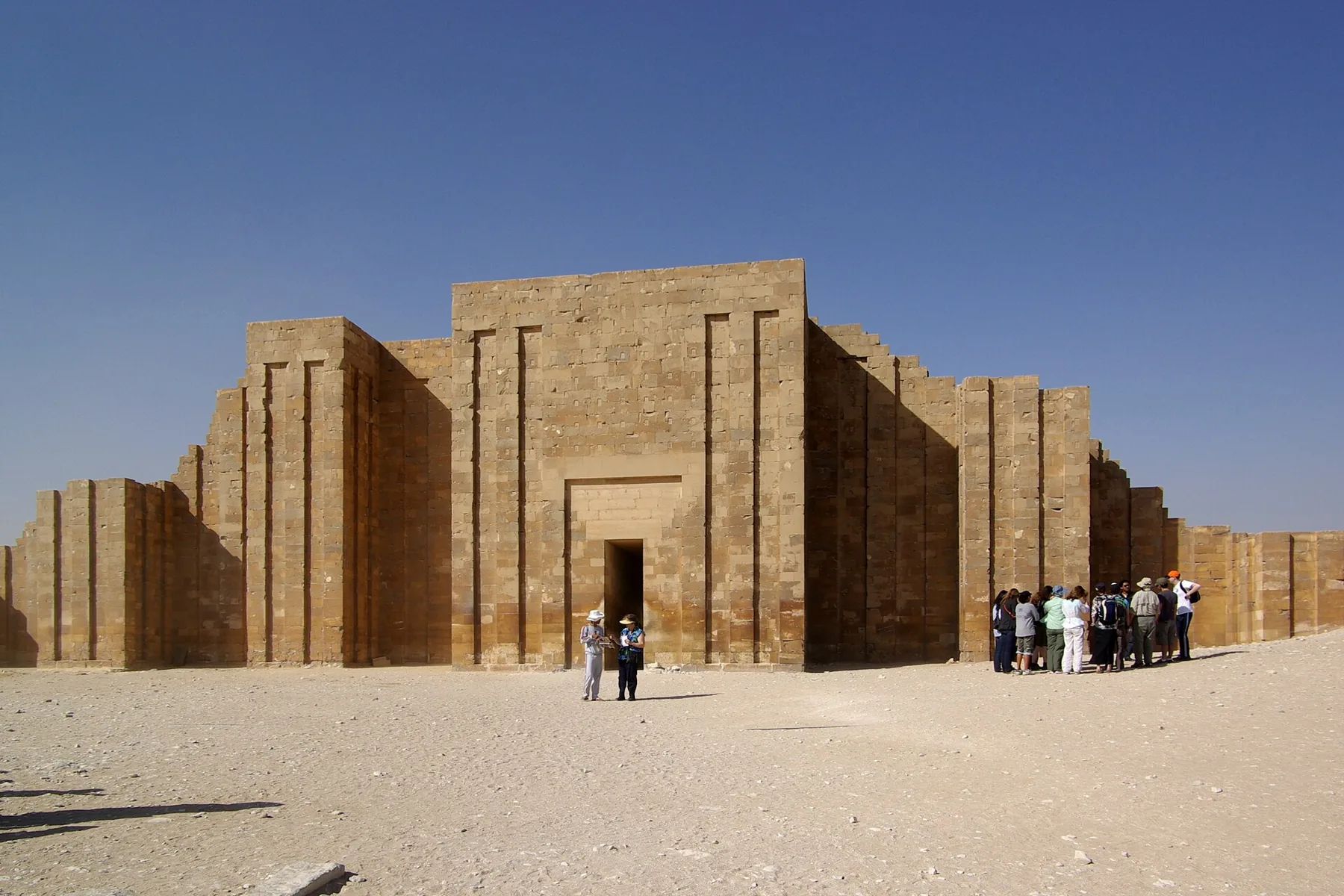
The great cemetery of Memphis, in use for almost the whole of ancient Egyptian history. The Ministry of Tourism and Antiquities calls it an open-air museum with all of ancient Egyptian history on display: kings and officials of the first two dynasties, the Step Pyramid of Djoser, the pyramids of the Fifth and Sixth Dynasties, tombs of the Middle and New Kingdoms, the underground catacombs of the Apis bulls, and a Coptic monastery used until the eighth century AD. Its name probably comes from Sokar, the god of the necropolis.
If Giza is a single statement, Saqqara is a conversation that lasts nearly four thousand years. The question to carry through it is how each age answered the one before.
History
It began with officials. Toby Wilkinson describes the First Dynasty mastabas at North Saqqara, huge mudbrick tombs built along the edge of the escarpment, facing the sunrise and overlooking the capital below, their façades modelled on the royal palace at Memphis. In one of them, the tomb of Hemaka, chancellor under King Den, a small wooden box held two rolls of papyrus: the earliest yet discovered.
Then came the kings. Djoser's Step Pyramid, the first monumental building in stone, is the subject of its own page. His successor Sekhemkhet began an even larger step pyramid and never finished it. When Zakaria Goneim excavated it between 1952 and 1956, he found jewellery in the passages, and an alabaster sarcophagus that proved to be empty. The later pyramid of Unas holds the oldest burial chamber decorated with the Pyramid Texts, and it had already fallen into ruin by the New Kingdom. Khaemwaset, son of Ramesses II and high priest at Memphis, restored it and carved an inscription on its south side to record the work, more than a thousand years after Unas: "thus causing the name of Unas to live again", in Mark Lehner's words.
The New Kingdom tombs include that of Horemheb, the general who became king. He was never buried in it: as king, he built a new tomb in the Valley of the Kings. By the Late Period Saqqara had become a city of sacred animals, with the Serapeum at its heart (see the Serapeum page).
Modern archaeology here began with Auguste Mariette, who in the 1850s dug huge trenches revealing tombs of every period in what Lehner calls the national cemetery of pharaonic Egypt; he never produced a proper map, and many were lost again under the sand.
What you actually see
A wide plateau of desert, with the Step Pyramid at its centre, the slumped pyramids of Teti and Unas, the decorated tombs of officials, and the descent to the Serapeum. The Ministry names the tombs of Mereruka and Mehu among those with their own tickets. In our judgement Saqqara rewards a whole morning: start at the Imhotep Museum, walk to the Step Pyramid, then choose one decorated tomb to see properly rather than several quickly.
Practical
The Ministry listing read on 19 September 2026 gives opening hours of 08:00 to 16:00 for the site, with separate tickets for the Serapeum, the tomb of Mereruka, the Step Pyramid interior, the Southern Tomb and the nobles' and New Kingdom tombs, and an inclusive ticket covering most of them. Recheck before visiting.
