What it is
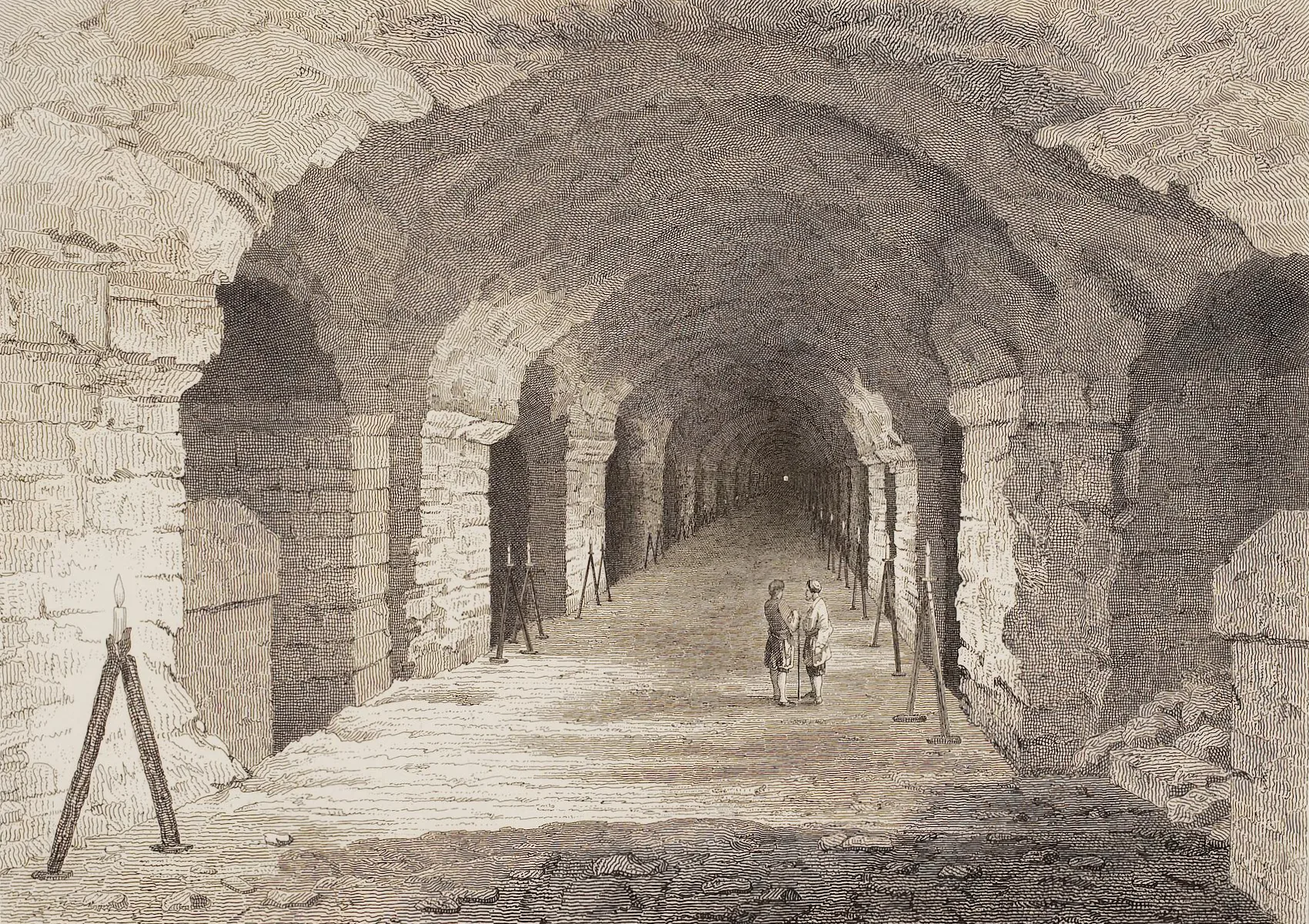
A cemetery for gods who were also cattle. Under the sand of Saqqara runs a catacomb of long corridors lined with vaults, and in them lie the huge stone coffins of the Apis bulls: animals chosen by their markings, worshipped in life at Memphis as a living image of the god Ptah, and mourned, when they died, as a king would be.
The question it answers is how far a civilisation will go for a belief. The answer here is a burial ritual kept up, one bull at a time, for more than a thousand years, and in its later centuries granite coffins of up to 70 tons, cut, dragged underground and set in rock chambers.
History
The Apis is among the oldest cults in Egypt. Aidan Dodson notes a "running of the Apis" ritual recorded as early as the First Dynasty. The bull was recognised by distinctive black and white markings, and when one died the priests searched the country for its successor. The Greek historian Diodorus describes the mourning that ended when the new calf was found, and the gilded state barge that carried it to the sanctuary at Memphis.
The earliest elaborate burials date from the late Eighteenth Dynasty, each bull with its own chapel above ground and chamber below. Amenhotep III's son Thutmose, high priest of Ptah, is associated with the first known Apis burial. Under Ramesses II, his son Khaemwaset, also high priest of Ptah, created the first shared galleries; whether Khaemwaset himself was buried here, as many believe, is less certain, according to Jacobus van Dijk. Under Amasis in the sixth century BC, monolithic stone sarcophagi were introduced and new temples built in the precinct. By then Saqqara had become a city of sacred animals. Nearby lay the burials of the cows that had borne the Apis, and, some 700 m to the north-east, catacombs holding literally millions of mummified ibises, baboons, falcons and dogs.
The Ministry notes that inscriptions here record many kings who made offerings. Private donors came too: a stela set up by a Libyan-descended army commander, Pasenhor, lists his ancestors back fifteen generations. The Ptolemies placed their own statues in the Serapeum, and Ptolemy I founded a second Serapeum at Alexandria for Serapis, a Greek-style form of Osiris-Apis. Pilgrims came from across the Greek world; Egyptians, Toby Wilkinson notes, were distinctly unimpressed by the new god. Burials in the Serapeum ended under Augustus.
In 1850 the Louvre sent a young Frenchman, Auguste Mariette, to Egypt to buy Coptic manuscripts. He began digging at Saqqara instead, found the Serapeum, and was later put in charge of Egypt's new national Antiquities Service.
What you actually see
A descent from the desert into long, dim corridors cut in the rock, with side vaults to left and right. In the vaults stand the sarcophagi, each a single block. Stand beside one and imagine moving that weight into a tunnel. The Ministry notes an avenue of sphinxes leading to the site and two long main corridors.
Practical
The Ministry listing read on 19 September 2026 gives opening hours of 08:00 to 17:00. The Serapeum has its own ticket, separate from the Saqqara area ticket. Recheck before visiting.