Domestic flights; air-conditioned vehicle in Luxor
Guides speak
English, Other languages on request
How the day divides
On the road
A domestic flight each way, plus airport transfers
At the sites
Most of the day in Luxor, between flights
6 stops
How the day runs
From the edge of Sinai to Thebes, the city of Amun: the god's temple on the living bank and, across the river, the kings who chose to be hidden rather than seen.
Early
Pickup in Sharm and the flight to Luxor
From your hotel at about 04:30 to Sharm el-Sheikh airport; your Egyptologist meets you in Luxor.
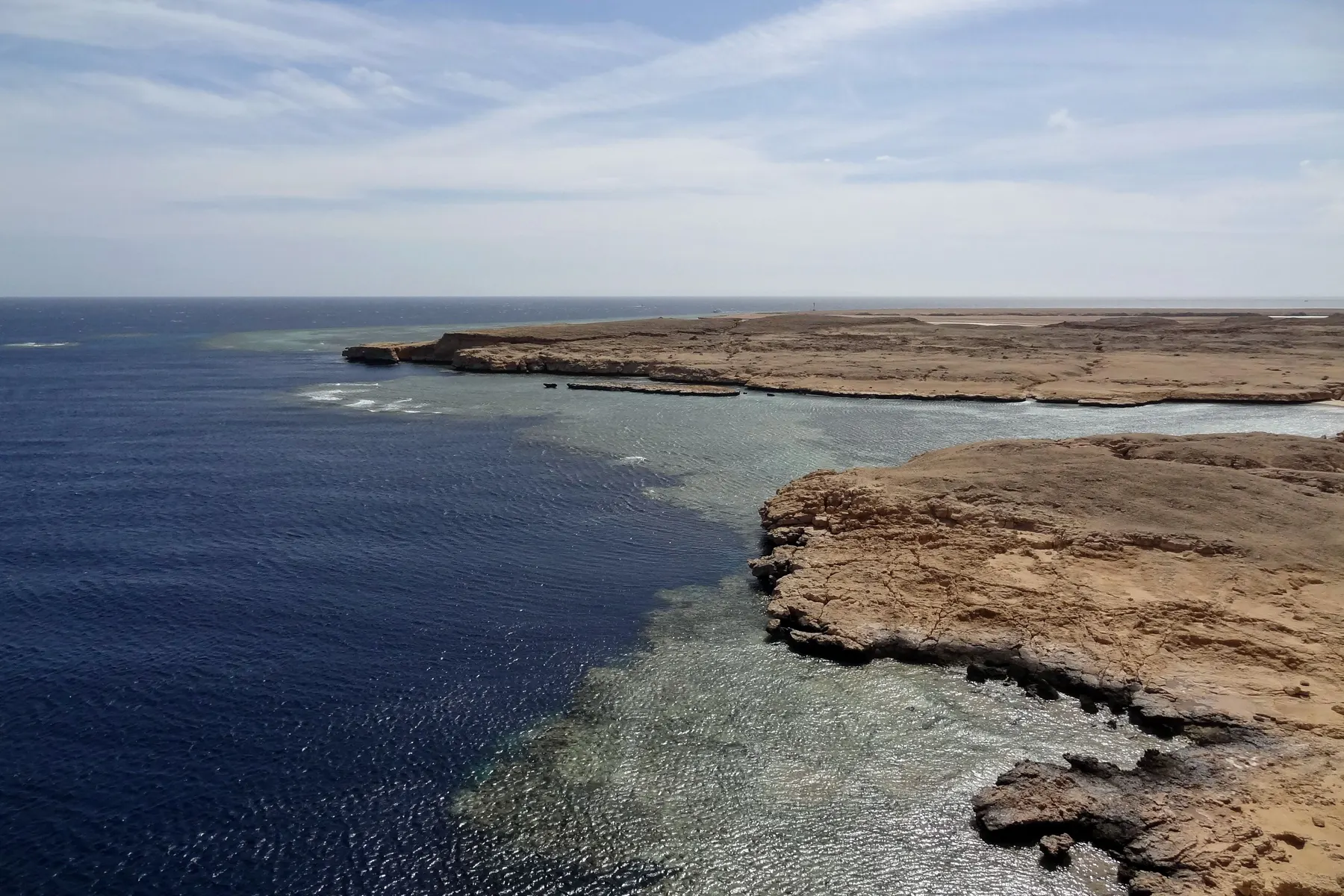
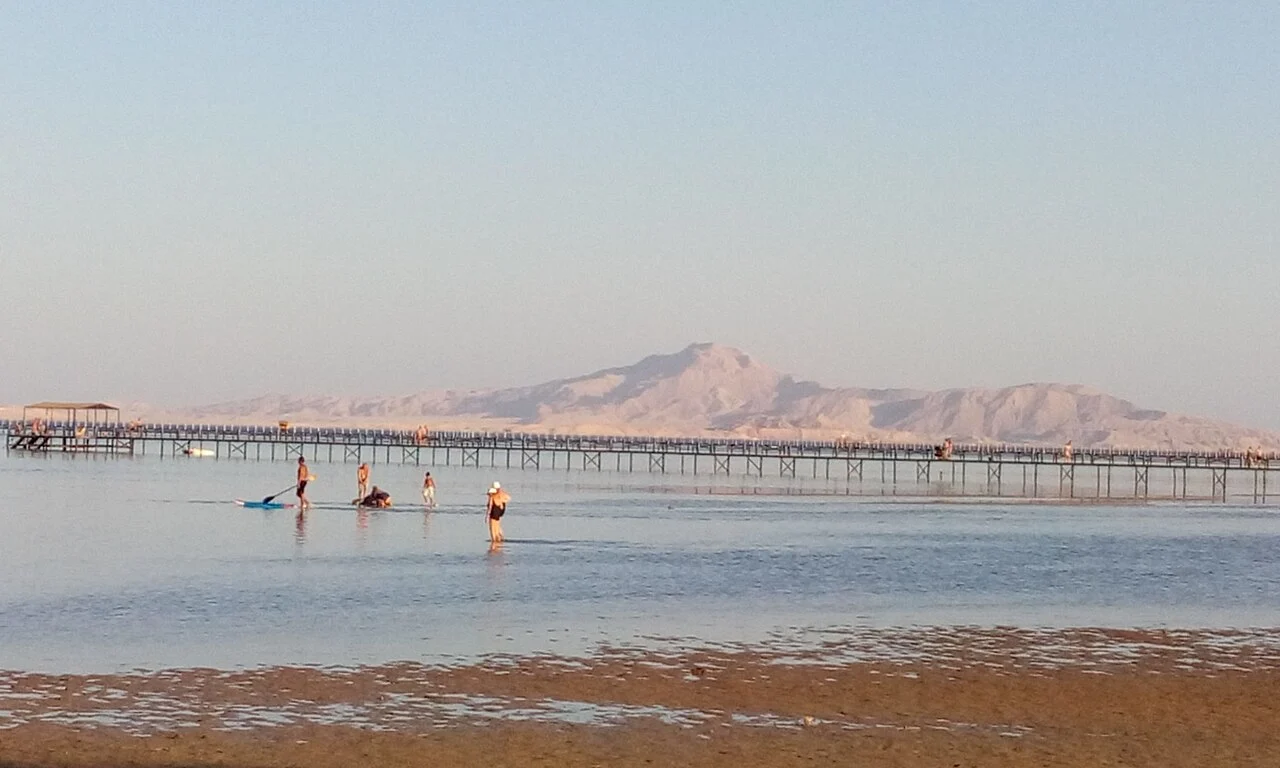
Sinai coast reference; travel and any free-day activities are confirmed separately.
Day and time labels describe the planned sequence, not confirmed departures. Your written quote confirms pickup, flights, sailing and return times for your date.
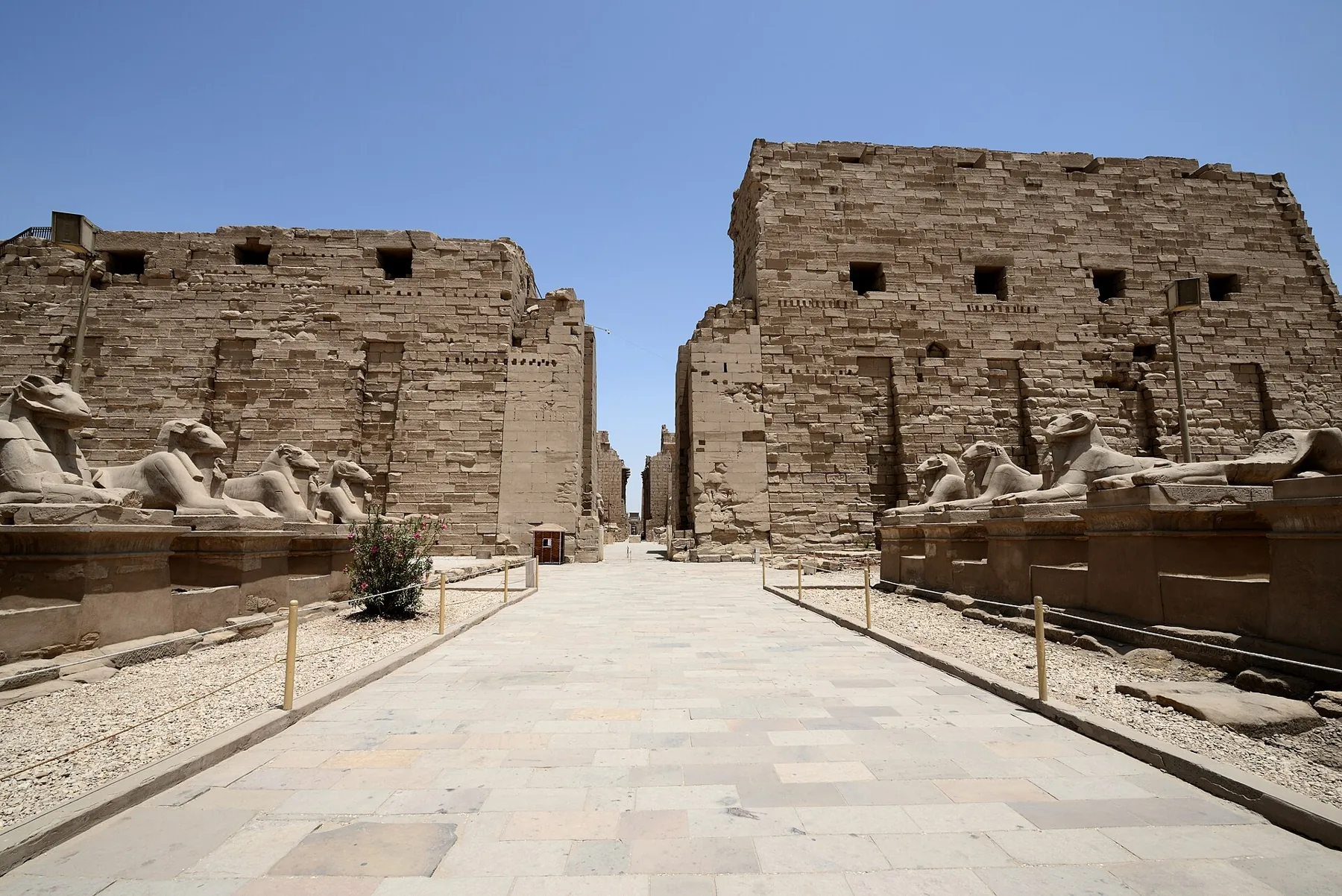
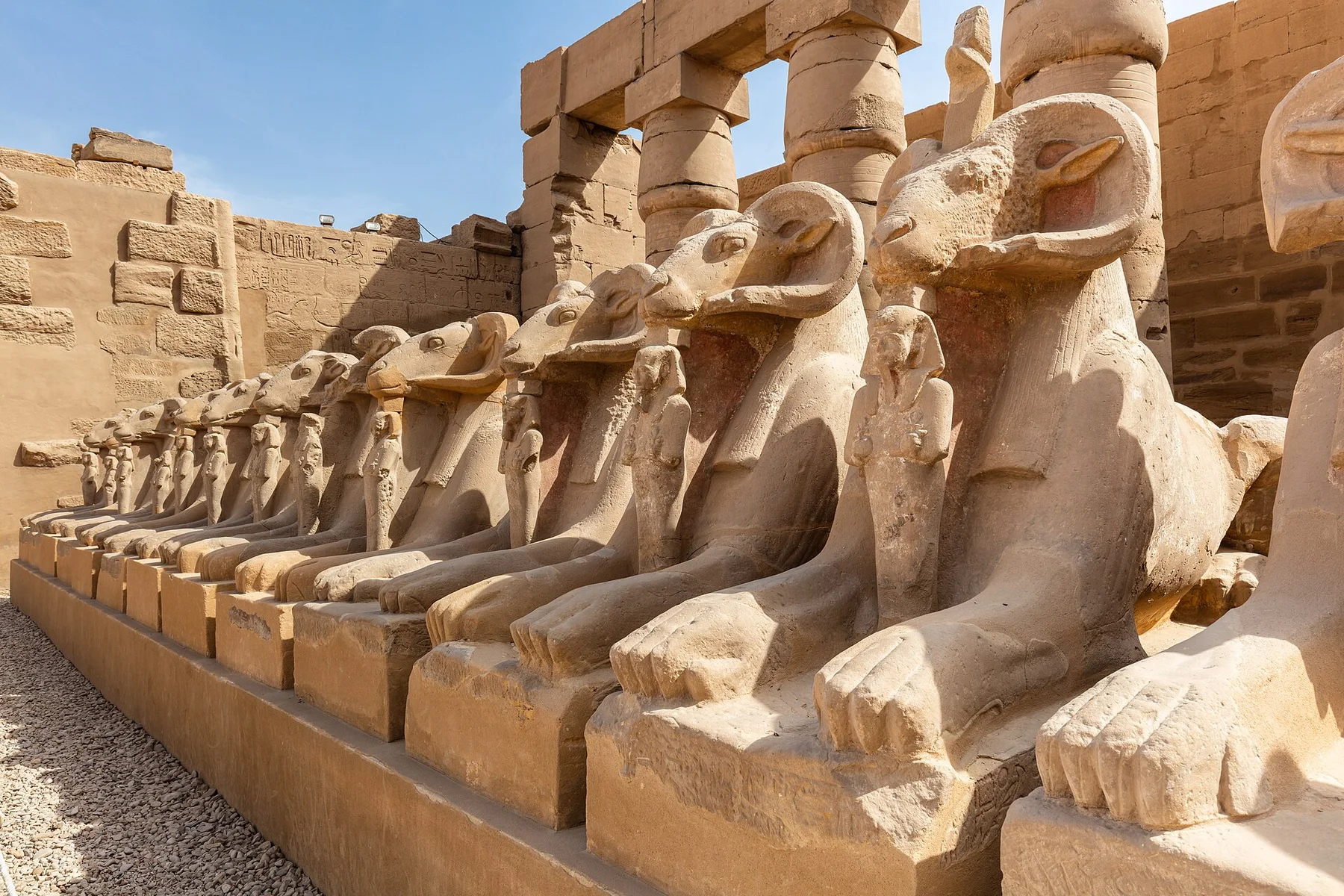
You walk between two rows of rams, towards a gate its builders never finished. Their mud-brick ramps are still inside.
Karnak grew for more than fifteen hundred years. By Ramesses the Third, the god who lived here held about a quarter of Egypt's farmland.
When the painter David Roberts sketched it in 1838, the columns still showed their paint above the fallen stone.
Then the hall. One hundred and thirty-four columns. The central twelve rise twenty-one metres over your head, lit through stone grilles high above.
“Now my heart turns to and fro, in thinking what will the people say”
Hatshepsut, on the obelisks she raised here; one still stands
Some three and a half thousand years later, here you are, saying it.
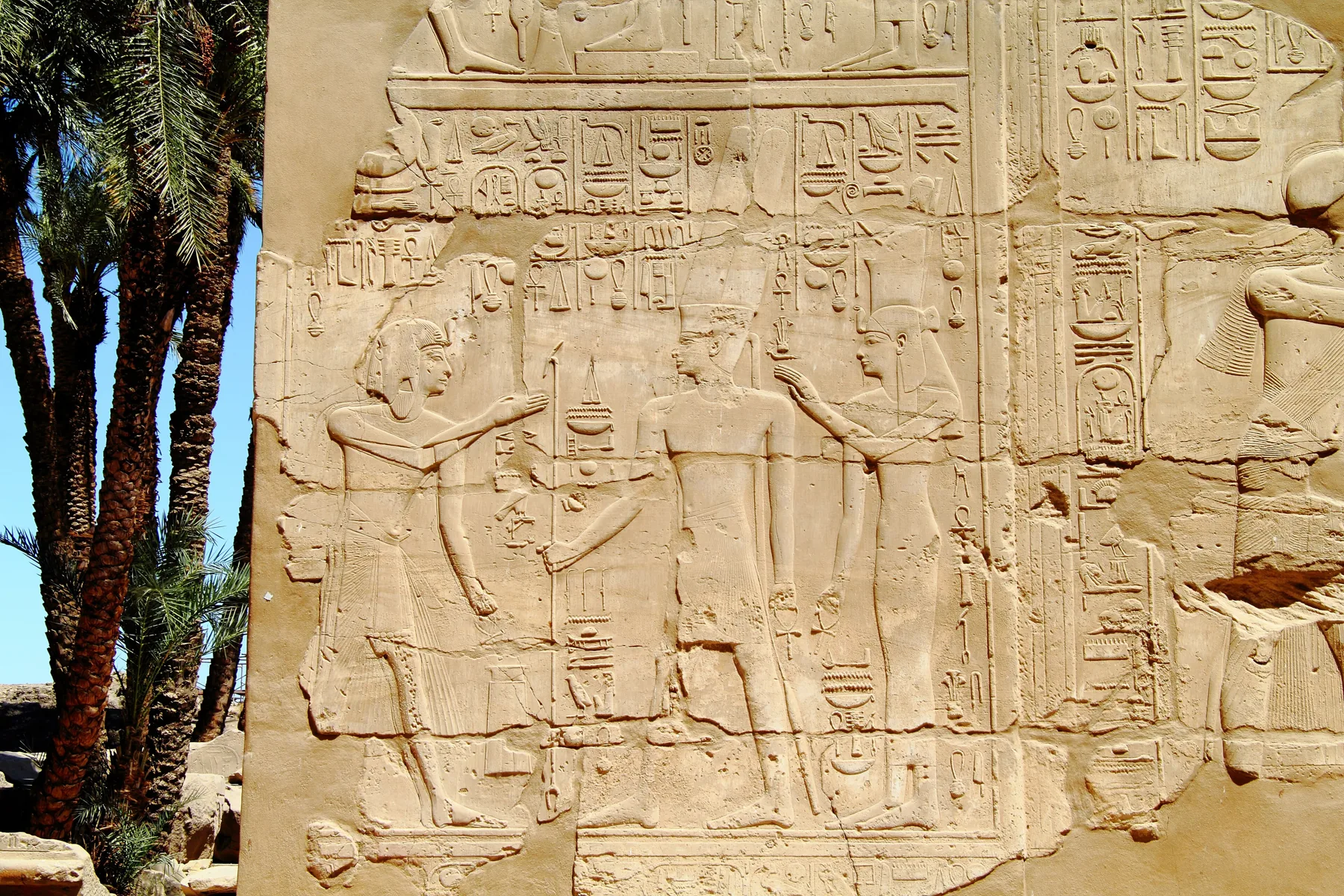
Look for: In the hall, find where Seti the First's raised carving gives way to Ramesses the Second's deeper cuts: two kings, one wall.
Sources: Elaine A. Sullivan, “Karnak: Development of the Temple of Amun-Ra”, UCLA Encyclopedia of Egyptology (2010), pp. 1–21; Ian Shaw (ed.), The Oxford History of Ancient Egypt (2003), p. 298; Ministry of Tourism and Antiquities, site pages (read 2026), Karnak; Miriam Lichtheim, Ancient Egyptian Literature (2019 edition), vol. II, Hatshepsut's obelisk inscription; Wikimedia Commons file records for the photographs shown (read 4 October 2026), David Roberts, Karnac, sketch dated 1838.
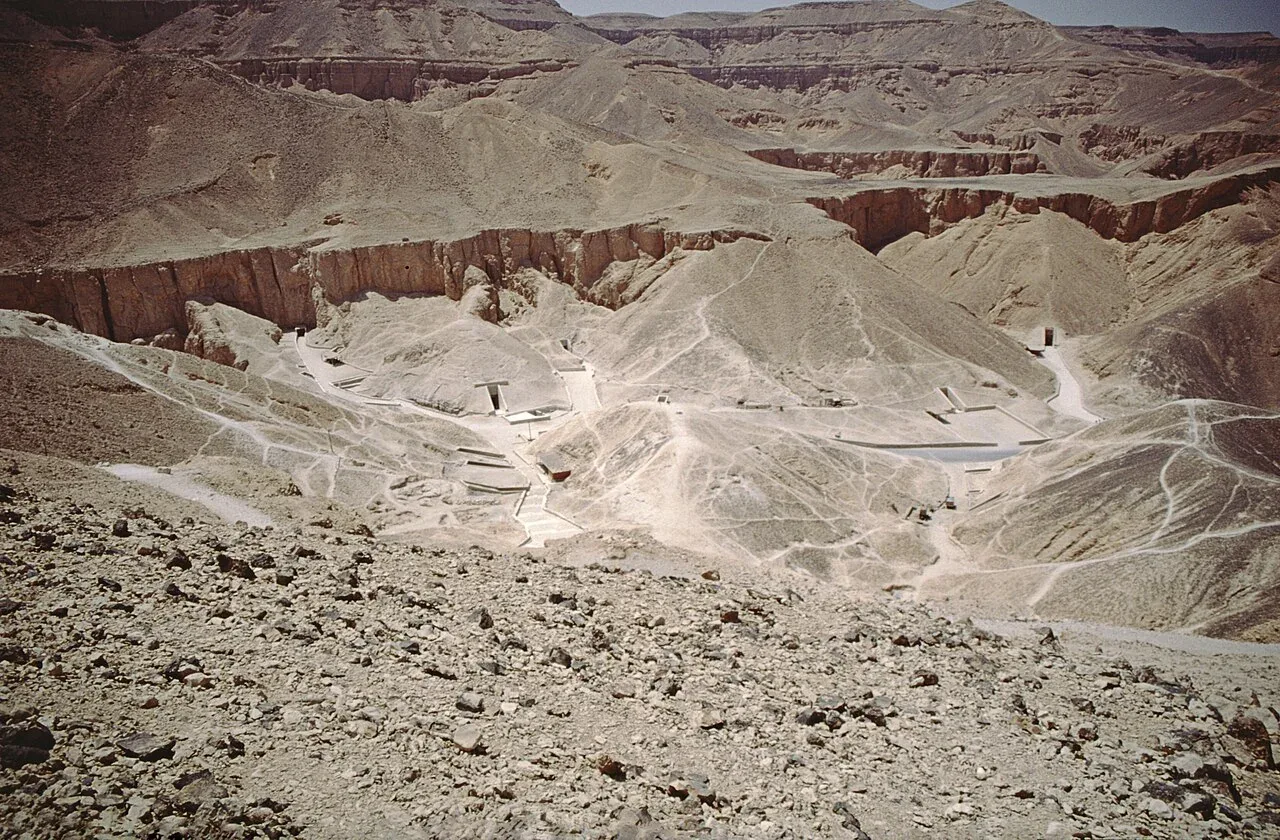
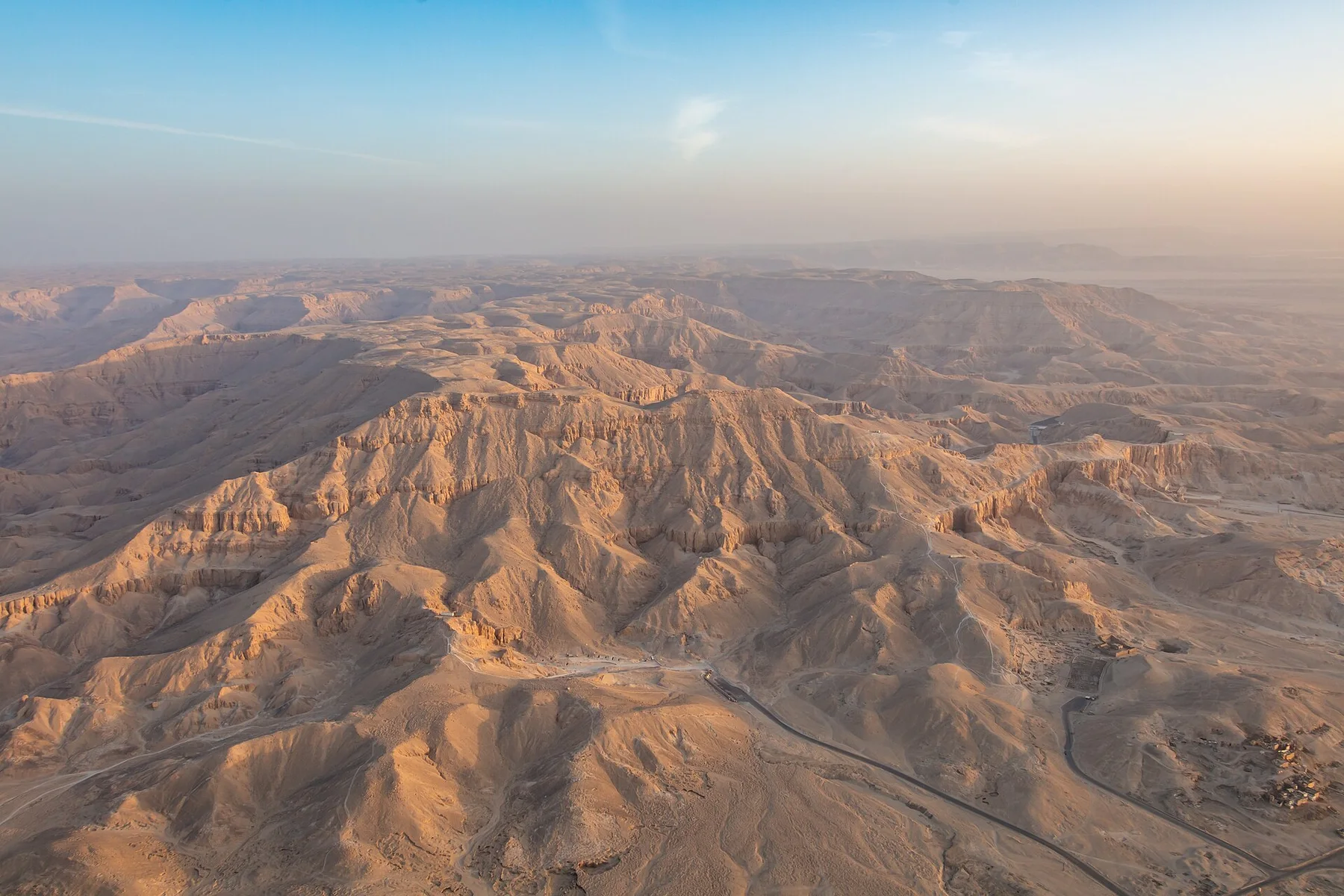
The road runs out in a bowl of pale limestone. No river. No town. Just a peak shaped like a pyramid, standing guard.
For nearly five hundred years, Egypt's kings were not raised above the ground. They were cut into it.
“Alone, no-one seeing, no-one hearing.”
Ineni, architect of Thutmose I, the first king known to be buried here
You step down into the hill. The corridor slopes away from the daylight, and the walls turn to night.
Twelve hours of darkness are painted here: the night the sun must cross to be born again at dawn.
But the secret does not keep. A decade after one king is sealed in, robbers break through, and some of them are the tomb-builders' own neighbours.
Around 1050 BC the kings' bodies are gathered up, and hidden all over again in secret caches.
Look for: In the burial halls, the twelve hours of the night through which the sun travels to be reborn.
Sources: Ministry of Tourism and Antiquities, site pages (read 2026), Valley of the Kings; Barry J. Kemp, Ancient Egypt: Anatomy of a Civilization (2018), p. 269; Nicholas Reeves and Richard H. Wilkinson, The Complete Valley of the Kings (1996), p. 91; Toby Wilkinson, The Rise and Fall of Ancient Egypt (2011), pp. 253, 267–268; Jan Assmann, Death and Salvation in Ancient Egypt (2005), pp. 183, 402.
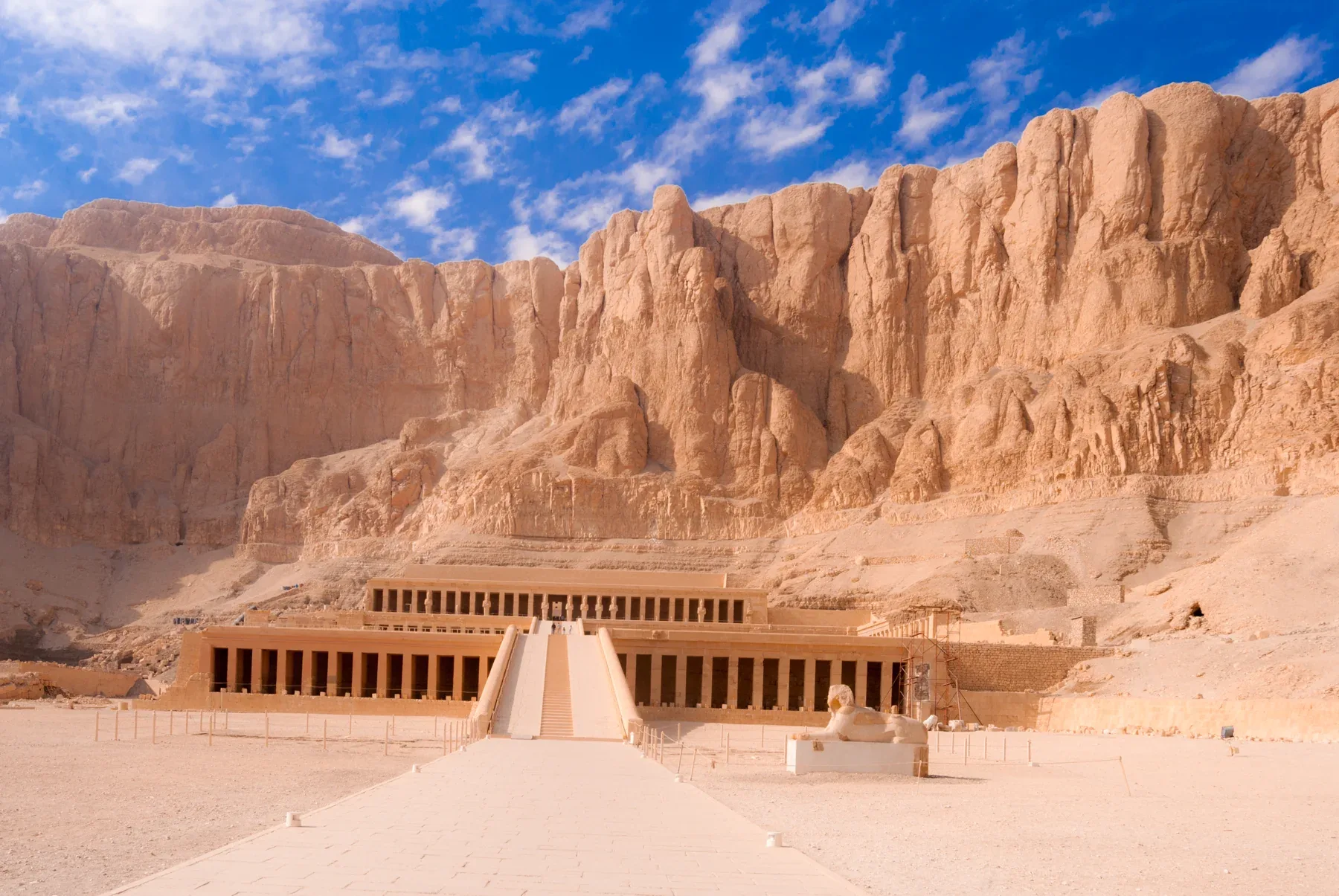
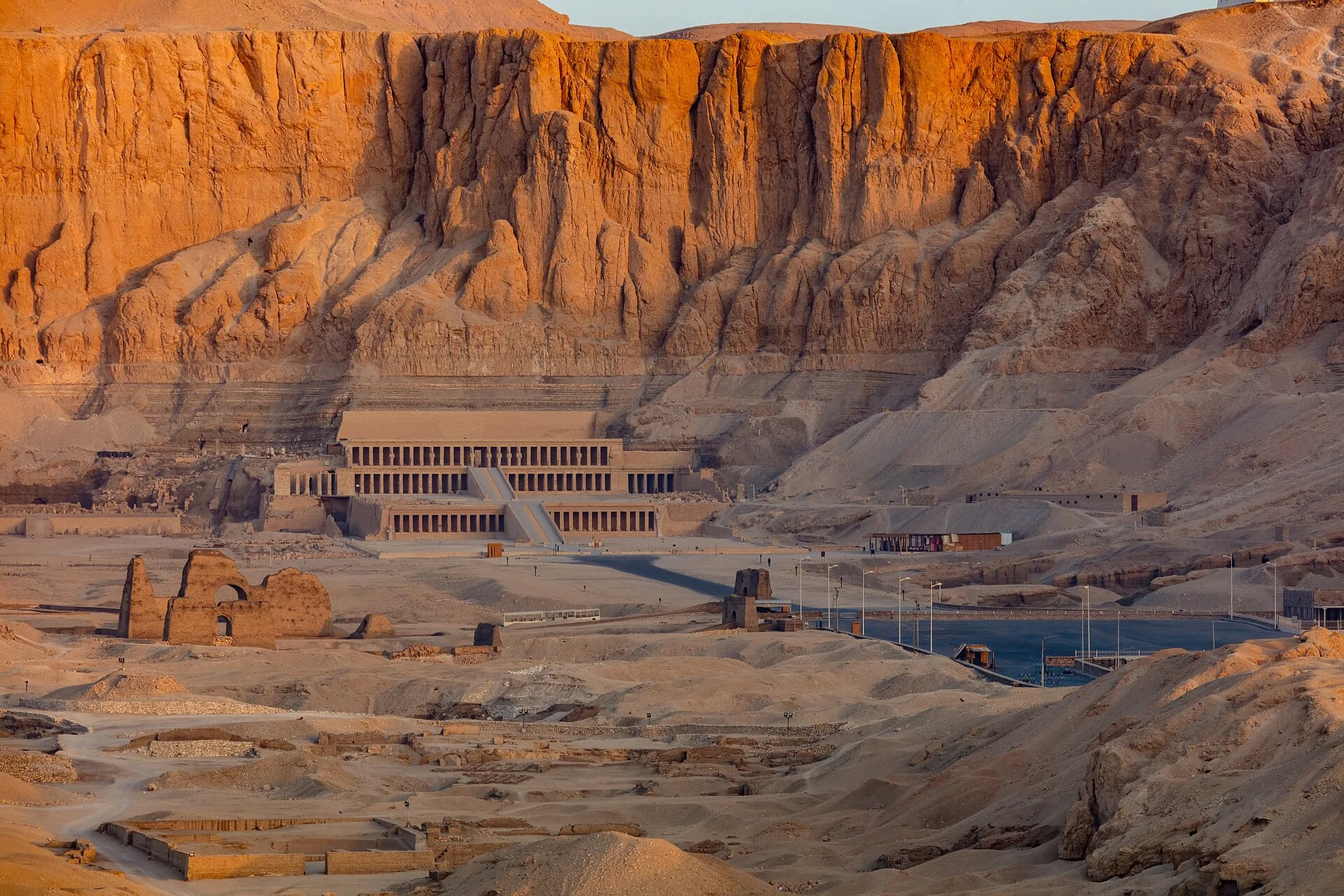
Turn the corner and the cliff fills your sight. At its foot, three terraces climb towards it, one above the other.
The cliff is the point. Across the river stands Karnak, and once a year the god Amun crossed over to rest here.
The king who built it was a woman. Hatshepsut ruled first for a boy, Thutmose the Third, then as king in her own right.
She had herself shown as a man. Decades after her death, her names and faces were cut away.
Probably not out of hatred, scholars now argue, but to secure the next king's claim.
“a garden for my father Amun”
Hatshepsut, of the courts she planted here, as rendered by Richard H. Wilkinson
Look for: On the middle terrace, the voyage to Punt: ships on the Red Sea, and trees brought home for the god's garden.
Sources: Richard H. Wilkinson, The Complete Temples of Ancient Egypt (2000), pp. 175–178; Barry J. Kemp, Ancient Egypt: Anatomy of a Civilization (2018), pp. 262, 269; Ian Shaw (ed.), The Oxford History of Ancient Egypt (2003), pp. 228–241; Ian Shaw and Elizabeth Bloxam (eds.), The Oxford Handbook of Egyptology (2020), p. 660.
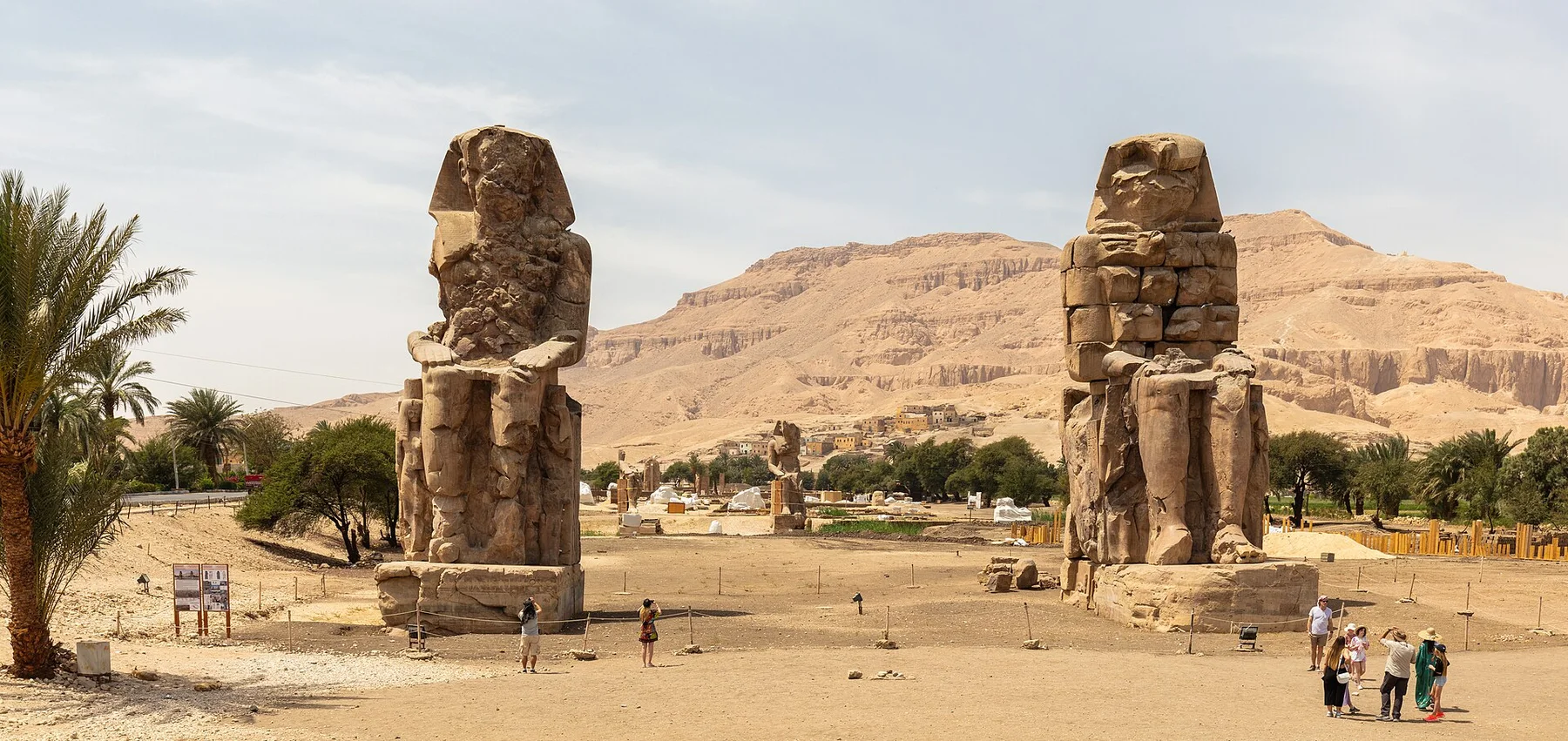
Two giants sit in the fields, each about eighteen metres high, with nothing behind them.
There was something. The largest royal temple known. Amenhotep the Third built it on the flood plain, so every year the river came in.
The colossi stood in the water, like the first land rising.
After an earthquake in 27 BC, the northern statue began to sound at sunrise. Greek and Roman visitors came to hear it.
Then an emperor's repairs silenced it for good.
Look for: On the northern colossus, graffiti left by Roman-era visitors, among them verses by Balbilla, a poet in Hadrian's court.
Sources: Richard H. Wilkinson, The Complete Temples of Ancient Egypt (2000), pp. 188–189; Toby Wilkinson, The Rise and Fall of Ancient Egypt (2011), p. 183; Ian Shaw (ed.), The Oxford History of Ancient Egypt (2003), p. 257; Ian Shaw and Elizabeth Bloxam (eds.), The Oxford Handbook of Egyptology (2020), p. 1122.
Times of day set the scene; your written quote confirms the timetable. Facts come from the sources named under each chapter, and where we give an opinion, it reads as ours.
Why go
Who loves this tour
Luxor is about 300 km from Sharm el-Sheikh in a straight line, across the Gulf of Suez and the Eastern Desert, and far more by road, so the way to see it in a day from Sinai is to fly. This day trip leaves your hotel before dawn and brings you back in the evening, with an Egyptologist waiting at Luxor airport.
The day begins at Karnak, less a temple than a temple city, where the temple of Amun was built, rebuilt and enlarged over more than fifteen hundred years. Across the river on the West Bank is the Valley of the Kings, the royal cemetery of the New Kingdom, cut into a dry valley beneath a pyramid-shaped peak, and beside it the terraced temple Hatshepsut built against the cliffs of Deir el-Bahari, facing Karnak across the Nile. The Colossi of Memnon, two seated statues of Amenhotep III, stand beside the road back.
The return flights, transfers, guide, entrance fees and lunch are included. Before you book, check your visa: if you flew into Sharm on the free Sinai entry stamp, you need an Egyptian visa to leave the resorts, and you can get one at Sharm airport or online.
Our tip
Check your visa first: the free Sinai stamp does not cover a trip to Luxor. Then choose a Thursday or a Friday, the days the flights allow.
Also consider: Would rather stay in Sinai? The Mount Sinai sunrise climb and St Catherine's Monastery are a night's trip from Sharm.
The highlights
Return flights Sharm el-Sheikh–Luxor included
Karnak, the precinct of Amun
The Valley of the Kings and Hatshepsut's temple
The Colossi of Memnon
The details
What is included
Included
Hotel pickup and drop-off in Sharm el-Sheikh
Return domestic flights Sharm el-Sheikh–Luxor
Air-conditioned transport in Luxor
Egyptologist guide
Entrance fees for the sites listed
Lunch at a local restaurant
Taxes and service charges
Not included
An Egyptian visa, if you arrived on the Sinai stamp
Tutankhamun's tomb and other special tombs
Tips
Insurance
Optional tours
Places you visit
Sharm el-Sheikh
Karnak
Valley of the Kings
Temple of Hatshepsut
Colossi of Memnon
Before you go
Good to know
Meeting point
Your hotel in Sharm el-Sheikh
Best time to go
October to April for cooler days in Luxor; book a few days ahead
Entrance tickets
Included: entrance to the sites listed
Optional extras
Tutankhamun's tomb and other special tombs
Shopping stops
Time in a Luxor bazaar
Your price
Set in your written quote for your party, dates and pickup, with the payment and cancellation terms.
Details checked
Questions
Before you ask
Do I need a visa for this trip?
If you flew into Sharm el-Sheikh on the free entry stamp, yes. The UK government's advice says the stamp covers stays of under 15 days in the resorts of Sharm, Dahab, Nuweiba and Taba, and travel outside them needs a visa, available at Sharm airport or online (read 29 September 2026). Check the rules for your own passport.
Which days does it run?
Thursdays and Fridays, with pickup at about 04:30. Tell us your dates and the quote confirms the flights.
Is the price for children different?
Children usually pay less, but the domestic fare sets part of the price. Tell us the children's ages and the quote shows it.
Add to the day
Experiences nearby
A few hours of something different, placed around this tour in your quote.
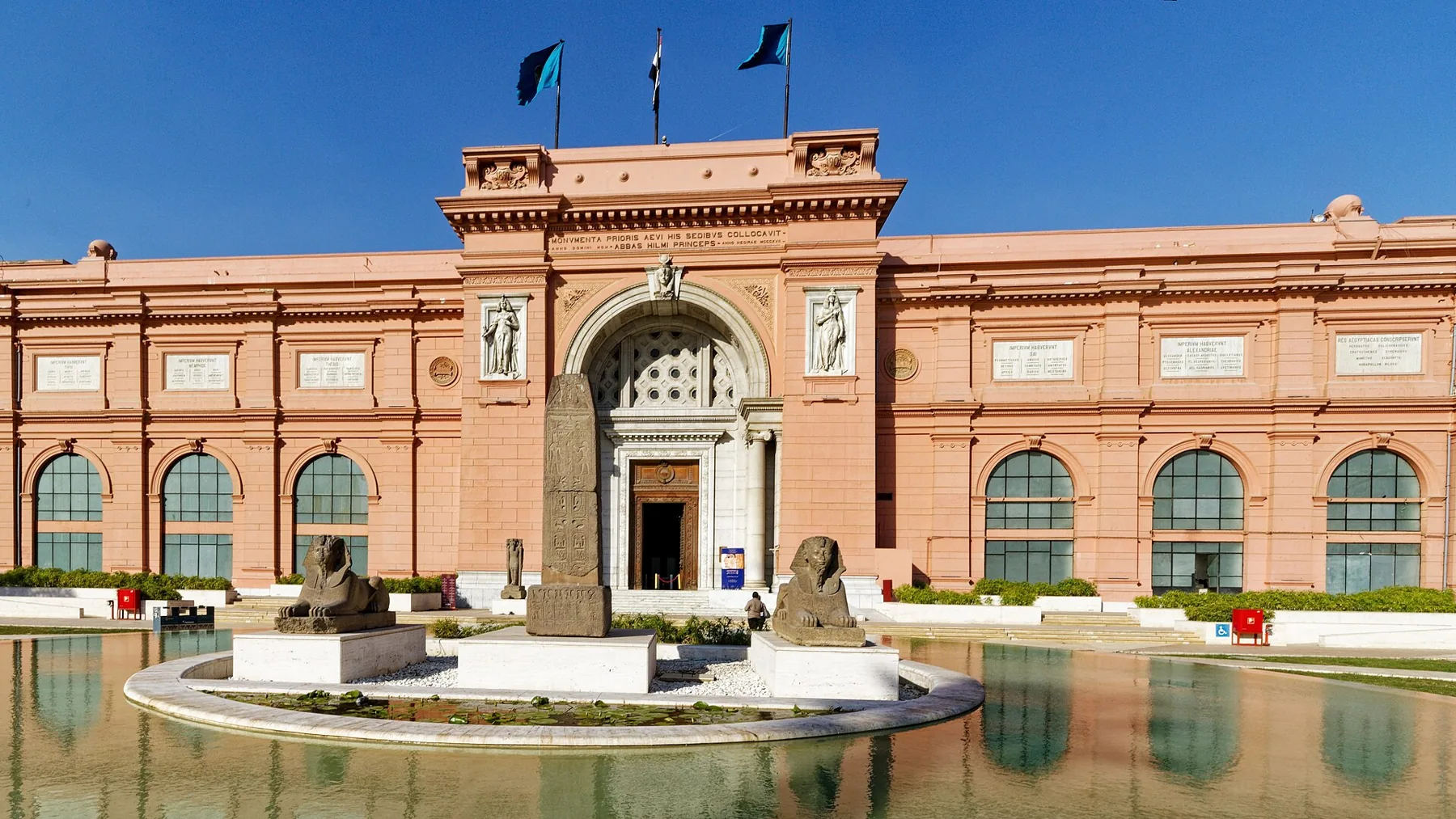
From the Sinai coast to Giza and back by air: the pyramids and Sphinx, the Egyptian Museum, the Citadel and the old bazaar.
Length: Full day · about 12 hours
Style: Private
Active pace
from USD 360 per person
Deluxe Trips Egypt
Ask for this tour, for your dates.
Send your dates and party size here. We reply with a written quote: the price for your party, what is included and the terms. Nothing is booked until you accept it.
 Temples, then the sea