De quoi s’agit-il ?
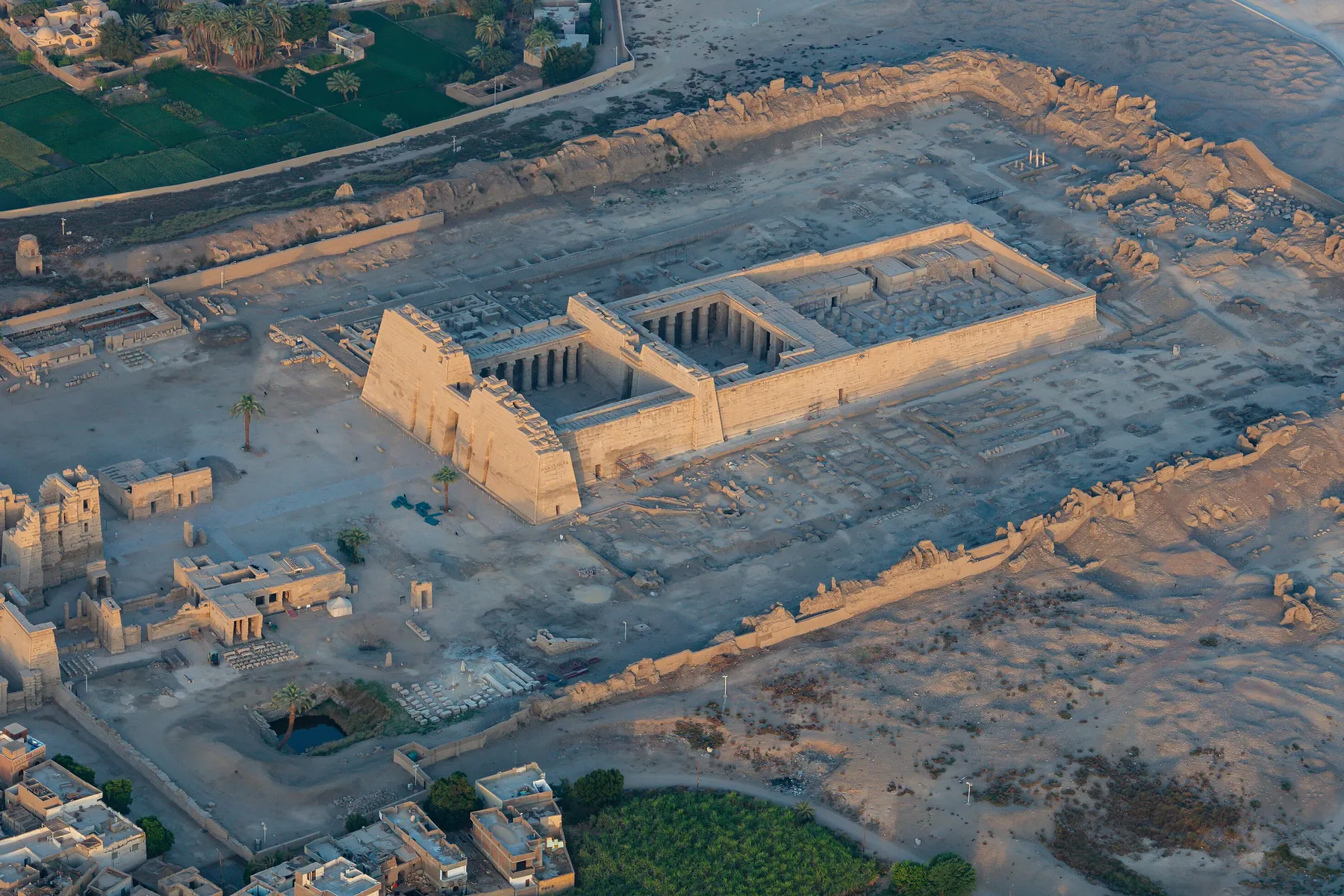
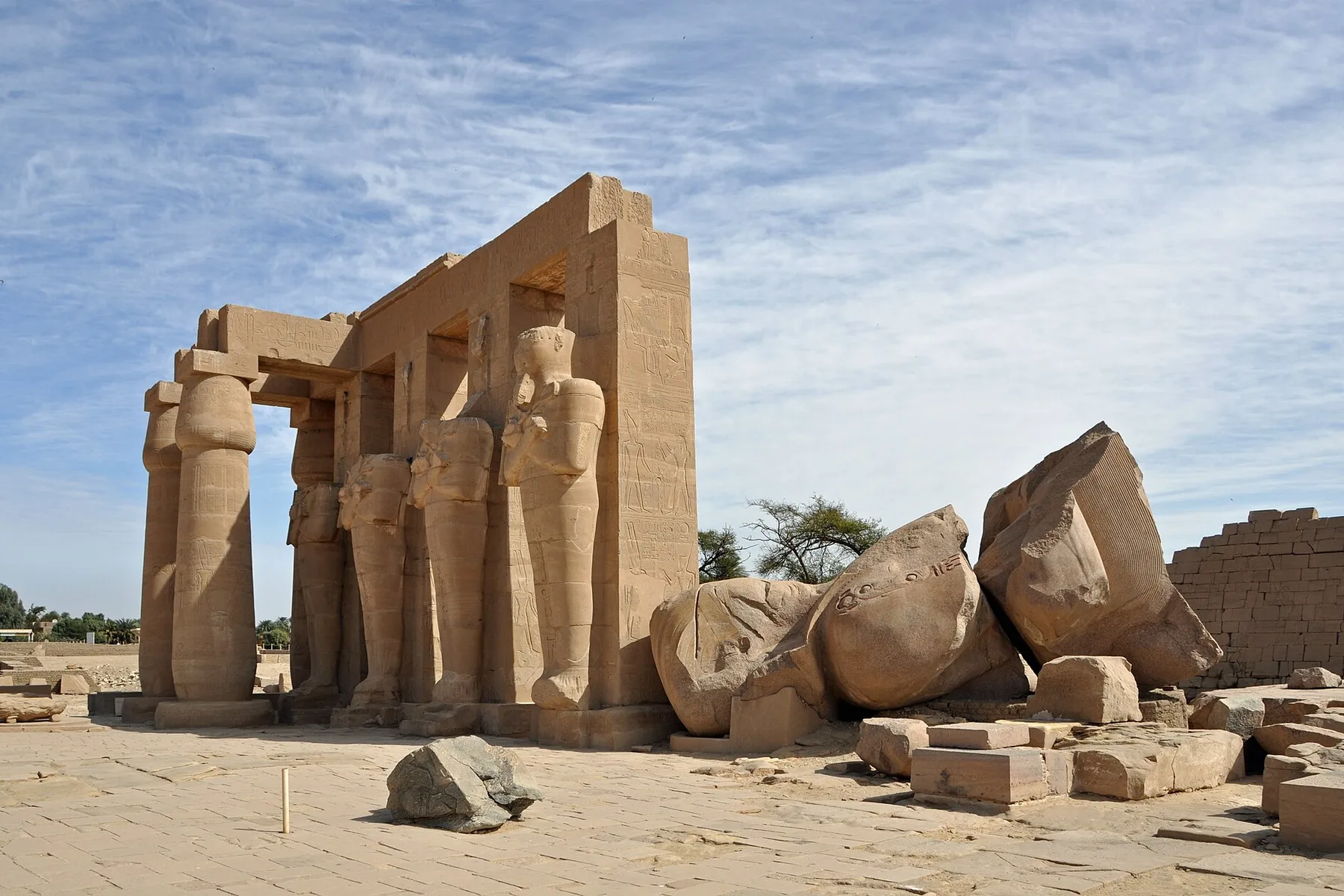
The Ramesseum is the mortuary temple of Ramesses II (c. 1279–1213 BC) on Luxor's West Bank, built of sandstone and carved with his battle against the Hittites at Kadesh. Its ancient name was "Ramesses United with Thebes". Toby Wilkinson calls it the most ambitious monument of its kind since the reign of Amenhotep III, covering more than eleven and a half acres, with every surface given over to the king.
Its fallen colossus is the "Ozymandias" of Shelley's poem, and the storerooms around it held a significant part of Egypt's wealth, in grain.
The question to carry inside: what was a temple like this for, when its king was buried elsewhere, in the Valley of the Kings?
History
Two architect-foremen, Penre of Coptos and Amenemone of Abydos, built it for the king. It was planned as two temples and a palace, with many administrative buildings around them. Champollion, who visited in 1829, gave it the name it still has.
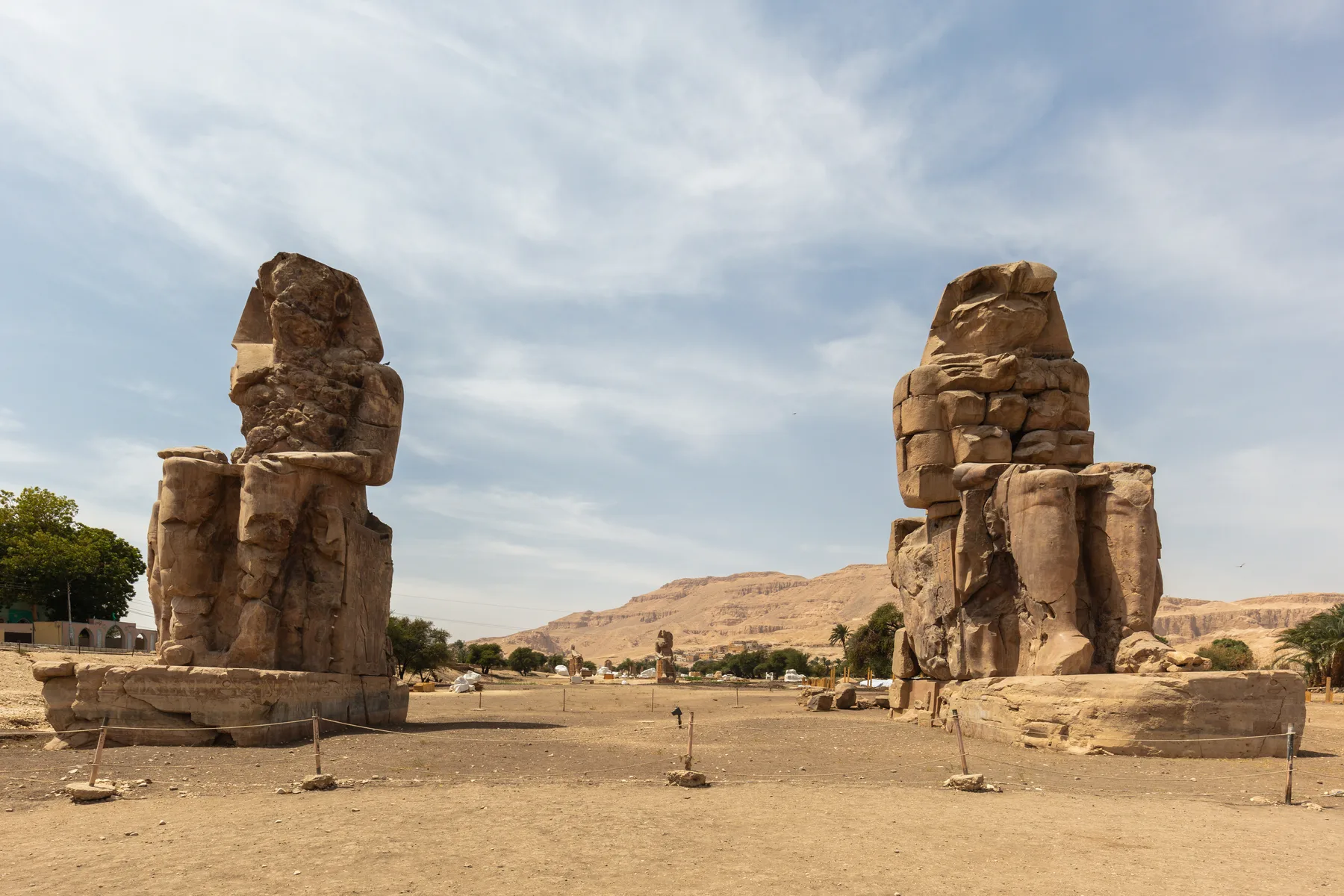
The colossus that stood by its second gateway was, in Richard Wilkinson's words, the largest free-standing statue in Egypt: more than 20 m high and over 1,000 tons, with one ear just over a metre long, cut as a single block from the quarries of Aswan some 400 km to the south. An earthquake brought it down in antiquity. Its shattered remains, carved with the throne name Usermaatra, corrupted in Greek to Ozymandias, inspired Shelley's poem. Wilkinson adds that the cold and mocking king of the poem is the poet's own invention: votive stelae show ordinary people adoring such colossi as gods "who listen to prayers".
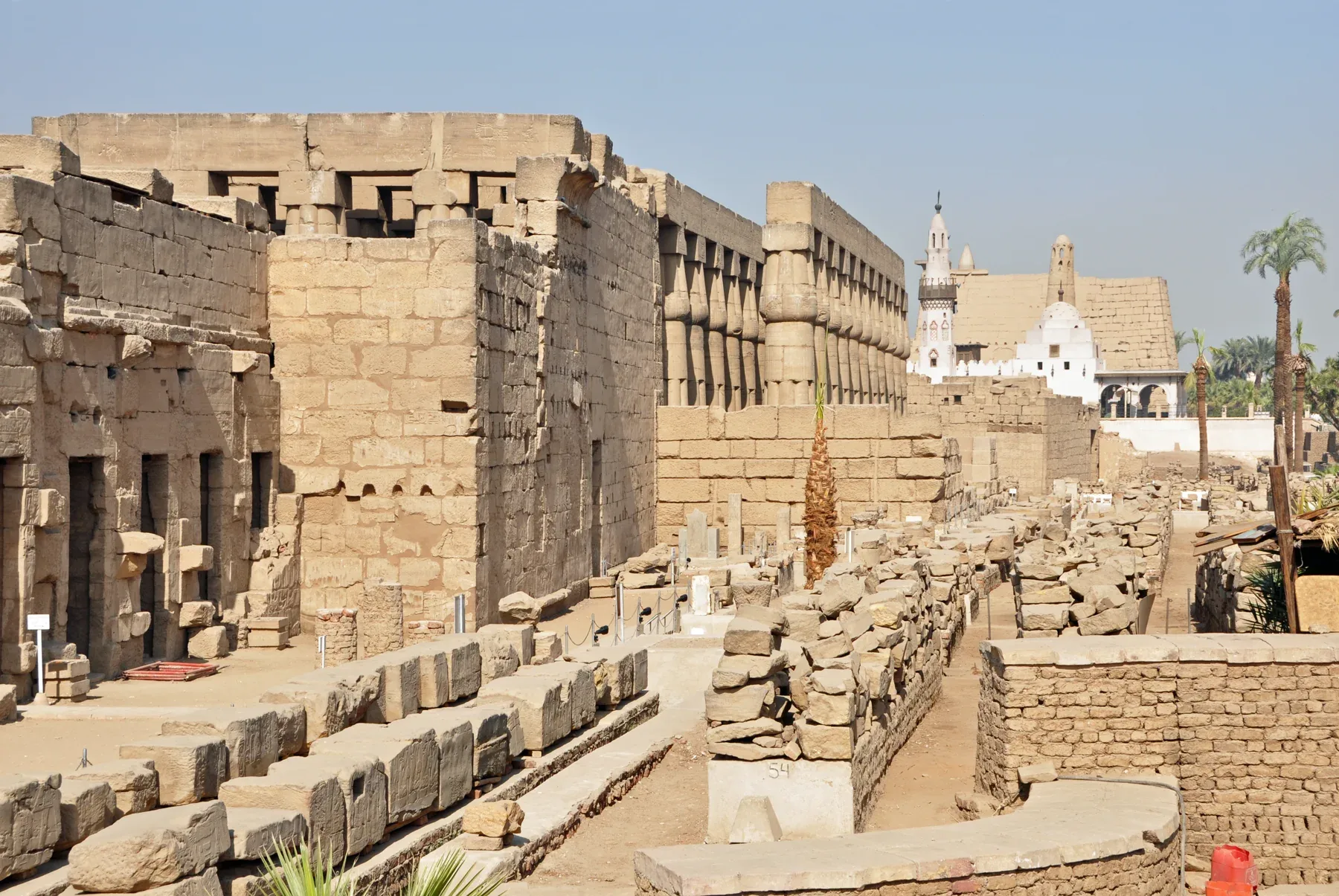
The temple was also an economy. Storerooms and granaries surrounded it on all sides. Barry Kemp calculates the granaries' capacity at 226,328 sacks of grain, enough to feed about 3,400 families for a year, the population of a fair-sized ancient city. Toby Wilkinson calls the Ramesseum Upper Egypt's reserve bank. Under Ramesses III, when the rations of the royal tomb-builders were late and they went on strike, it was officials sent from the Ramesseum who had to hear their complaints.
Its life as a temple was short. By the Twenty-second Dynasty it was already in use as a cemetery; from the Twenty-ninth its walls and pillars were dismantled for building elsewhere; and later its core was turned into a church, when many of the reliefs were hammered. For the consul Henry Salt, Giovanni Belzoni moved a colossal head of Ramesses II from the temple to the river in two weeks, for shipment to London.
A joint Egyptian–French mission is still working here. The Ministry reports that it has found a "House of Life", a school attached to the temple, with traces of drawings and school games: the first evidence of a school within the Ramesseum. It has also found cellars for olive oil, honey, fats and wine, and tombs of the Third Intermediate Period.
What you actually see
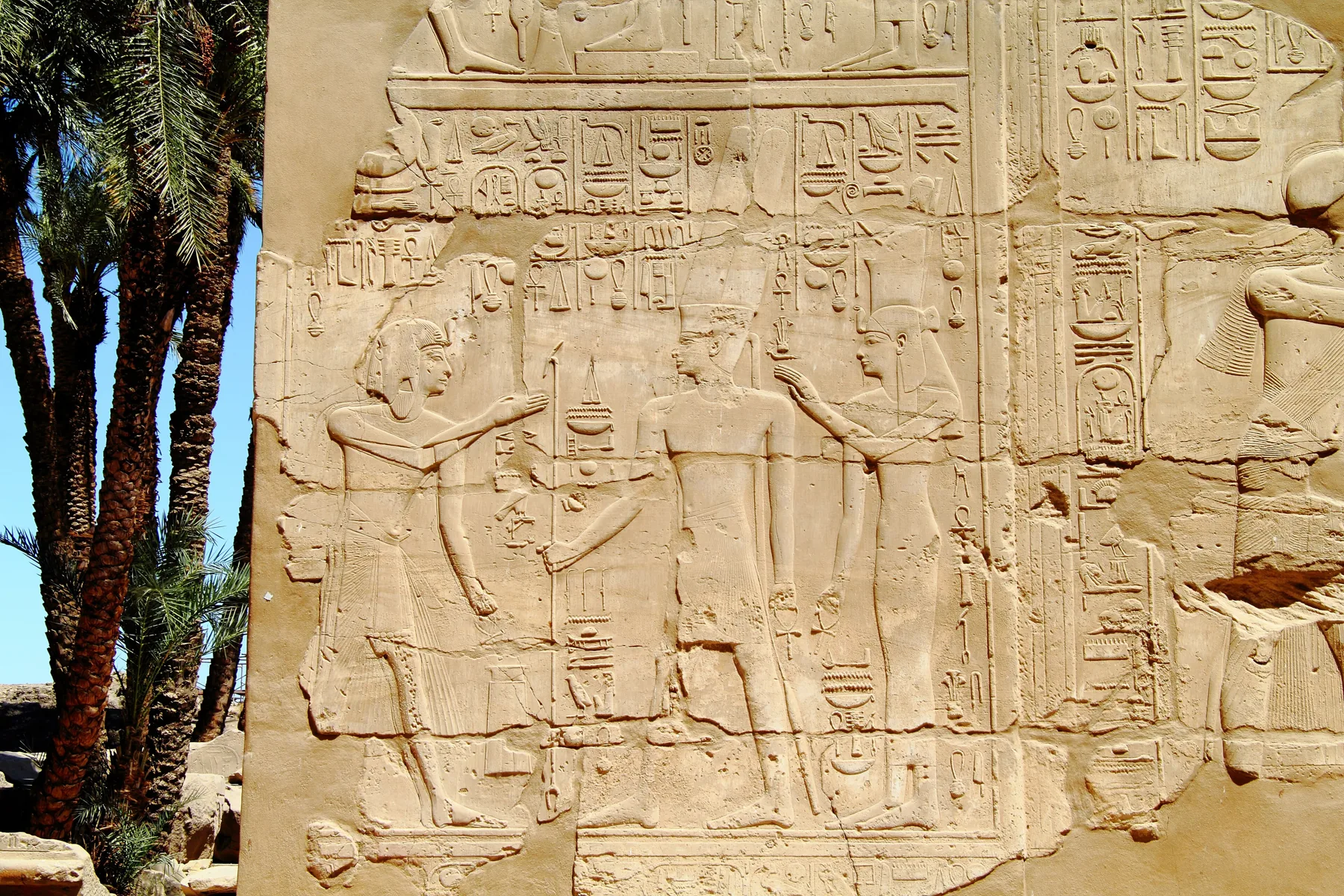
Walk into the second court. On one side stand the Osiride pillars, the king in the form of Osiris; beside them lie the broken pieces of the colossus, as in the photograph. The Battle of Kadesh is carved again on the surviving northern wall of the court, with scenes from the festival of Min. Then look outward, at the long brick vaults around the stone temple: those are the storerooms that made it a bank.
Practical
The Ministry of Tourism and Antiquities lists the Ramesseum as open from 06:00 to 17:00. The foreign adult ticket is EGP 220 and the student ticket EGP 110, read on 17 October 2026. In our judgement it fits well between the Colossi of Memnon and Medinet Habu, the temple Ramesses III modelled on it.
Billets et horaires
- Billet adulte étranger
- EGP 220. Les étudiants paient moitié prix.
- Horaires d’ouverture
- 06:00–17:00, selon les informations de .
- Source
- la page du ministère du Tourisme et des Antiquités consacrée à the Ramesseum, consultée le . Les tarifs peuvent changer ; la page du ministère fait foi. Tous les sites sont réunis dans un tableau : Billets et horaires des sites en Égypte.
Billets, horaires et guides pratiques
- Billets pour la Vallée des Rois
- Tarifs officiels, tombeaux à choisir et meilleur moment pour la visite.
- Billets et horaires des sites
- Quinze sites majeurs dans un tableau daté.
- Du Caire à Louxor
- Avion, train-couchettes, train de jour ou route, avec durées et tarifs.
- De Louxor à Assouan
- Comparatif de la croisière, du train ou de la route via Edfou et Kom Ombo.