Luxor beyond the kings
Luxor's Other West Bank: the Tombs of the Nobles, Deir el-Medina and Medinet Habu
The people behind the royal tombs: a vizier and a mayor, the village of the tomb-builders, and the temple where they went on strike.
Half day · about 4 hours · Luxor · Private
- Nothing is booked until you accept a written quote
- A Deluxe Travel Egypt brand: read the reviews
- Duration
- Half day · about 4 hours
- On the road
- Short drives between three sites on the West Bank
- At the sites
- About 4 hours, most of it at the sites
- Format
- Private
- Pace
- Moderate
Before you choose
Is this the right tour for you?
Most visitors to Luxor's West Bank see the tombs of kings. This private half-day tour shows you the people who served them, and it tells one story from beginning to end.
You start in the Tombs of the Nobles, the burials of the officials who ran Egypt for the pharaohs. Rekhmire was vizier under Thutmose III, and the king's charge at his installation is written on the wall of his tomb: the office, it warns, is bitter as gall. Sennefer, mayor of Thebes under Amenhotep II, has one of the most famous painted burial chambers in the necropolis.
Then you walk into Deir el-Medina, the village of the men who cut and painted the royal tombs, among the best-preserved ancient settlements in Egypt. They called themselves the Servants of the Place of Truth. Their houses still line the street, thousands of their letters, notes and accounts have survived, and on the hillside above they cut their own tombs: Sennedjem's shows him and his wife planting and harvesting grain and flax.
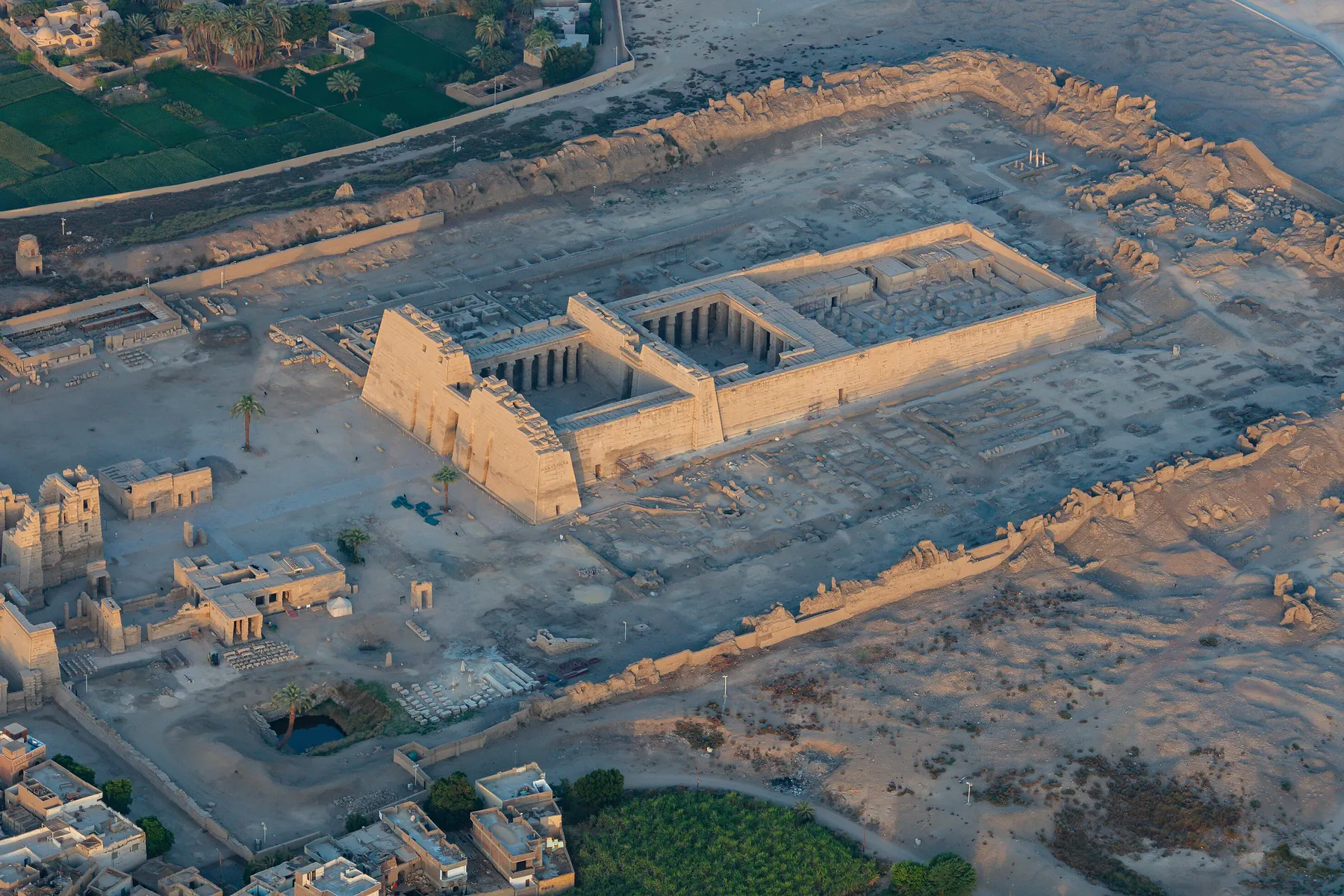
You finish at Medinet Habu, the temple and fortress of Ramesses III. In his 29th year, when their grain was late, these same workmen marched here with a formal complaint and then stopped work, in what historians call the first known labour dispute. Its walls show the king's battles against the Libyans and the Sea Peoples, and it is the best preserved of all the royal mortuary temples of Thebes.
A guide and driver collect you from your Luxor hotel and take you back, and entrance fees are included.
Our advice
Take this after the Valley of the Kings, not instead of it: it makes more sense once you have seen the royal tombs these people built.
Consider instead: First time in Luxor? The West Bank tour covers the Valley of the Kings and Hatshepsut's temple.
5 stops
How the day runs
Start
Hotel pickup in Luxor
Your guide and driver collect you and cross to the West Bank.
Stop 2
The Tombs of the Nobles
Two painted tombs of the officials who served the kings, those of the vizier Rekhmire and the mayor Sennefer when open on the day. Rekhmire's walls show revenues arriving from the provinces and the king's charge to a new vizier.
Stop 3
Deir el-Medina, the workmen's village
The walled street of the tomb-builders' houses, with over 30 foreign names known among its people, many of them literate. Then two of their own tombs on the hillside, those of Sennedjem and of Inherkhau when open.
Stop 4
Medinet Habu
Through the fortress-like High Gate into Ramesses III's temple: the massive first pylon, the battle scenes on the outer walls, and the court where soldiers count the enemy dead.
Medinet Habu: Ramesses III's temple and fortress, where the builders of the royal tombs came to demand their pay.
Finish
Return to your hotel
Back across the river by late morning or early afternoon.
The details
What is included
Highlights
- The painted tombs of the vizier Rekhmire and the mayor Sennefer
- Deir el-Medina, the village of the royal tomb-builders, and their own tombs
- Medinet Habu, Ramesses III's temple and fortress
- The story of the first known strike, told where it happened
Included
- Hotel pickup and drop-off in Luxor
- Air-conditioned transport with driver
- Professional Egyptologist guide
- Entrance fees for the sites in the itinerary
- Taxes and service charges
Not included
- Food and drinks
- Tips
- Insurance
- Personal spending
Places you visit
- Tombs of the Nobles
- Tomb of Rekhmire
- Tomb of Sennefer
- Deir el-Medina
- Valley of the Workers
- Tomb of Sennedjem
- Tomb of Inherkhau
- Medinet Habu
- Temple of Ramesses III
- Group
- Private: your party only
- Transport
- Air-conditioned vehicle with driver
- Departure
- Morning pickup from your Luxor hotel
- Meeting point
- Your hotel in Luxor
- Guide languages
- English, Other languages on request
- Best time to go
- Early morning, before the West Bank heats up
- Entrance tickets
- Included: entrance fees for the sites in the itinerary
- Optional extras
- Other tombs with their own tickets
- Your price
- Set in your written quote for your party, dates and pickup, with the payment and cancellation terms.
Details checked
Add to the day
Experiences nearby
Local tips matched to this route
Complete this day
We place these around the tour’s real timing. Anything that cannot fit cleanly stays an untimed request until we confirm it.
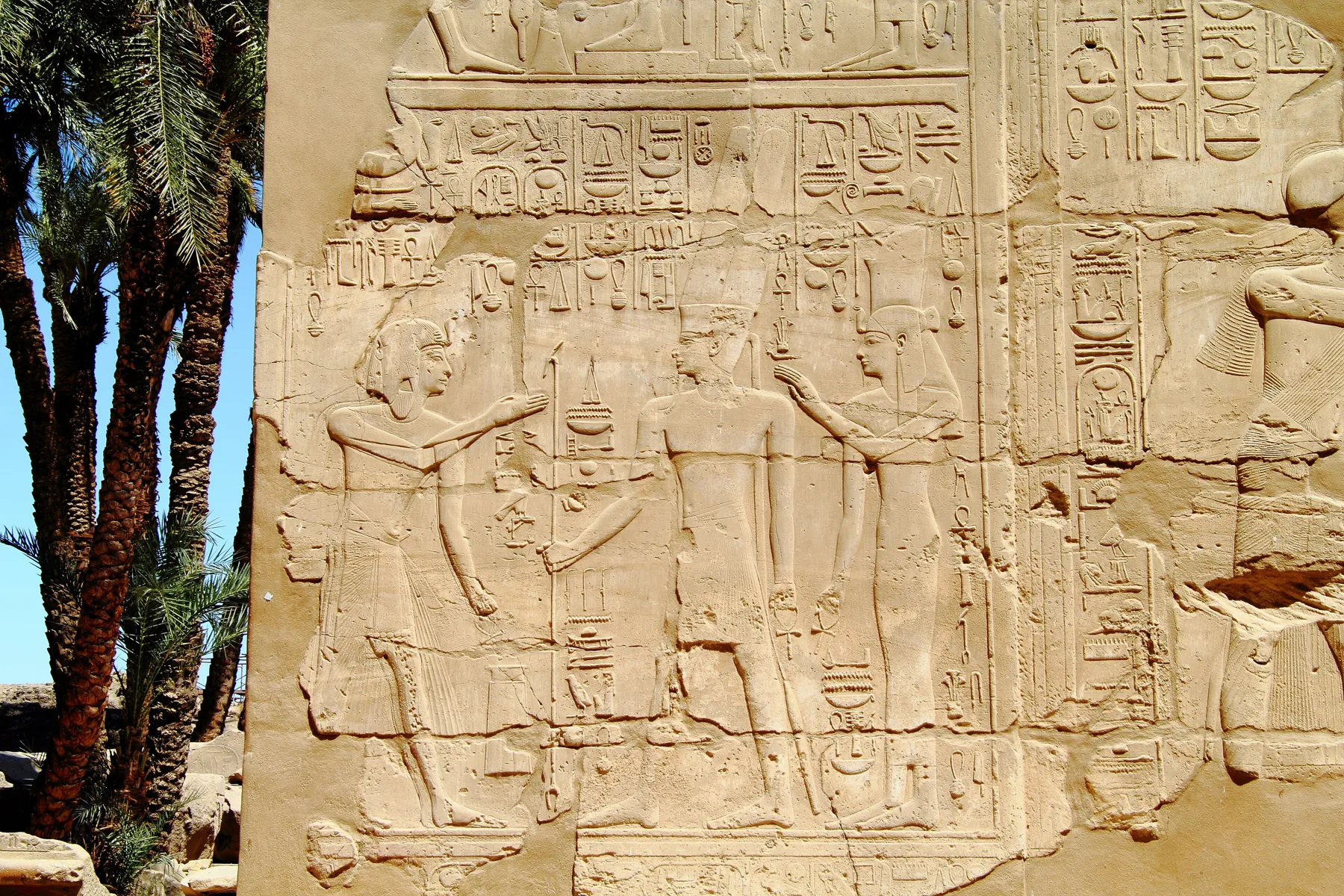
Karnak and the West Bank
A photoshoot in Luxor's temples
A photographer who knows Karnak's columns and quieter corners, and the hours when the light comes through them.
Late afternoon · About 2 hours. At opening time or in the last hours before closing.
We confirm the photographer and their portfolio, temple permissions, the edited set and the delivery date.
Add as a request
Photo: Djehouty, CC BY-SA 4.0
Questions
Before you ask
Does this tour include Nefertari's tomb?
No. The tomb of Nefertari in the Valley of the Queens has been closed to visitors since March 2024, and no reopening date has been announced. This tour visits tombs that are open.
Who lived at Deir el-Medina?
The workmen who cut and decorated the royal tombs in the Valley of the Kings, and from the Nineteenth Dynasty the Valley of the Queens, with their families. They worked in two gangs, the Right Side and the Left Side, slept at a camp on the ridge during the working week, and came home for their days off. The village was abandoned when royal burials in the valley ended.
What was the strike?
In the 29th year of Ramesses III, about 1165 BC, the workmen's grain rations were late and short. The scribe Amennakhte took their complaint to the administrative complex at Medinet Habu, and later that year the two gangs stopped work and sat in at the royal mortuary temples until they were paid. Nicholas Reeves and Richard Wilkinson call it the world's first known labour dispute.
Which tombs will we see?
The tour is planned around the tombs of Rekhmire and Sennefer among the nobles, and of Sennedjem and Inherkhau at Deir el-Medina. The antiquities authorities decide which tombs are open on a given day, and your guide confirms them the day before.
Can we add the Valley of the Kings?
Yes, as a full day. Ask in your request and the quote will show the combined day.
Pairs well with
Tours that go with this one

Deluxe Trips Egypt
Ask for this tour, for your dates.
Send your dates and party size here. We reply with a written quote: the price for your party, what is included and the terms. Nothing is booked until you accept it.
Prefer to talk? WhatsApp us


Photography credits (4)
Diego Delso, CC BY-SA 4.0; Zezinho68, CC BY-SA 4.0; Hamerani, CC BY-SA 4.0; Ovedc, CC BY-SA 4.0


