Air-conditioned vehicle to and from the old city; the street on foot
Guides speak
English, Other languages on request
How the day divides
About 4 hours in all
At the sites ≈ 4 h
About 4 hours in all: about 4 hours at the sites.
On the road
A short drive to the old city and back; the rest on foot
At the sites≈ 4 h
About 4 hours, most of it walking
Drawn to scale from the hours this tour states.
Book online
Pick a date and pay securely. Prefer to talk first? Ask for a quote or message us on WhatsApp.
6 stops
How the day runs
The street the Fatimid caliphs laid out as the spine of their new court city. The palaces are gone, but for eight centuries anyone with power built along it: Qalawun's hospital and tomb, al-Aqmar's Shiite facade, and the gates of 1087 and 1092, with blocks from pharaonic Memphis built into them.
Stop 1
Hotel pickup
Your guide collects you in Cairo and drives to the northern gate of the old city.
Cairo setting; pickup and return locations are confirmed separately.
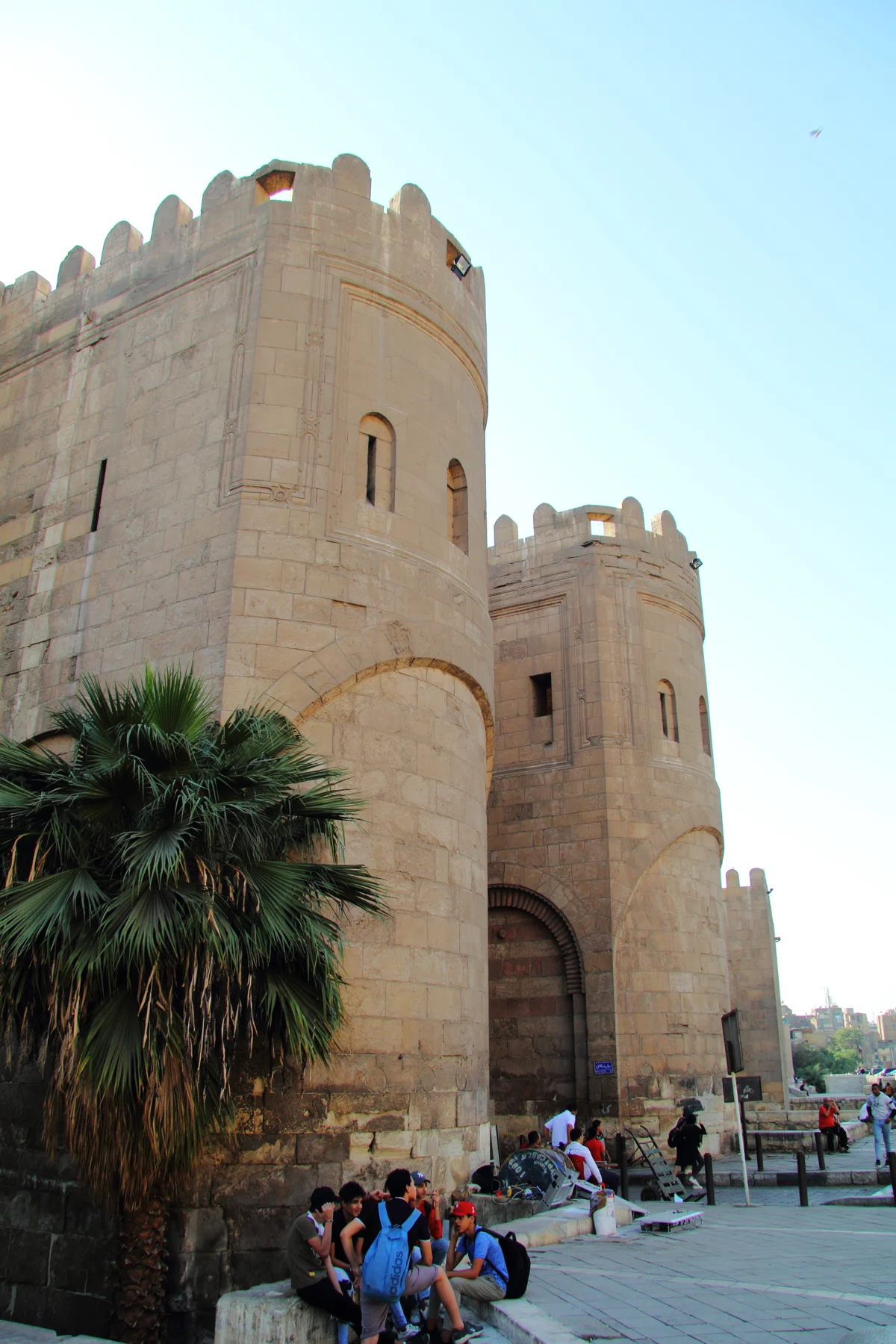
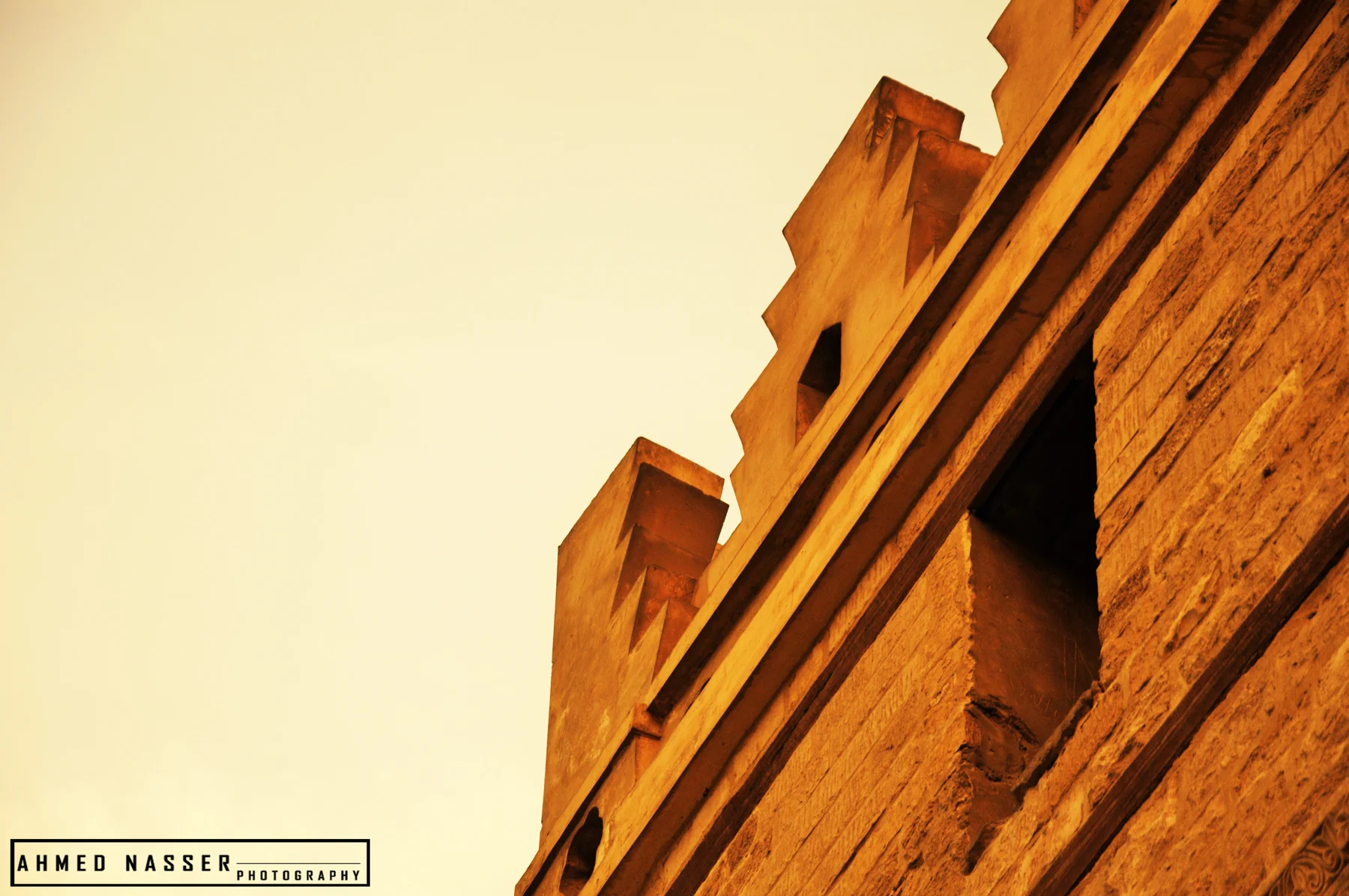
The Fatimid gate of 1087, built for the vizier Badr al-Gamali by masons from northern Mesopotamia and among the few military buildings in the region older than the Crusades. Look for the reused pharaonic blocks inside: a hippopotamus under a window, a procession of offering bearers.
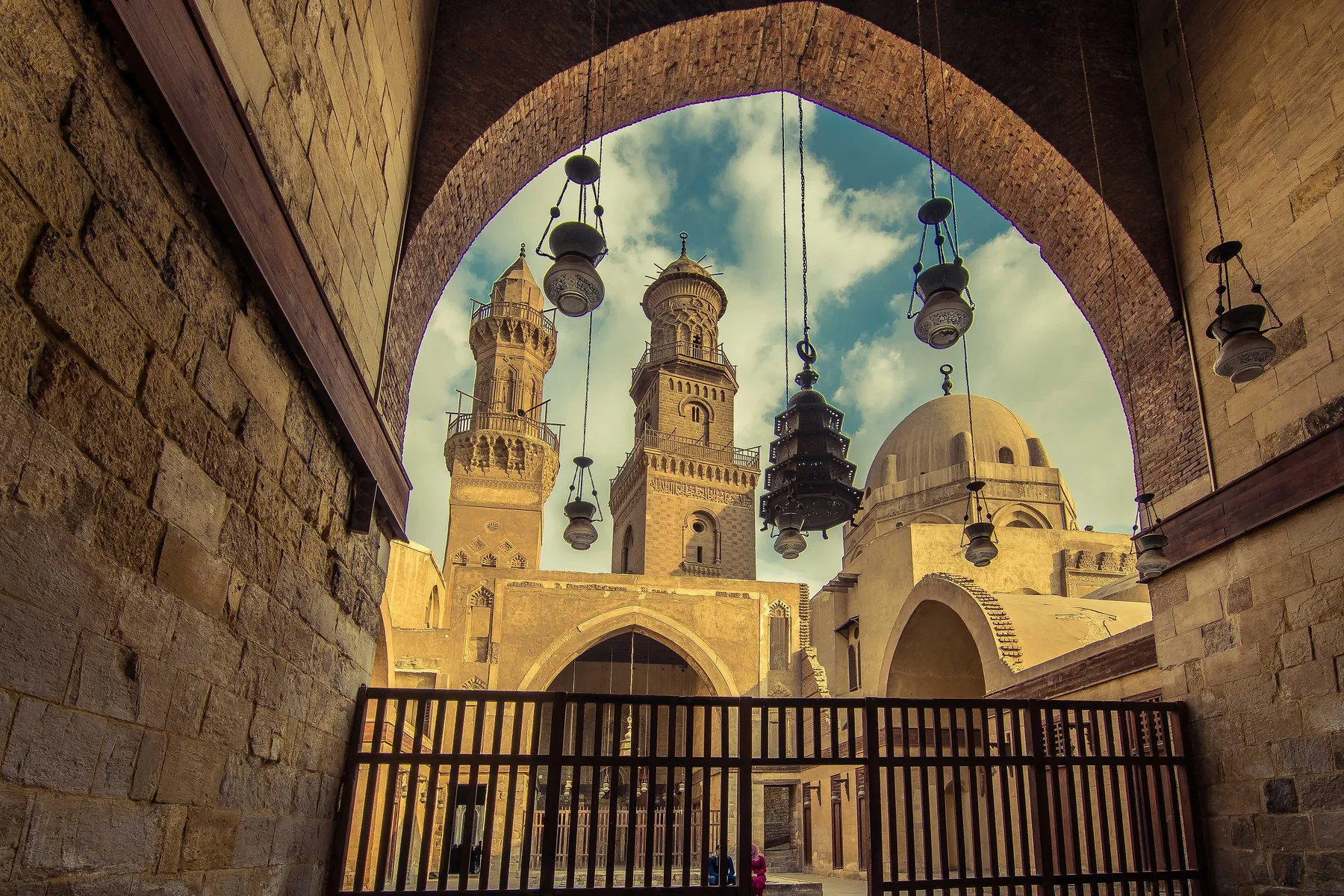
Past the great Mosque of al-Hakim to the small Mosque of al-Aqmar, 'the moonlit', built in 1125. Its facade carries an openly Shiite inscription, rare in Islamic buildings, in which 'God is with Muhammad and 'Ali' can be read.
The ceremonial ground 'between the two palaces' of the caliphs, where Sultan Qalawun built his hospital, school and tomb in 1284–85. The hospital had a hall each for fevers, eye diseases, surgery and dysentery, a hall for women, and musicians to entertain the patients.
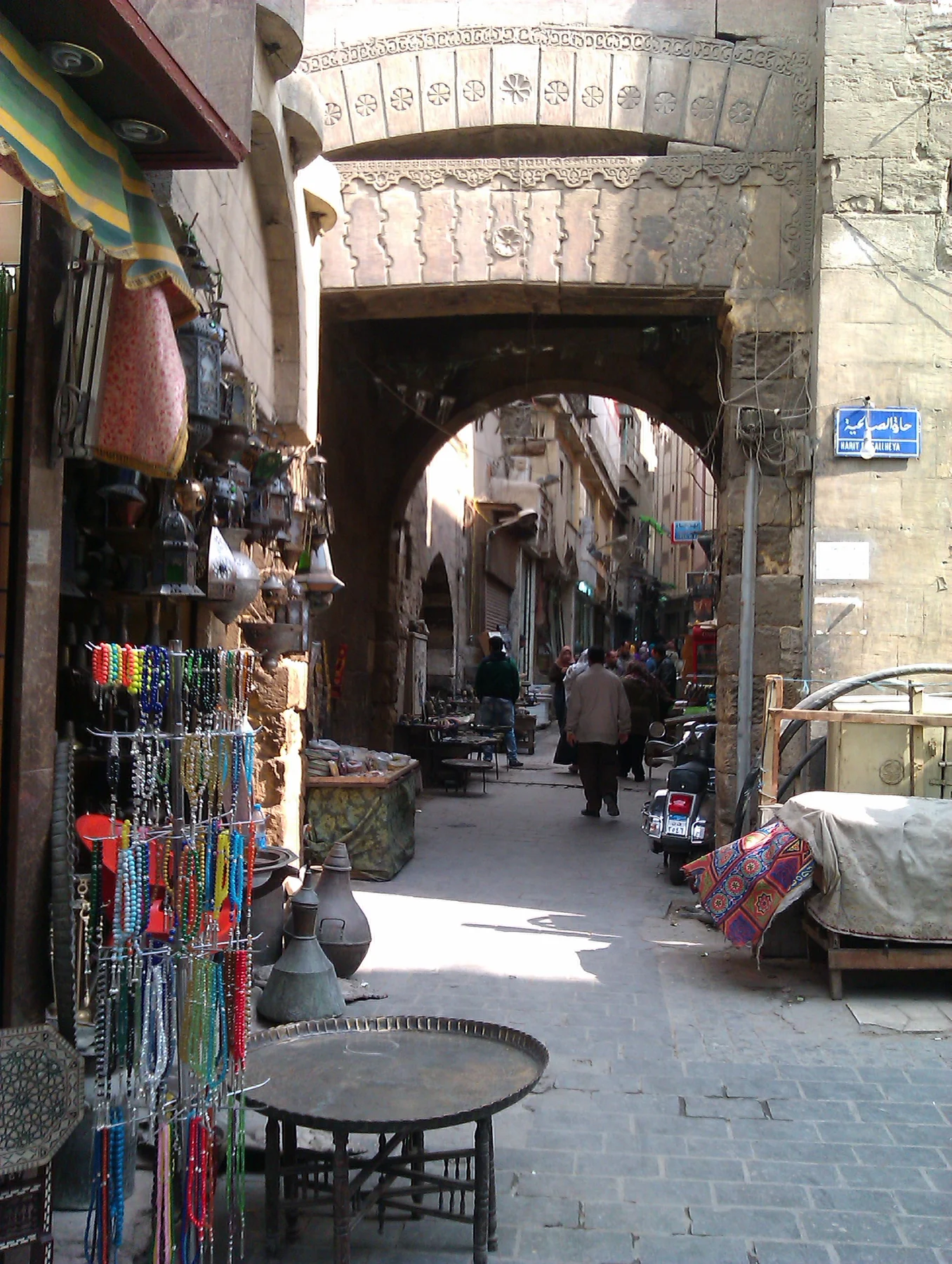
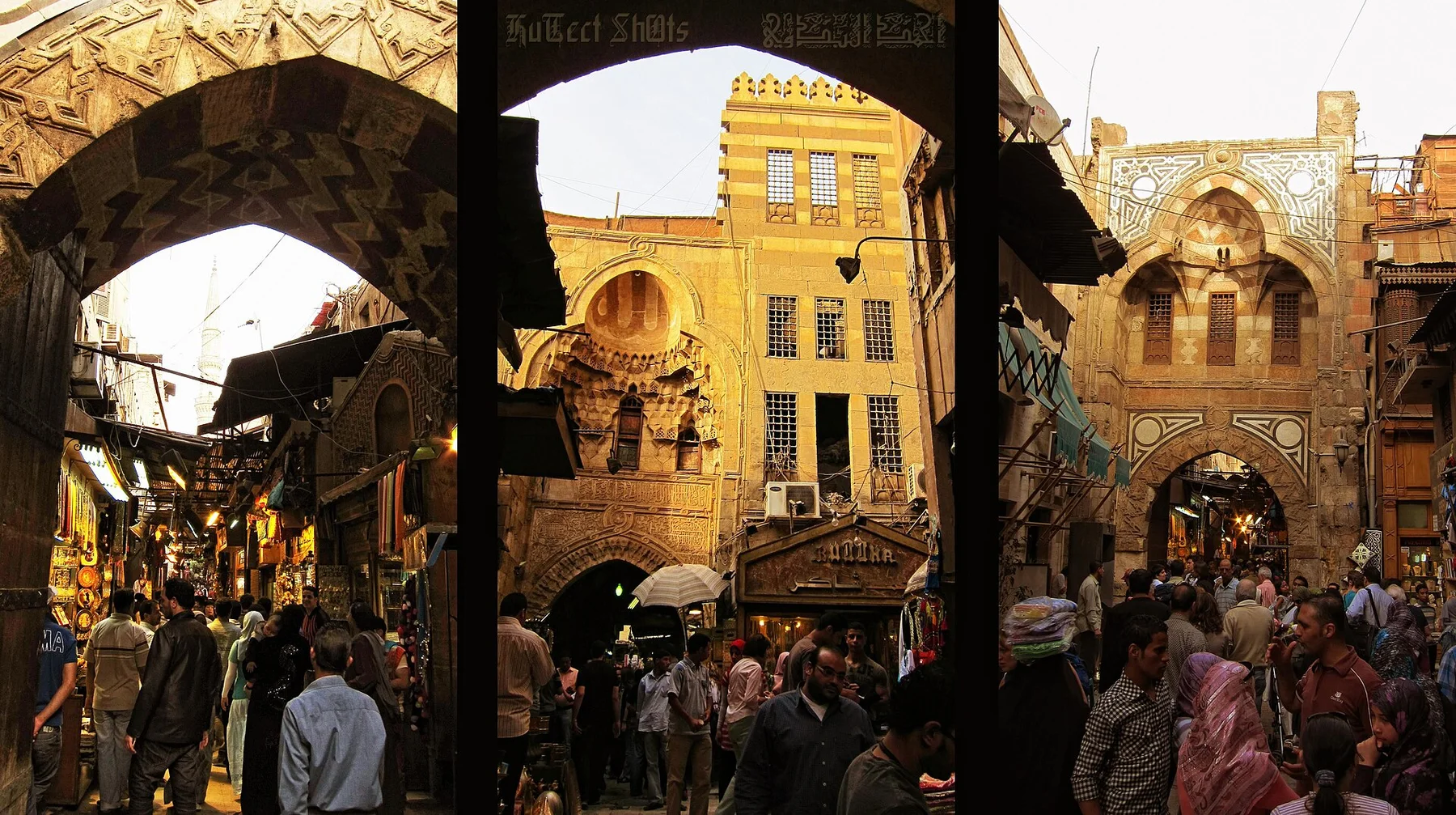
Khan el-Khalili: Cairo's great bazaar, grown from a Mamluk caravanserai of 1382.
Stop 6
Bab Zuwayla
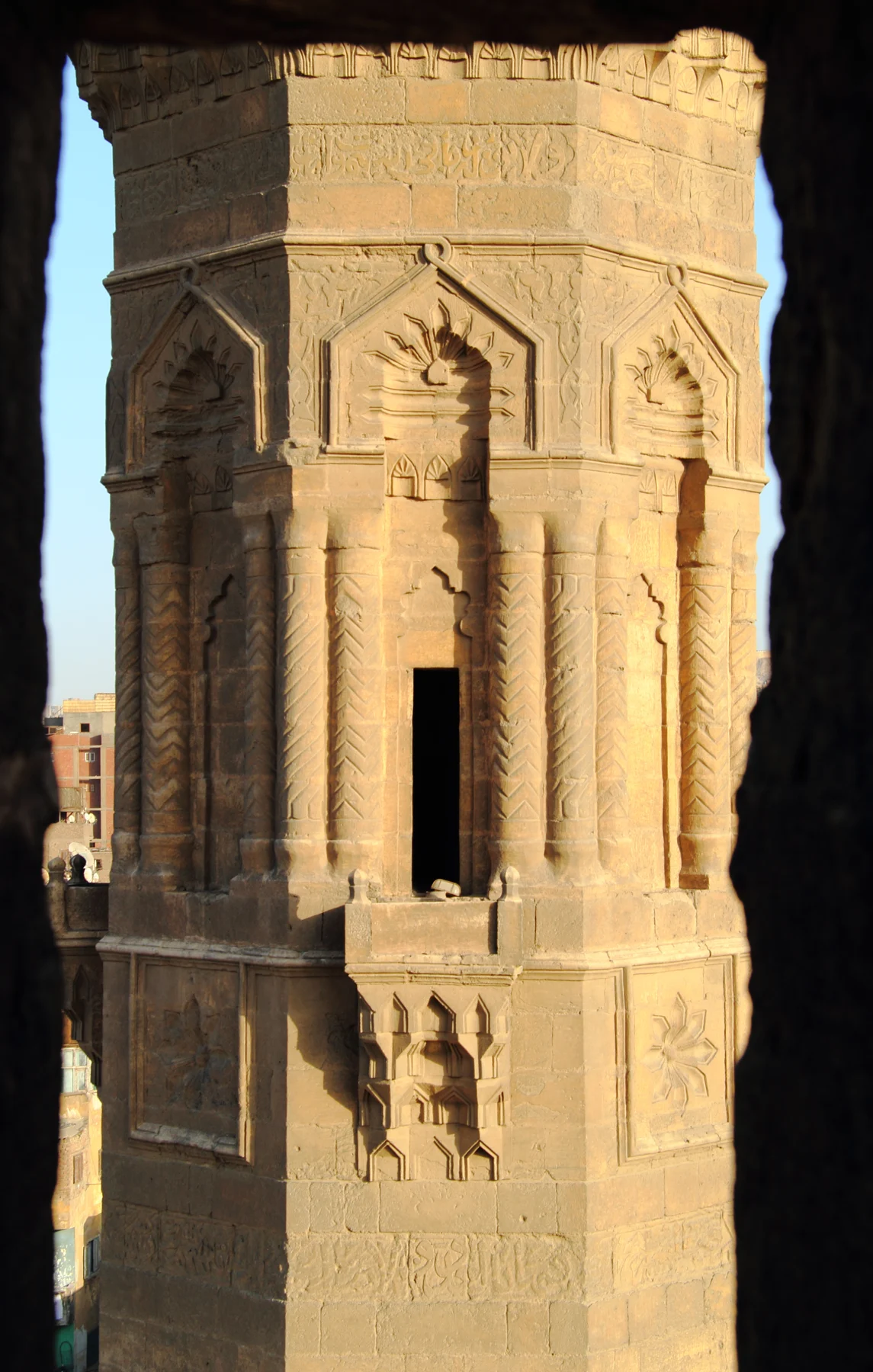
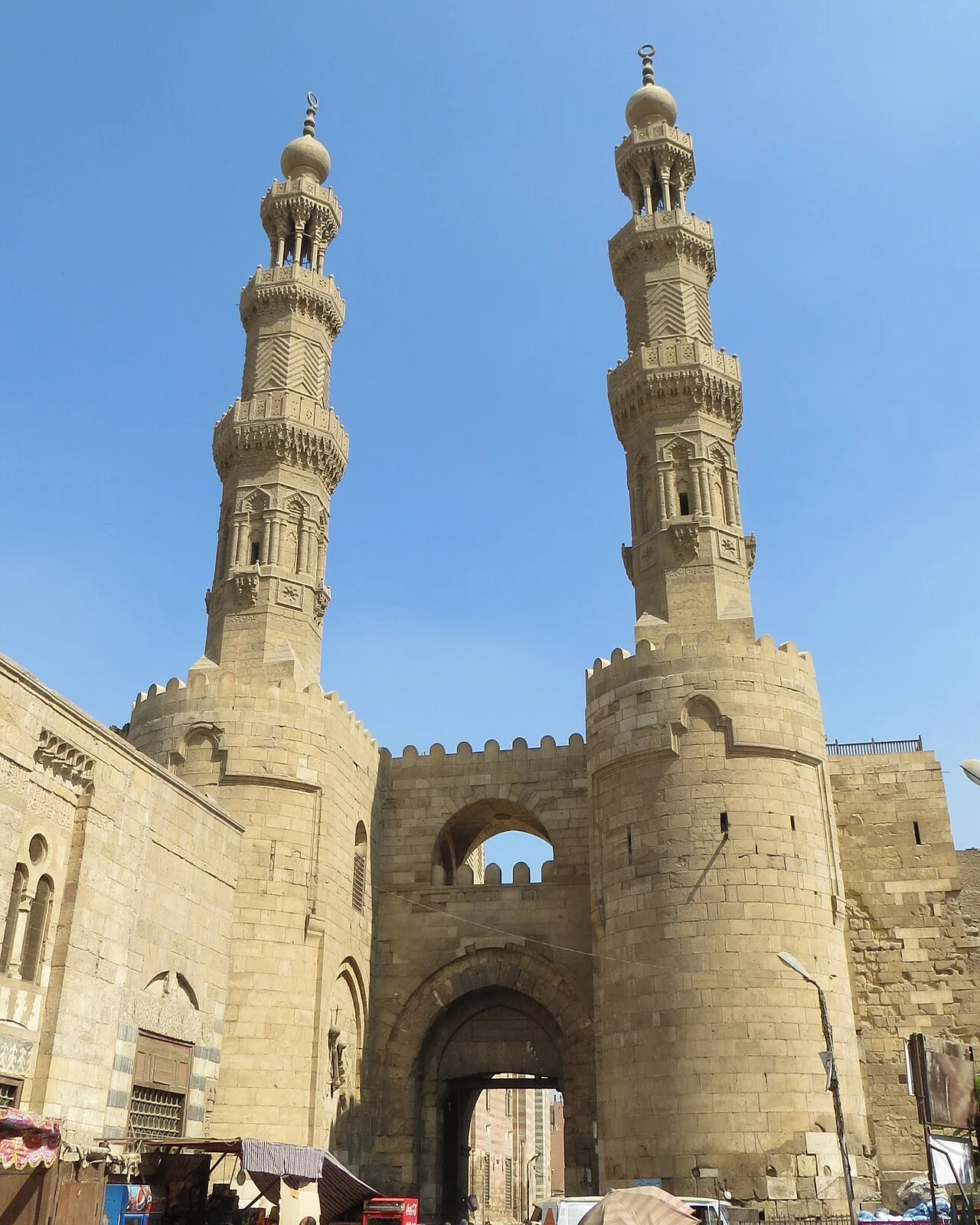
The southern gate of 1092, named after Berber soldiers of the Zawila tribe quartered by the first gate of 969, and crowned by two minarets added in the fifteenth century. Your driver meets you here for the ride back.
Day and time labels describe the planned sequence, not confirmed departures. Your written quote confirms pickup, flights, sailing and return times for your date.
You start at the northern gate of medieval Cairo. In 1087, Armenian masons built it in stone, to replace a wall of mud brick.
It is rare: a fortress gate from before the Crusades, still standing.
Climb inside, if the stair is open. Suddenly, set into the medieval wall: a hippopotamus. An offering procession. Blocks carried here from pharaonic Memphis.
Sources: Caroline Williams, Islamic Monuments in Cairo (5th edition, 2002), pp. 192–194.
This mosque was finished by al-Hakim, a caliph who ruled by decree, and by night.
He banned mulukhiya, Egypt's favourite green stew. He forbade shoemakers to make shoes for women. Once, he had all the honey in Cairo poured into the Nile.
One night he rode his donkey into the hills, and never came back.
A few steps south, the little Mosque of al-Aqmar, the moonlit, from 1125. Read its carved face slowly.
After dark, it lives up to its name.
Look for: Al-Aqmar's facade makes an explicitly Shiite statement, rare in Cairo.
Sources: Caroline Williams, Islamic Monuments in Cairo (5th edition, 2002), pp. 22, 192.
The southern gate, built in 1092. Its two minarets were added some three centuries later.
The historian al-Maqrizi called this place unlucky.
In 1517, the Ottoman sultan hanged the last Mamluk sultan, Tumanbay, from this gate. The rope broke twice.
Later, the sick hung a lock of hair or a scrap of cloth on its doors, asking a saint to heal them. A gate of endings, and of hope.
Look for: Look up at the platform between the towers, where sultans watched the pilgrim caravan leave for Mecca.
Sources: Caroline Williams, Islamic Monuments in Cairo (5th edition, 2002), pp. 141–142.
Times of day set the scene; your written quote confirms the timetable. Facts come from the sources named under each chapter, and where we give an opinion, it reads as ours.
Why go
Who loves this tour
This walking tour follows al-Mu'izz Street, the spine of the court city the Fatimid caliphs founded in 969 and the reason the whole city is called Cairo. It runs between two of the old city gates, Bab al-Futuh in the north and Bab Zuwayla in the south, and the Ministry of Tourism and Antiquities counts twenty-nine monuments along it, from the tenth century to the nineteenth.
You start at Bab al-Futuh, one of the stone gates the vizier Badr al-Gamali raised in 1087, where blocks carried from pharaonic Memphis still show their carvings. From there the street leads south past the Mosque of al-Hakim and the small Fatimid Mosque of al-Aqmar to Bayn al-Qasrayn, the ceremonial ground that once lay between the caliphs' two palaces. Here Sultan Qalawun built his hospital, school and tomb in 1284–85, and the hospital, with a hall for each kind of illness, was open to all.
The walk continues through the lanes of Khan el-Khalili to al-Azhar Mosque, which you can enter when it is open to visitors, and ends beneath the two minarets of Bab Zuwayla. A guide walks with you throughout, with hotel pickup and drop-off in Cairo. The Ministry's inclusive ticket for the street's monuments is not included; your quote can add it.
Our tip
Take the morning start if you want to go inside: the monuments close at 17:00. Wear comfortable shoes and clothes that cover shoulders and knees for the mosques.
Also consider: Prefer a day by car? The historic Cairo day covers the Citadel, Coptic Cairo and Khan el-Khalili.
The highlights
Bab al-Futuh, with blocks from pharaonic Memphis in its walls
Bayn al-Qasrayn and the hospital, school and tomb of Sultan Qalawun
The Fatimid Mosque of al-Aqmar and its Shiite facade
Khan el-Khalili, al-Azhar Mosque and Bab Zuwayla
The details
What is included
Included
Hotel pickup and drop-off in Cairo
Air-conditioned vehicle to and from the old city
Professional guide on foot throughout
Taxes and service charges
Not included
Entrance tickets
Tips
Insurance
Personal spending
Places you visit
Bab al-Futuh
Mosque of al-Hakim
Mosque of al-Aqmar
Bayn al-Qasrayn
Qalawun complex
Khan el-Khalili
Al-Azhar Mosque
Bab Zuwayla
Before you go
Good to know
Meeting point
Your hotel in Cairo
Best time to go
Morning, to see the interiors before they close at 17:00; the walk also runs in the evening
Entrance tickets
Not included: the Ministry's inclusive ticket for the street's monuments
Optional extras
The inclusive al-Mu'izz ticket; Bayt al-Suhaymi, which has its own ticket
Cancellation
Free cancellation up to 48 hours before the tour.
Your price
Set in your written quote for your party, dates and pickup, with the payment and cancellation terms.
Details checked
Questions
Before you ask
How much walking is it?
Most of the four hours is on foot along the old street, at an easy pace with stops at each monument. A car takes you to the northern gate and collects you at the southern one.
Is the entrance ticket included?
No. The Ministry's inclusive ticket for al-Mu'izz Street (EGP 220 for foreign adults, EGP 110 for students, read 29 September 2026) opens the Qalawun complex, the madrasas of al-Nasir Muhammad, Barquq and al-Kamil, the Hammam of Inal, the palace of Bashtak and more. Bayt al-Suhaymi has its own ticket. Your quote can include them.
Can we go inside al-Azhar Mosque?
Yes, when it is open to visitors. Cover shoulders and knees; women may be asked to cover their hair.
Morning or evening?
Both run. Choose the morning if you want to go inside the monuments, which close at 17:00.
What should I wear?
Comfortable shoes for stone paving, and light clothes that cover shoulders and knees for the mosques.
Local tips matched to this route
Complete this day
We place these around the tour’s real timing. Anything that cannot fit cleanly stays an untimed request until we confirm it.
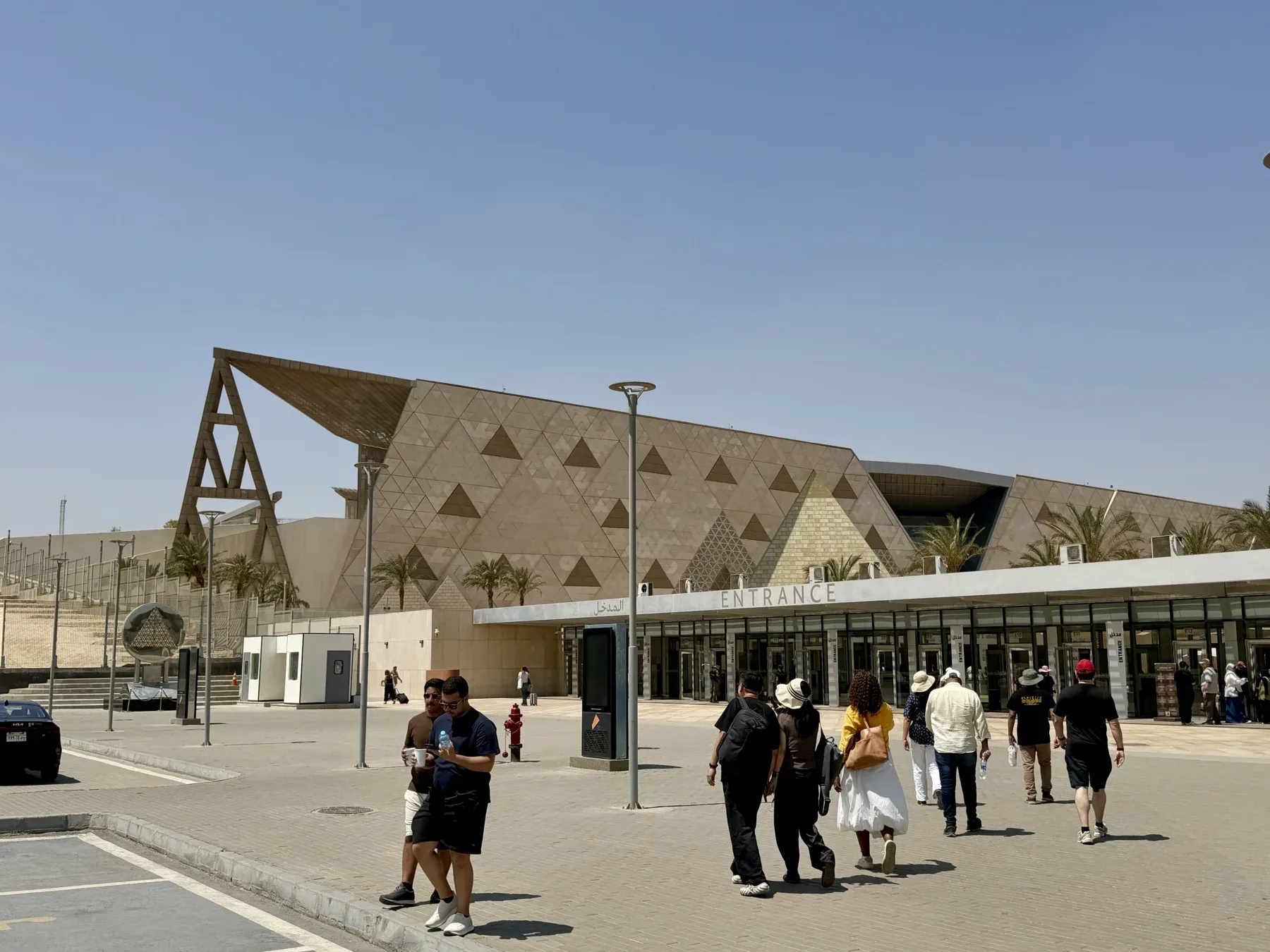
Grand Egyptian Museum
An Egyptian lunch without leaving the museum
The museum is large enough that leaving for lunch can break the day. Its public dining area gives you a proper pause before returning to the galleries.
Lunch · 45–75 minutes. Use it between the plateau and the galleries, not after a rushed final room.
We recheck the open outlets, museum entry window and dietary request.
Fits at its stated time
Wekalet El Ghouri, Islamic Cairo
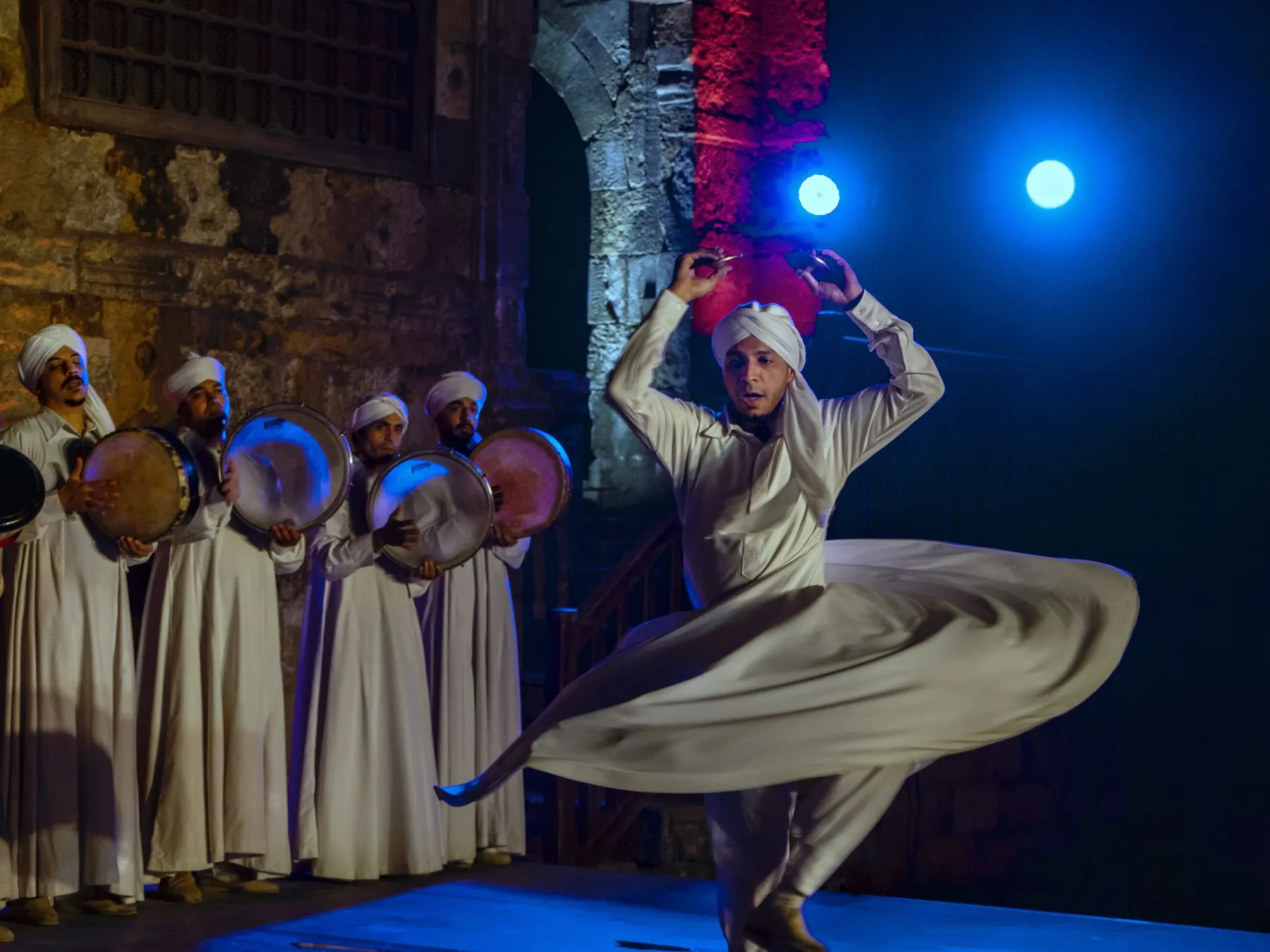
The Tanoura show in Islamic Cairo
A whirling Sufi dance and a folk orchestra in a sixteenth-century caravanserai: the one evening show Cairo visitors mention most.
Evening · About 90 minutes, plus arriving early. On its performance evenings only, usually a few nights a week; we confirm the night.
We confirm the performance night, the start time and the arrival plan for seating.
Add as a request
Giza plateau, the Sphinx terrace
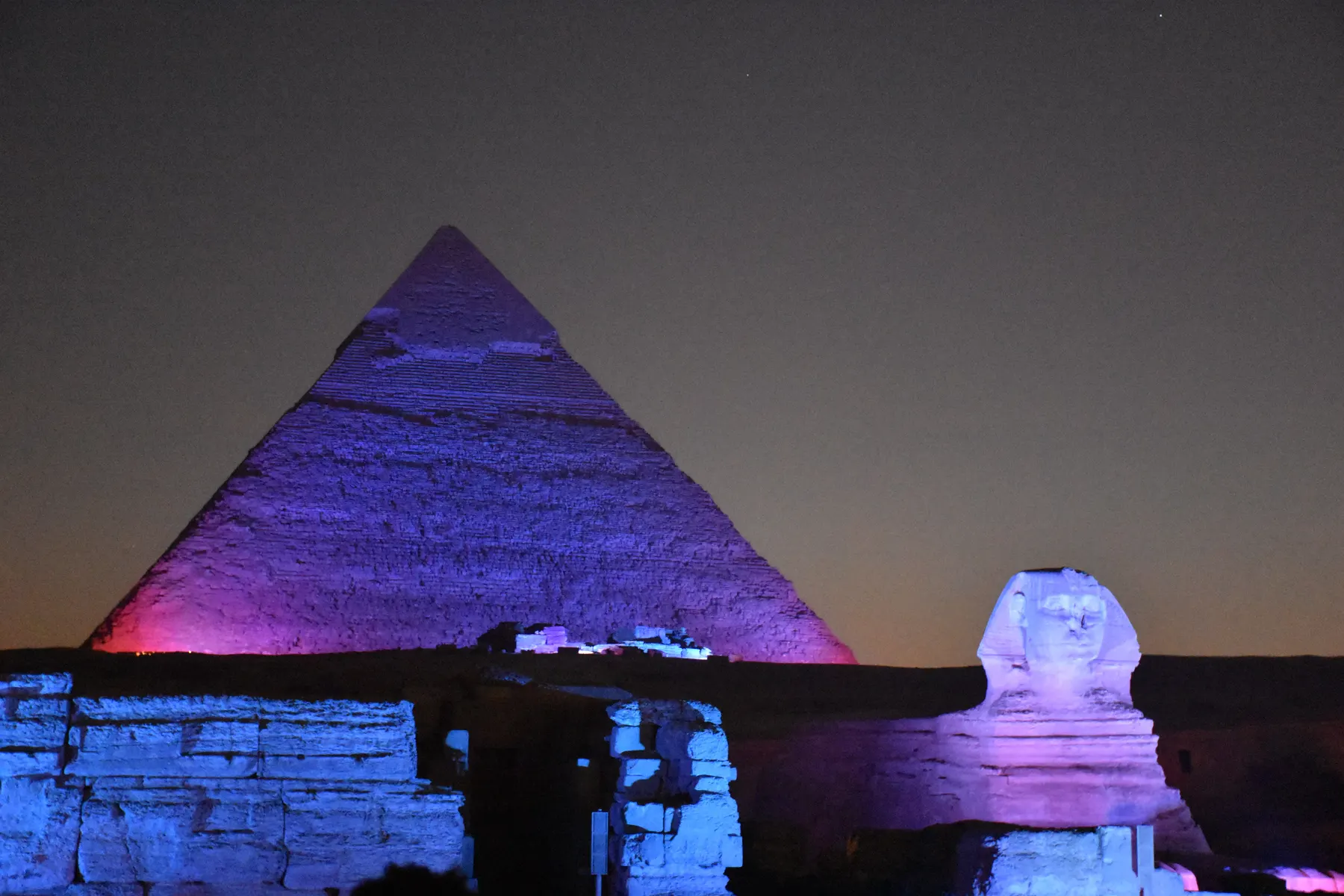
The Sound and Light show at the pyramids
The pyramids after dark, lit in colour with a narrated story. The script is old-fashioned; the setting is not.
Evening · About an hour. Evenings, with sessions in different languages; start times change with the season.
We confirm the session language, the start time and your seats.
Giza, Saqqara and both banks of Luxor in under a week, with the night train doing the travelling.
Length: 6 days · 5 nights
Style: Private
Active pace
from USD 1,075 per person
Deluxe Trips Egypt
Ask for this tour, for your dates.
Send your dates and party size here. We reply with a written quote: the price for your party, what is included and the terms. Nothing is booked until you accept it.
 Grand Egyptian Museum