De quoi s’agit-il ?
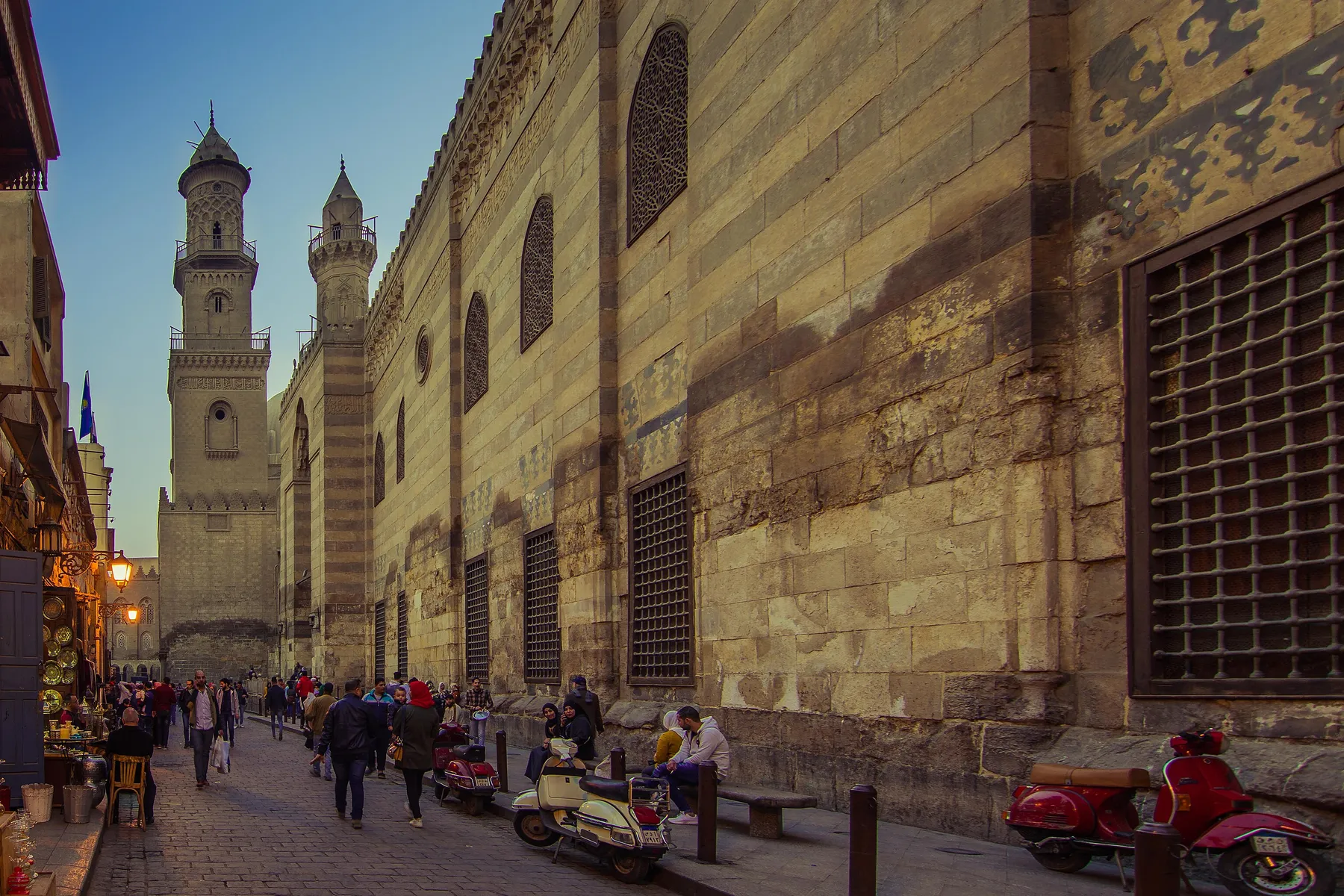
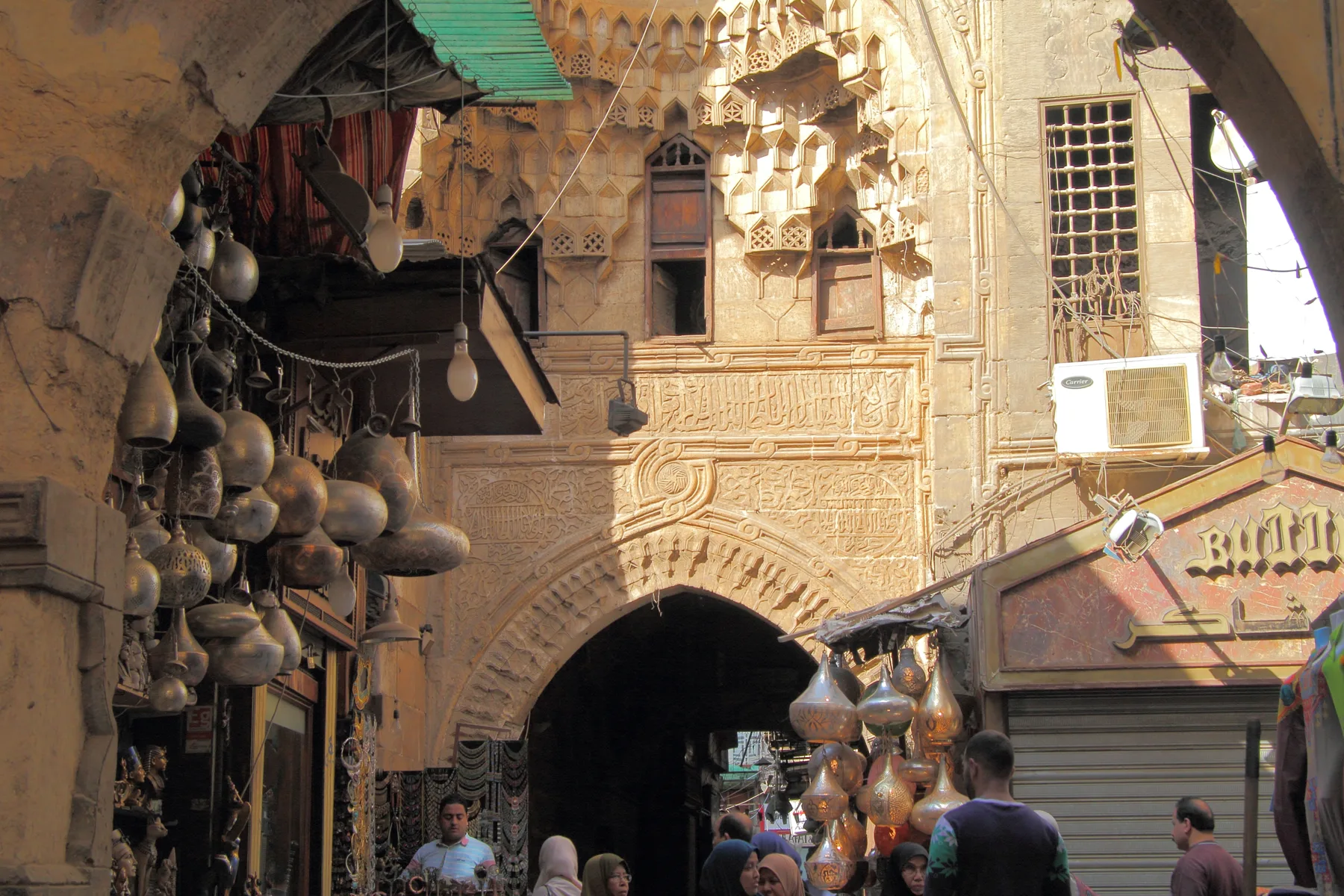
The great bazaar of historic Cairo: a warren of lanes where the city has traded for centuries, and still does. Caroline Williams describes it as bounded by the Mosque of al-Husayn on the east, the old main street, Al-Mu'izz Street, on the west, and Sharia al-Muski on the south. It is not a monument you visit so much as a part of the city you walk into. There is no ticket and no single entrance.
The question it raises is a practical one: whose market is this, and who is guiding you through it?
History
The name comes from a building. The original khan, a caravanserai where travelling merchants lodged above their goods, was built in 1382 by Amir Jarkas al-Khalili, master of the horse to Sultan Barquq.
Historically it was the domain of foreign merchants: Armenians, Jews, Persians and Arabs from beyond Egypt. Williams notes that most of them have since moved away and the market's make-up has changed. Later Mamluk sultans built here too: one of the bazaar's gates, Bab al-Badistan, dates from 1511, in the reign of Sultan al-Ghuri.
What you actually see
Lanes of shops, workshops and cafés, set among the older buildings of the medieval city. Look up from the goods to the stonework as often as you look in the shop windows. Williams points out vestiges of the Mamluk khan itself: a courtyard on the street leading from the western facade of the Mosque of al-Husayn, the old gate with the heavy iron grilles through which merchants lodging in the khan could watch the street below, and a domed gateway from al-Ghuri's time opposite it. The famous Fishawi's teahouse stands by the square.
Practical
Open public streets with no ticket. Allow at least an hour. Williams notes that gold and silver are sold by weight, and that everything else can be bargained for.
In our judgement the market is best seen on your own terms. Travellers often report being steered into particular shops on guided visits, or steered away from the open market altogether. Go with time to wander, compare before buying, and treat a shop described as "government-approved" with the same caution as any other.
Billets, horaires et guides pratiques
- Le Caire islamique
- La rue al-Muizz, la Citadelle et la mosquée de Mohammed Ali.
- Billets des pyramides de Gizeh
- Ce que comprend le billet du plateau et quels intérieurs ajouter.
- Le Grand Musée égyptien
- Horaires, ouvertures tardives, billets à heure fixe et durée à prévoir.
- Billets et horaires des sites
- Quinze sites majeurs dans un tableau daté.