Zum Inhalt springen
Deluxe Trips Egypt

c. 1264 BC · Power carved into a cliff

Abu Simbel

Zwei in eine Klippe über dem Nil gehauene Tempel, abgetragen und weiter oben zum Schutz wieder aufgebaut.

Öffnungszeiten
06:00-17:00Laut . Vor dem Besuch erneut prüfen.
Eintrittskarte
EGP 750 ausländische ErwachseneMinisteriumspreis, abgerufen am .
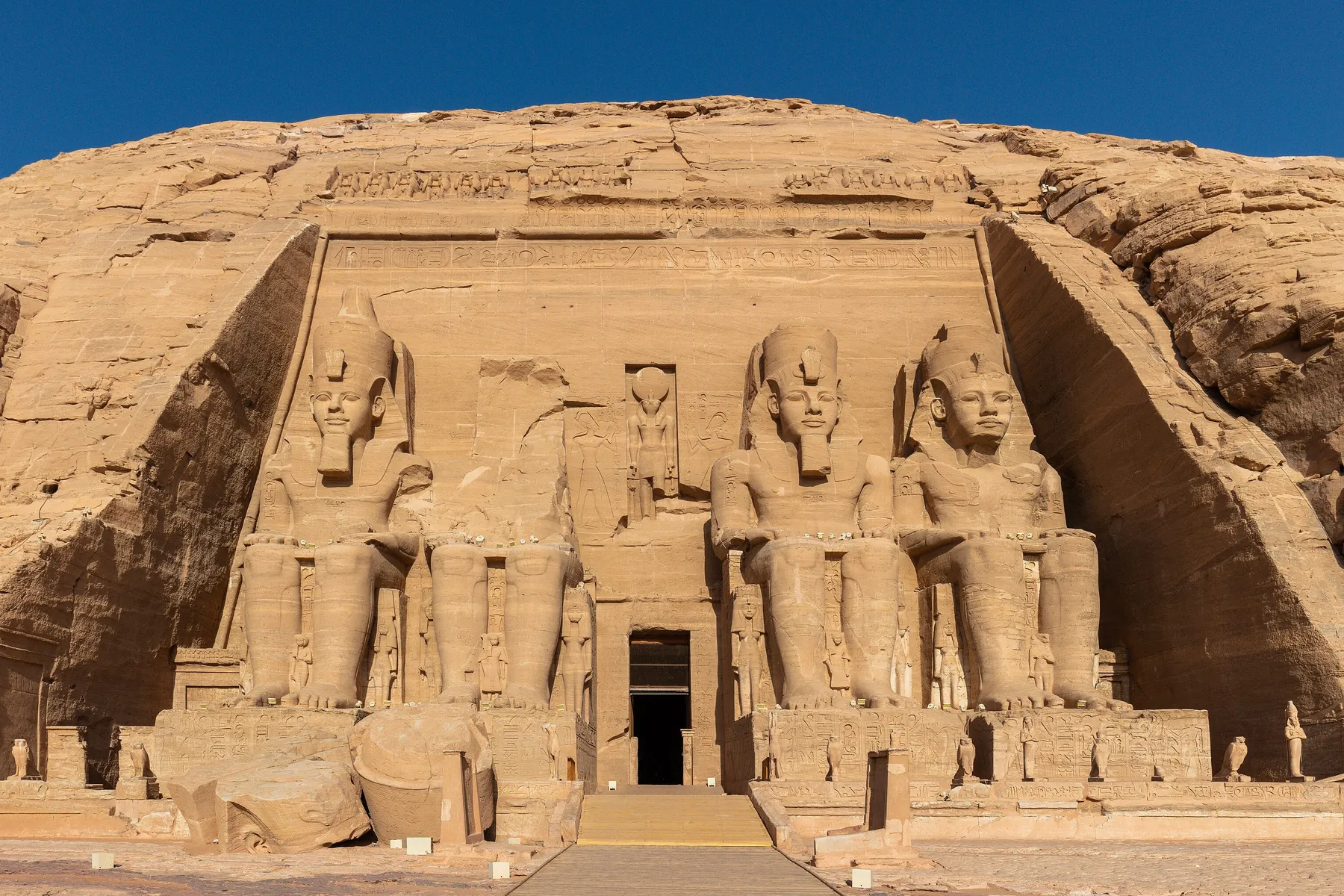
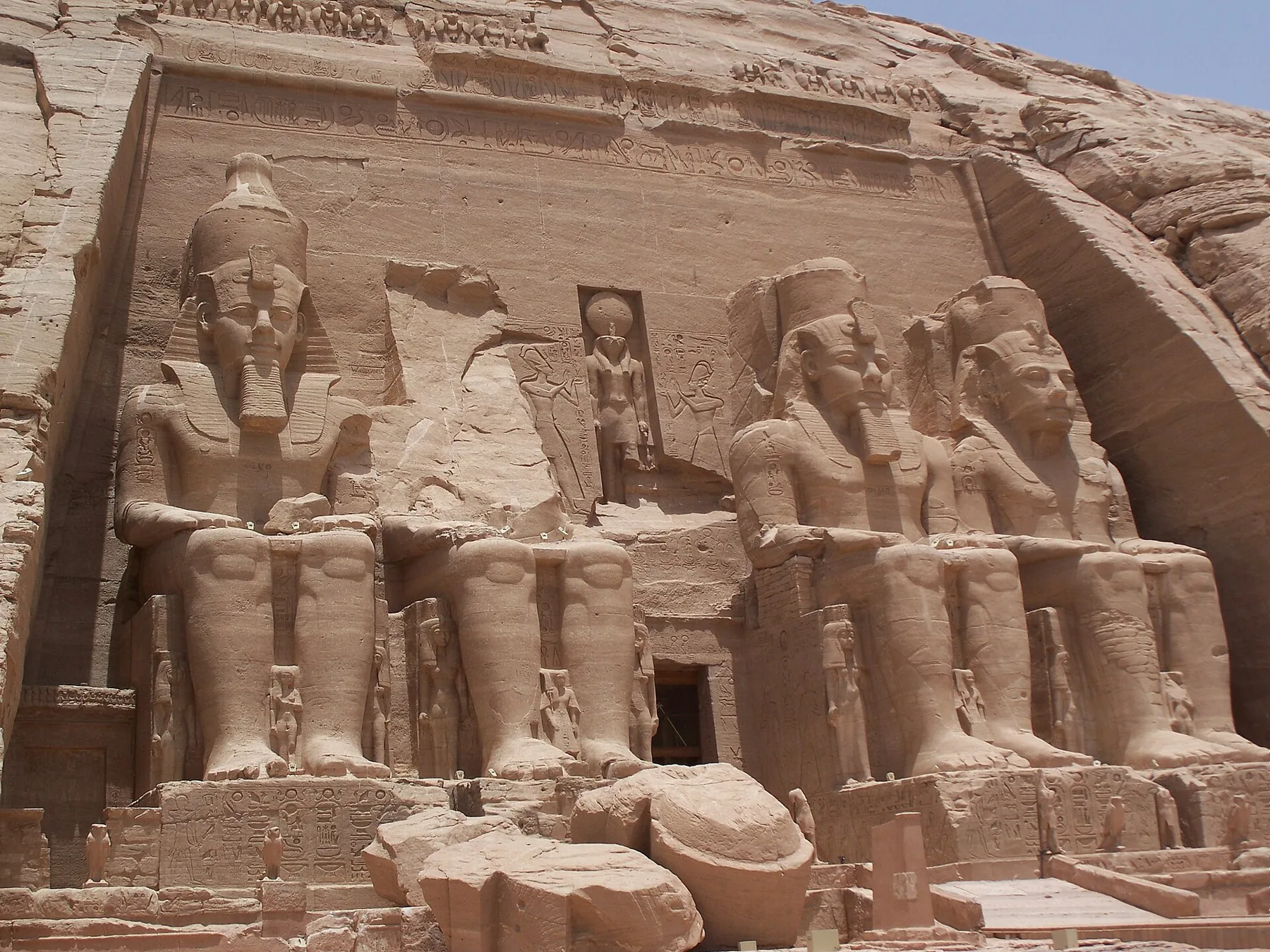
The four seated colossi of Ramesses II on the facade of the Great Temple at Abu Simbel.

Seine Rolle in der Geschichte

Power carved into a cliff

Royal tombs and public temples served different purposes. At Abu Simbel, Ramesses II made a monumental statement in stone: kingship and the gods, facing the river.

Kapitel lesen
  1. Early Dynastic, c. 3000–2686 BC
  2. Old Kingdom, c. 2686–2160 BC
  3. First Intermediate, c. 2160–2055 BC
  4. Middle Kingdom, c. 2055–1650 BC
  5. Second Intermediate, c. 1650–1550 BC
  6. New Kingdom, c. 1550–1069 BC
  7. Third Intermediate, 1069–664 BC
  8. Late Period, 664–332 BC
  9. Ptolemaic, 332–30 BC
  10. Roman, 30 BC–AD 395
  1. c. 2600 BC: They built to be seen, chapter 1
  2. c. 1500 BC: They built to be hidden, chapter 2
  3. c. 1264 BC: Power carved into a cliff, chapter 3
  4. c. 200 BC: They built to remember, chapter 4
c. 1264 BC, in the New Kingdom period (c. 1550–1069 BC). Periods follow The Oxford History of Ancient Egypt (ed. Ian Shaw, 2000); early dates are approximate.

Was das Museum bietet

Two temples cut into the rock face above the Nile in Lower Nubia, just north of the Second Cataract, for Ramesses II. The larger, the Great Temple, has four seated colossi of the king on its façade, and its sanctuary holds statues of Ptah, Amun, Ra-Horakhty and the deified Ramesses. The smaller is dedicated to the goddess Hathor and to Ramesses II's Great Royal Wife, Nefertari.

Nubia was not Egypt's frontier at the time. After defeating Kerma early in the Eighteenth Dynasty, Egypt had absorbed Kush as far as Gebel Barkal and the Fourth Cataract and ruled it as a province. On the pedestals of the Great Temple's colossi, the king's name stands above rows of foreign captives, which Toby Wilkinson reads as a statement of his mastery of all peoples.

History

Ramesses II reigned from 1279 to 1213 BC and filled Egypt with temples and statues, many of them usurped from earlier rulers. In Lower Nubia alone he built a series of eight rock temples, two of them at Abu Simbel. Toby Wilkinson calls it his most remarkable project, and its dominant theme the king's own apotheosis.

The four seated colossi on the Great Temple's façade each measure nearly seventy feet, about 21 m. One of them collapsed in an ancient earthquake, and its fragments can still be seen on the ground.

The Small Temple is easy to pass on the way to the large one. On its façade, on either side of the door, a standing statue of Nefertari is flanked by two colossi of Ramesses: six figures in all. Her colossi are the same size as her husband's, a display the official monuments listing calls very rare.

Visitors began writing on the temple in antiquity. Greek, Carian and Judaean mercenaries marching south with Psamtek II carved their names on the legs of Ramesses II's colossi.

Sand blown down from the rock above later buried much of the Great Temple's front. When Giovanni Belzoni first reached it, sand choked the entrance and covered two-thirds of the façade, and one colossus showed only its head and shoulders. Between 1816 and 1819 he directed hundreds of workers to open the entrance, and he records entering on the morning of 1 August, after two voyages.

In the 1960s the lake forming behind the Aswan High Dam threatened the monuments south of Aswan, and UNESCO ran an international campaign to save them from 1960 to 1980. Between 1964 and 1968 both temples of Abu Simbel were dismantled and reassembled on higher ground. The expanding lake also wiped away much of the archaeological record in the area. The site was inscribed on the World Heritage List in 1979.

What you actually see

Inside the Great Temple, a pillared hall leads back into the rock. Each pillar carries a colossal standing figure of Ramesses in the guise of Osiris. At the rear is the sanctuary, where four statues sit carved from the living rock: Ptah, Amun, Ra-Horakhty and the deified Ramesses. Among the reliefs are depictions of the Battle of Kadesh, an encounter from which, in Toby Wilkinson's account, Ramesses snatched survival rather than victory.

On two days a year the sun's rays enter the temple, cross the main hall and light the innermost statues. The official listing gives the days as 22 February and 22 October. Wilkinson writes that Ptah sits permanently in shadow, and gives the days as 21 February and 21 November: the sources disagree on the second date.

Practical

  • Open 06:00-17:00 daily, per the Ministry listing read on 2026-09-14.
  • The Ministry's tickets cost more on 22 February and 22 October, the two sun days.
  • Photography rules inside the temples change; check them at the door.

Eintritt und Öffnungszeiten

Eintritt für ausländische Erwachsene
EGP 750. 1.200 EGP am 22. Februar und 22. Oktober. Studierende zahlen die Hälfte.
Öffnungszeiten
06:00–17:00, laut .
Quelle
der Seite des Ministeriums für Tourismus und Altertümer zu Abu Simbel, abgerufen am . Preise können sich ändern; maßgeblich ist die Ministeriumsseite. Alle Stätten in einer Tabelle: Eintrittspreise und Öffnungszeiten ägyptischer Stätten.

Eintritt, Öffnungszeiten und Planungstipps

Das Sonnenphänomen von Abu Simbel
22. Oktober und 22. Februar: was Sie sehen und wie Sie den Besuch planen.
Eintrittskarten und Öffnungszeiten der Stätten
15 bedeutende Stätten in einer datierten Tabelle.
Von Luxor nach Assuan
Kreuzfahrt, Zug oder Straße über Edfu und Kom Ombo im Vergleich.
Ägypten erleben
Von den Pyramiden zu den Riffen und in die Wüste.
Three thousand years, in layers

Cut, buried, dug out, moved

Two temples were cut into the rock above the Nile for Ramesses II. Sand later buried much of the Great Temple’s front; in the nineteenth century it was dug out; and in the 1960s, as the lake behind the Aswan High Dam rose, both temples were dismantled and rebuilt on higher ground. Drag through it.
  1. Cut · Reign of Ramesses II

    Reign of Ramesses II

    Not built. Cut.

    Two temples cut into the rock face above the Nile in Lower Nubia, just north of the Second Cataract. On the Great Temple’s façade, four seated colossi of Ramesses II, each nearly 21 m high, sit above rows of foreign captives carved on their pedestals. The smaller temple is dedicated to the goddess Hathor and to Nefertari, the king’s Great Royal Wife.

    Standing

    • Four seated colossi, each nearly 21 m
    • Great Temple, complete
    • Small Temple, complete
  2. Nefertari · The same reign

    The same reign

    A queen at her husband’s scale

    On the façade of the Small Temple, six colossal standing figures are cut from the rock: on either side of the door, a statue of Nefertari between two of Ramesses. Her colossi are the same size as her husband’s, which Egypt’s official monuments listing calls a very rare display. Belzoni put the figures at thirty feet high.

    Standing

    • Nefertari and Ramesses, the same size
    • Small Temple façade, six colossi
  3. The earthquake · In antiquity

    In antiquity

    One colossus comes down

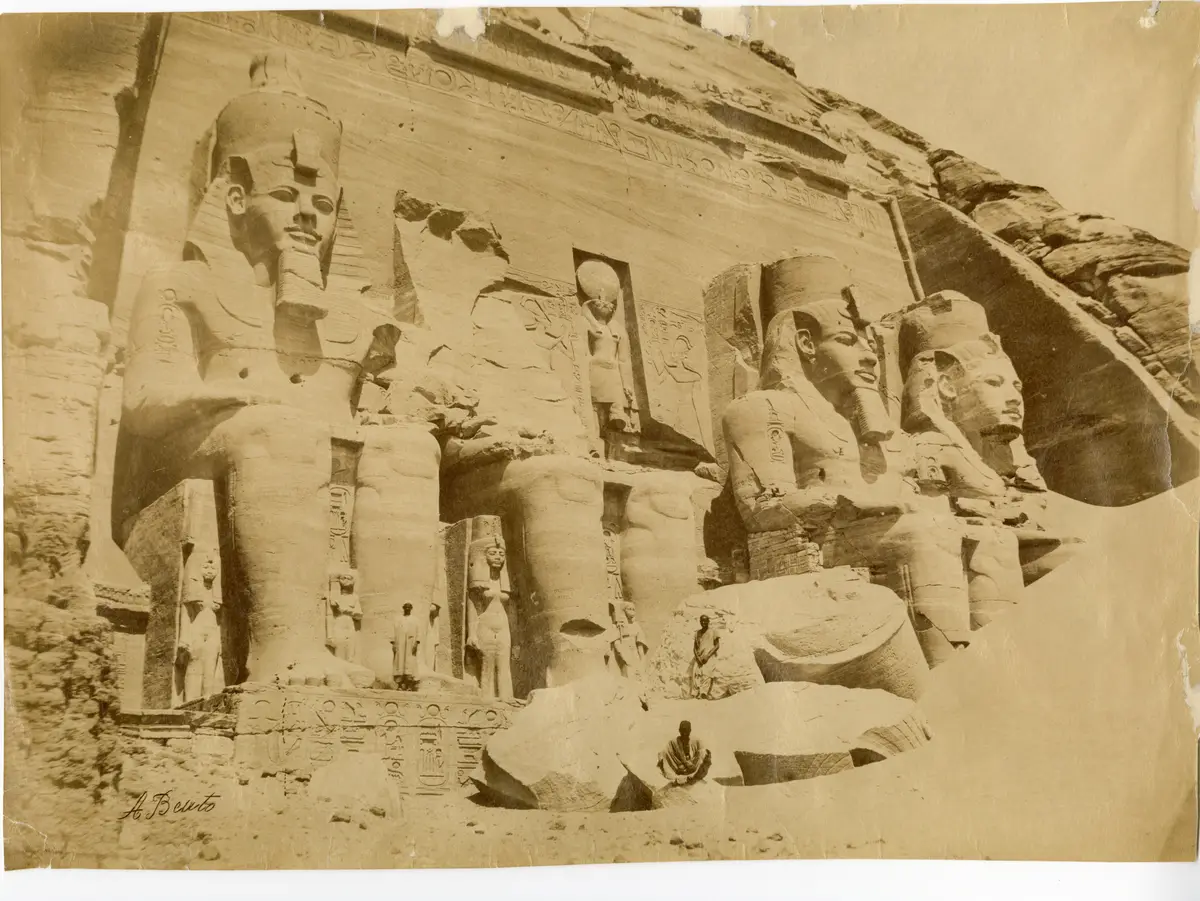
    One of the Great Temple’s four colossi collapsed in an ancient earthquake, and its fragments can still be seen on the ground. In Antonio Beato’s photograph, made between 1870 and 1888, it is the second from the left, its head and torso gone.

    Standing

    • Three colossi intact

    Lost

    • One colossus — head and torso
  4. Names · Under Psamtek II

    Under Psamtek II

    Soldiers sign the king’s legs

    Visitors were writing on Abu Simbel long before modern tourists. Greek, Carian and Judaean mercenaries marching south with Psamtek II stopped at the temple and carved their names on the legs of Ramesses II’s colossi.

    Standing

    • Mercenaries’ names, on the colossi’s legs
  5. The sand · Early nineteenth century

    Early nineteenth century

    Two-thirds under sand

    When Giovanni Belzoni first reached the Great Temple, sand blown down from the rock above had choked the entrance and buried two-thirds of the front. One colossus showed only its head and shoulders, and Belzoni reckoned the doorway lay at least thirty-five feet below the surface of the sand.

    Standing

    • Colossal heads, above the sand

    Lost

    • The façade, two-thirds buried
    • The entrance, buried
  6. Belzoni · 1816–1819

    1816–1819

    The door, found by digging

    Between 1816 and 1819 Belzoni directed hundreds of workers to open the entrance. After two voyages he records reaching the top of the door one evening and entering on the morning of the 1st of August: a pillared hall in which each pillar carries a colossal figure of Ramesses as Osiris, leading back to a sanctuary of four seated statues. Among the reliefs is the Battle of Kadesh, which Ramesses, in Toby Wilkinson’s account, survived rather than won.

    Standing

    • Pillared hall, figures of Ramesses as Osiris
    • Sanctuary, four seated statues
    • Battle of Kadesh reliefs
  7. The move · 1964–1968

    1964–1968

    Dismantled and rebuilt on higher ground

    The lake forming behind the Aswan High Dam threatened the monuments south of Aswan, and UNESCO ran an international campaign to save them from 1960 to 1980. Between 1964 and 1968 both temples of Abu Simbel were dismantled and reassembled on higher ground. The expanding lake wiped away much of the archaeological record around them.

    Standing

    • Both temples, reassembled

    Lost

    • The original site, under the lake
    • Much of the surrounding archaeology
  8. The alignment · Twice a year

    Twice a year

    On two days a year, the sun reaches the sanctuary

    The sun’s rays enter the temple, cross the main hall and light the innermost statues. Egypt’s official listing gives the days as 22 February and 22 October. Toby Wilkinson writes that Ptah sits permanently in shadow and gives the days as 21 February and 21 November: the sources disagree on the second date.

    Standing

    • The sanctuary statues, lit
    • Ptah, in shadow

Look closer

Abu Simbel in an albumen print

Antonio Beato photographed the entrance to the Great Temple some time between 1870 and 1888, with sand still banked against one end of the façade. The print, now in the Museo Egizio, Turin, was made decades before the temples were moved. Go in as far as the copy we serve allows.
Antonio Beato’s albumen print of the Great Temple of Abu Simbel before the move, with sand banked against the façade and a broken colossus.

A photograph from before the move

Everything in this frame was later dismantled and rebuilt on higher ground. Here the colossi still sit in their original rock face, a slope of sand covers the lower part of the fourth figure, and the fallen pieces of the broken colossus lie in front of the façade.

  1. A slope of sand across the façade

    At the right of the frame the ground is a smooth slope of sand rising across the front of the temple, and the lower part of the fourth colossus disappears into it. Belzoni, decades earlier, described sand blown down from the rock above choking the entrance.

  2. The head is gone; a smaller face is not

    Where the second colossus should have a head and shoulders there is a ragged break, with loose blocks resting on it. Lower down, one of the much smaller standing figures carved beside the colossi’s legs still has its face.

  3. Somebody wrote on it

    Scratched into the stone is a name in Latin capitals with two digits beneath it; the digits are easier to read than the name. Beside it stands a man in a pale robe, and just to his right a fainter, paler figure stands half behind the colossus’s leg.

  4. A. Beato

    Bottom left, on the print itself, the photographer signed his name. What you are looking at is an albumen print on paper, 26 by 36 centimetres, now in the photographic archive of the Museo Egizio, Turin.

Besuchen mit

Erleben Sie Abu Simbel vor Ort mit einer Führung.

2 Touren nehmen den Ort in ihr Tagesprogramm auf. Fahrt- und Besichtigungszeit stehen vor Ihrer Anfrage dabei.
Bildnachweise (4)

I, Rémih, CC BY-SA 3.0; Mohammed Moussa, CC BY-SA 4.0; Diego Delso, CC BY-SA 4.0; KennyOMG, CC BY-SA 4.0. Für die Anzeige verkleinert und zugeschnitten.