Experiences · thrills and crafts
Egypt by fire, stone, water and sand
Go down inside a pyramid, dive to a wartime wreck and walk a Bedouin trail. Blow glass, carve stone and sit at a loom. Choose an element, then how much nerve you bring. Every experience is arranged around your route, and nothing is promised until it is confirmed.
1 Choose an element
- All four13 experiences
- Fire2 experiencesFurnaces and solder: glass gathered hot, and a lantern made for Ramadan.
- Stone3 experiencesDown inside a pyramid, into a tomb's evidence, and a chisel in calcite.
- Water3 experiencesA war wreck on the seabed, one breath in Dahab, and a first kite.
- Sand and thread5 experiencesDunes and mountain trails, and the looms and needles of the people who live there.
2 How much nerve do you bring?
Anyone who is curious. You sit, watch, try and ask.
Showing 7 of 13 · Show everything
Furnaces and solder: glass gathered hot, and a lantern made for Ramadan.
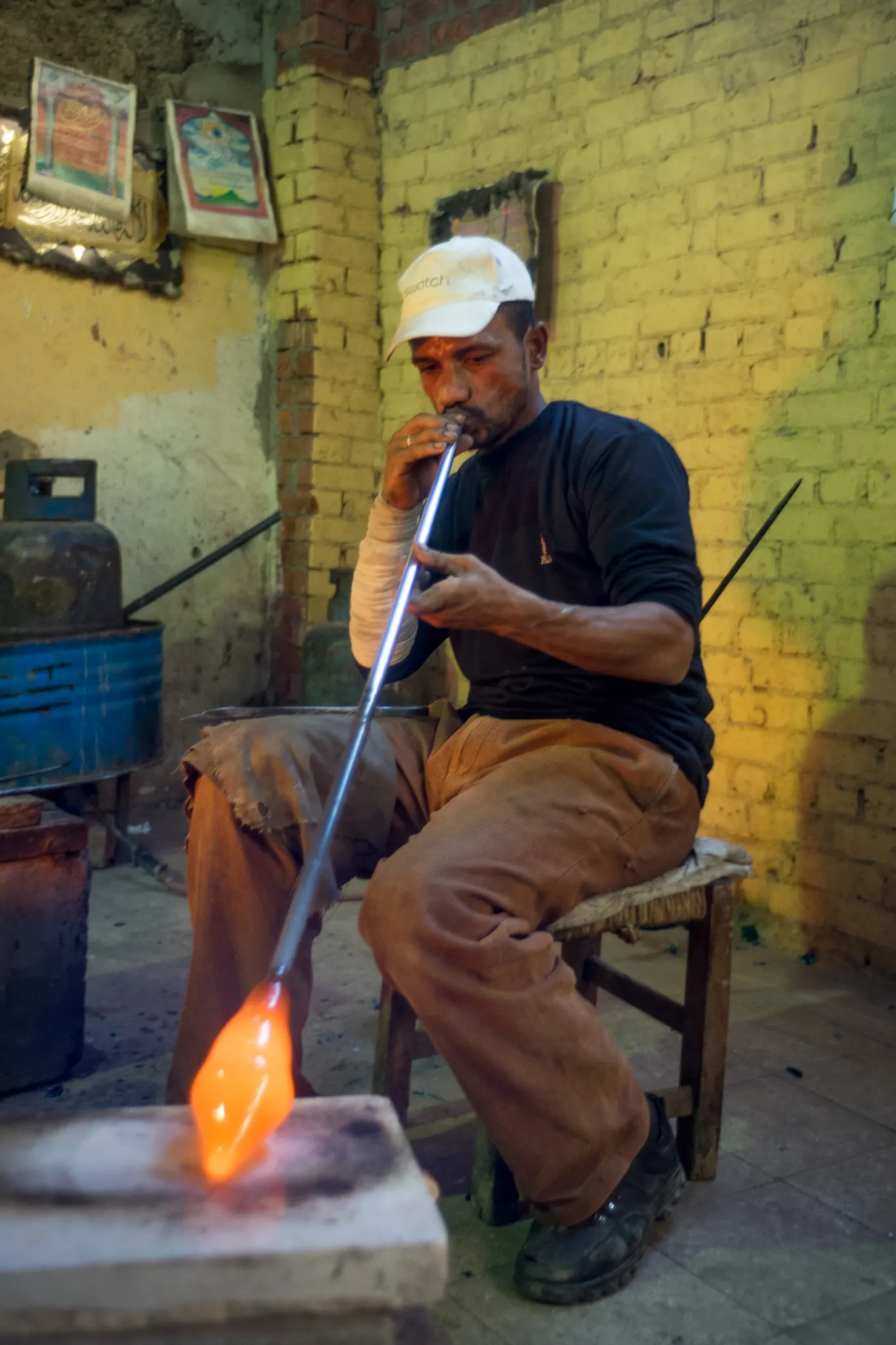
Glass from the furnace
Broken bottles become a cup in front of you, in one of Cairo's last glassblowing workshops.Recycled Cairo's historic workshops blow their glass from broken glass gathered across the city
Nerve: Curious2–3 hours
Open the layerswhat happens · what it asks · what we confirm
What happens
- Stand at the furnace mouth while a maker gathers molten glass on the end of a pipe.
- Watch a vessel take shape by breath, gravity and a few wooden tools.
- Try the pipe yourself where the maker judges it safe, and choose the colour of a small piece.
- Leave the piece to cool slowly, then collect it or have it sent on.
What it asks of you
Heat and noise more than nerve. You stand close to a furnace in closed shoes and cotton clothes, and you follow the maker's word about where to stand.
Before you go, we confirm
- Which workshop hosts, and whether visitors may blow glass or only watch
- Protective clothing, eye protection and where children may stand
- Whether your piece can cool in time to leave with you, or is sent on
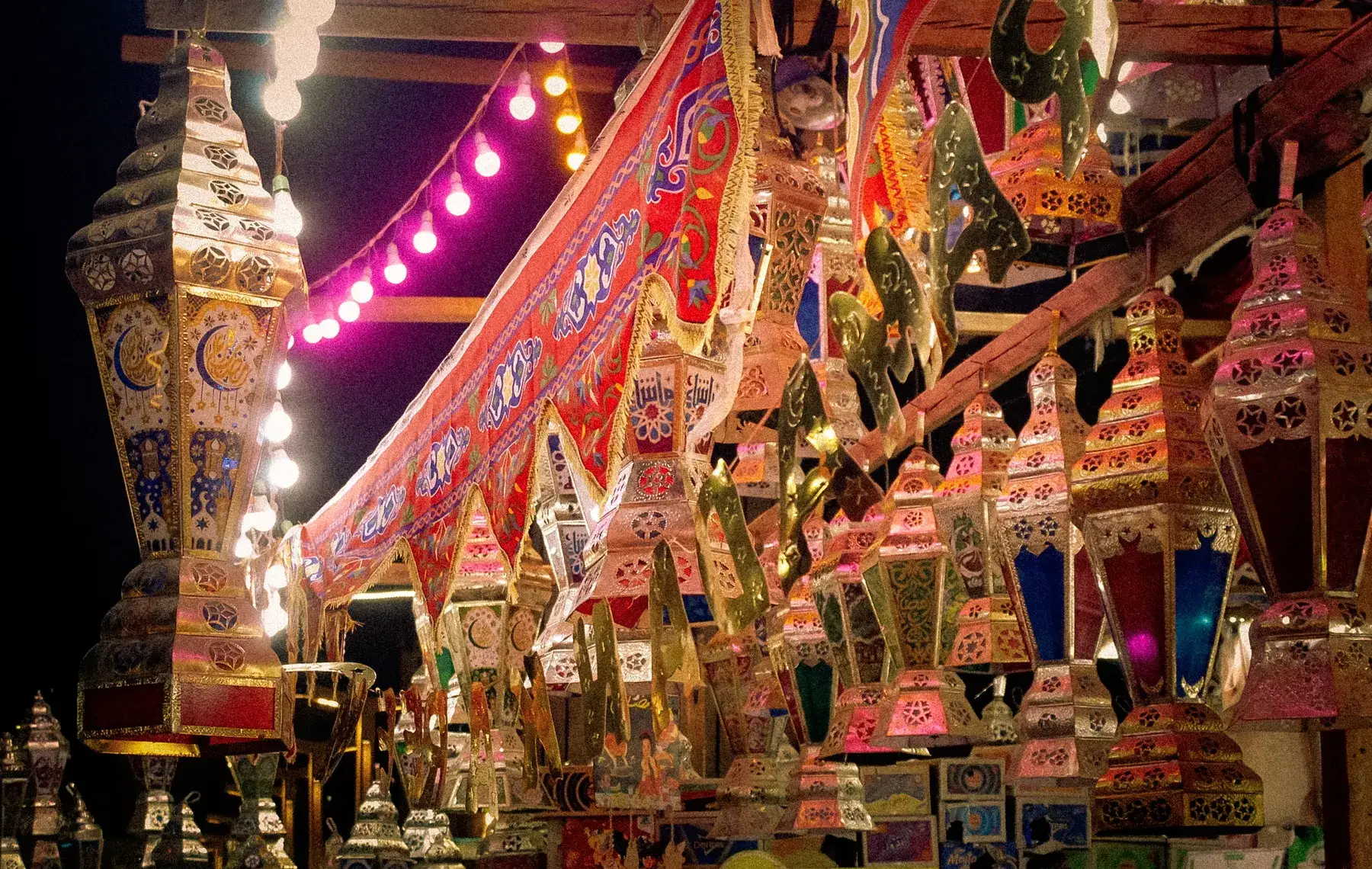
A lantern, cut and soldered
Tin, coloured glass and a soldering iron in the workshops that make Egypt's Ramadan lanterns.All year the workshops make lanterns year-round for a single month, Ramadan
Nerve: Curious2–3 hours
Open the layerswhat happens · what it asks · what we confirm
What happens
- Walk the lantern makers' streets, where the fanous hangs in every size.
- Cut and fold tinplate panels with a maker, then set coloured glass into them.
- Solder the joints and fit the handle, with the maker's help.
- Light it once before you take it home.
What it asks of you
Patience with small sharp edges and a hot iron. Gloves are sensible; no skill is assumed.
Before you go, we confirm
- Which workshop hosts, and in which months it has time for visitors
- Whether you make a whole lantern or a single panel in the time
- How a lantern with glass travels home
Down inside a pyramid, into a tomb's evidence, and a chisel in calcite.
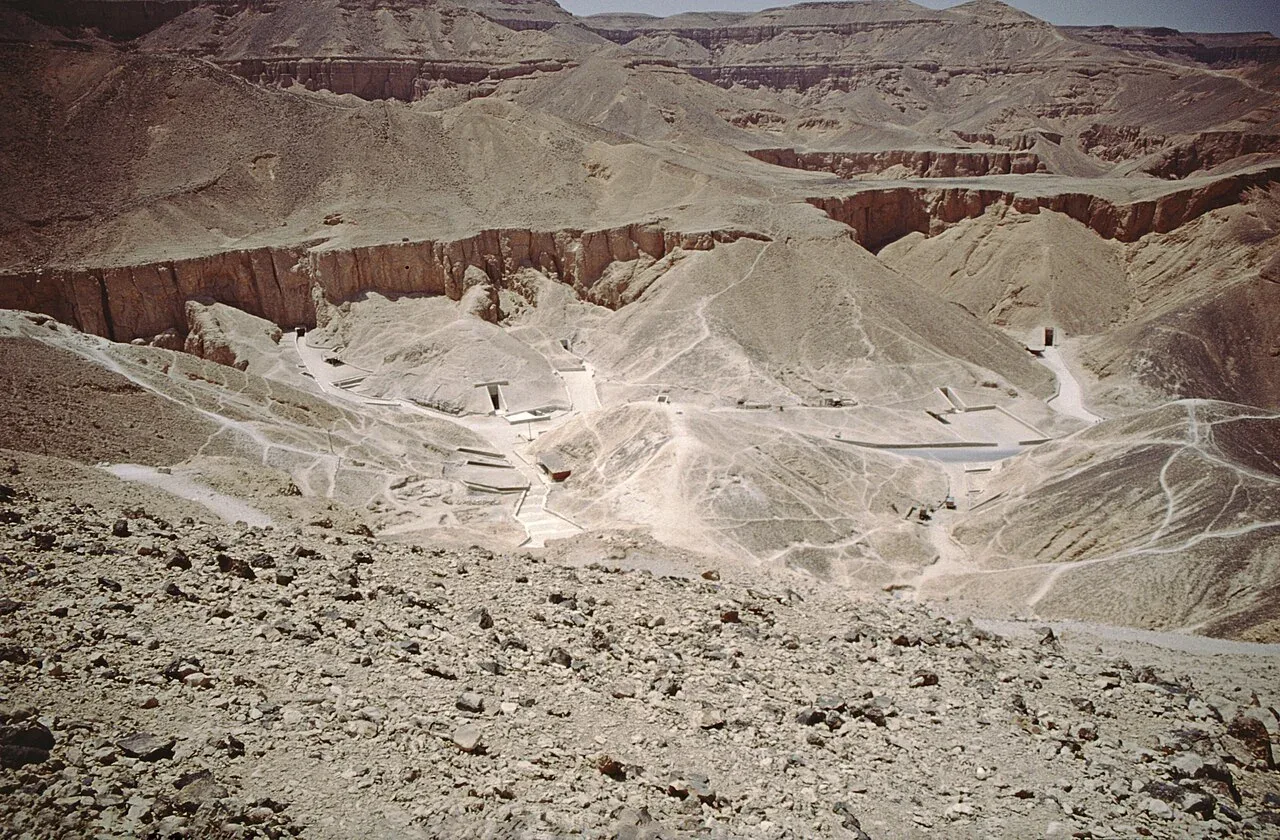
The tomb robbed twice
An archaeology thriller: the excavators' own evidence that Tutankhamun's tomb was entered in antiquity.2 ancient entries into the tomb, as Howard Carter reconstructed them
Nerve: CuriousHalf day
Open the layerswhat happens · what it asks · what we confirm
What happens
- Start with three observations the excavators recorded, before any explanation.
- Test each against the competing readings, and decide what would change your mind.
- Walk the Valley of the Kings with the case in hand.
- Keep the recorded damage, the reconstruction and the guesses about the thieves apart.
What it asks of you
Attention, not stamina: a morning of looking closely and arguing well. The Valley is hot and exposed by midday.
Before you go, we confirm
- A guide who can teach from the excavation records, not only the story
- Which tombs are open on your date, and any extra ticket
- Start time, to be in the Valley before the heat
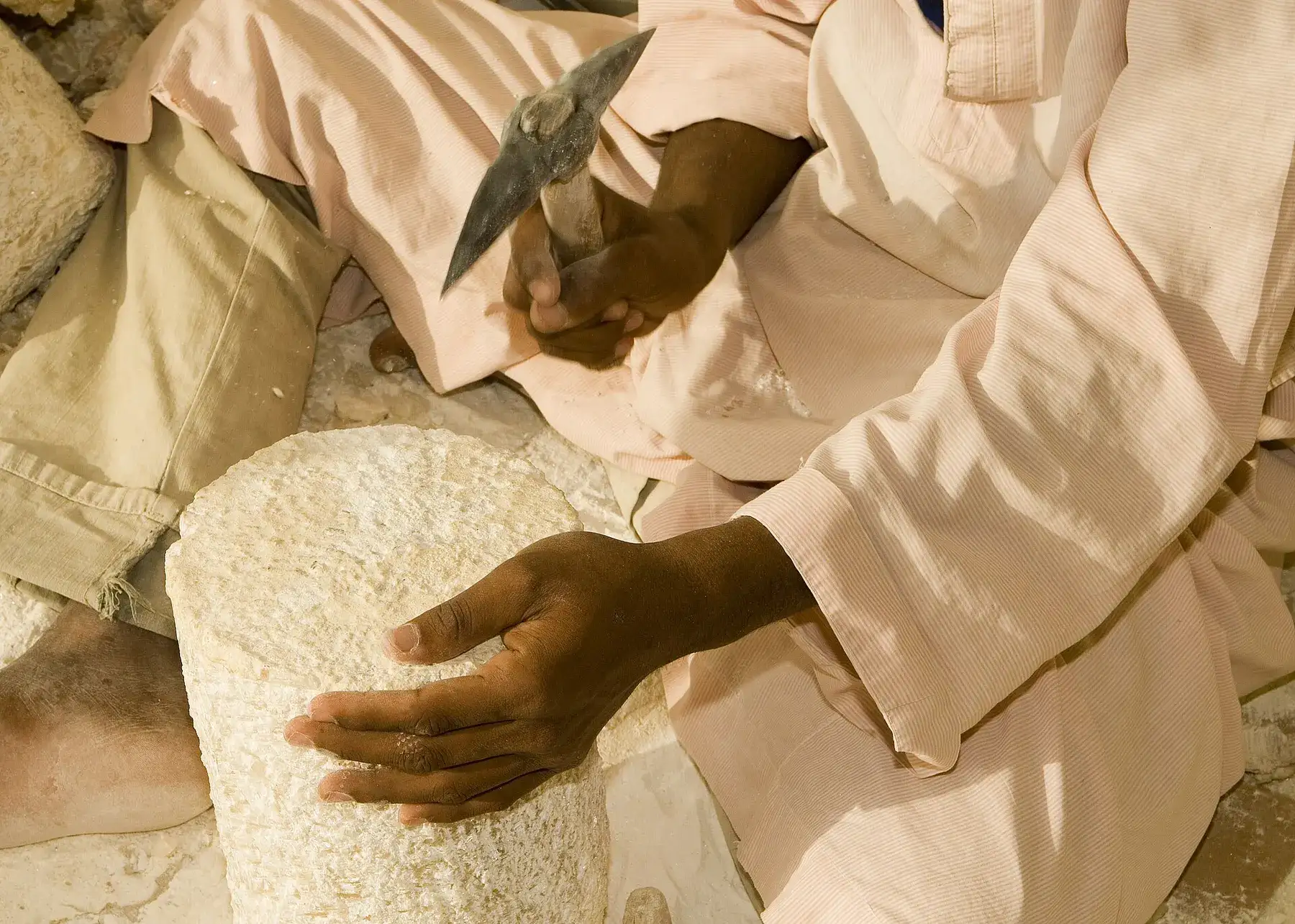
Calcite, carved at Qurna
A chisel, a block of Egyptian 'alabaster' and a family workshop between the royal tombs and Deir el-Bahari.Calcite is what Egyptian 'alabaster' is, a harder stone than the gypsum alabaster of Europe
Nerve: Curious2–3 hours
Open the layerswhat happens · what it asks · what we confirm
What happens
- Sit in a family workshop where the stone is sawn, carved and polished by hand.
- Hollow a small piece with a chisel and file, as the carver shows you.
- Hold real stone and a cast copy side by side, and learn the difference.
- Take home what you carved, and nothing you were pressed to buy.
What it asks of you
Dust and patience. You are shown the tools; no skill is assumed.
Before you go, we confirm
- A workshop that carves on site and does not run a sales stop
- Dust protection, and whether children can take part
- Packing for a carved piece in your luggage
Dunes and mountain trails, and the looms and needles of the people who live there.
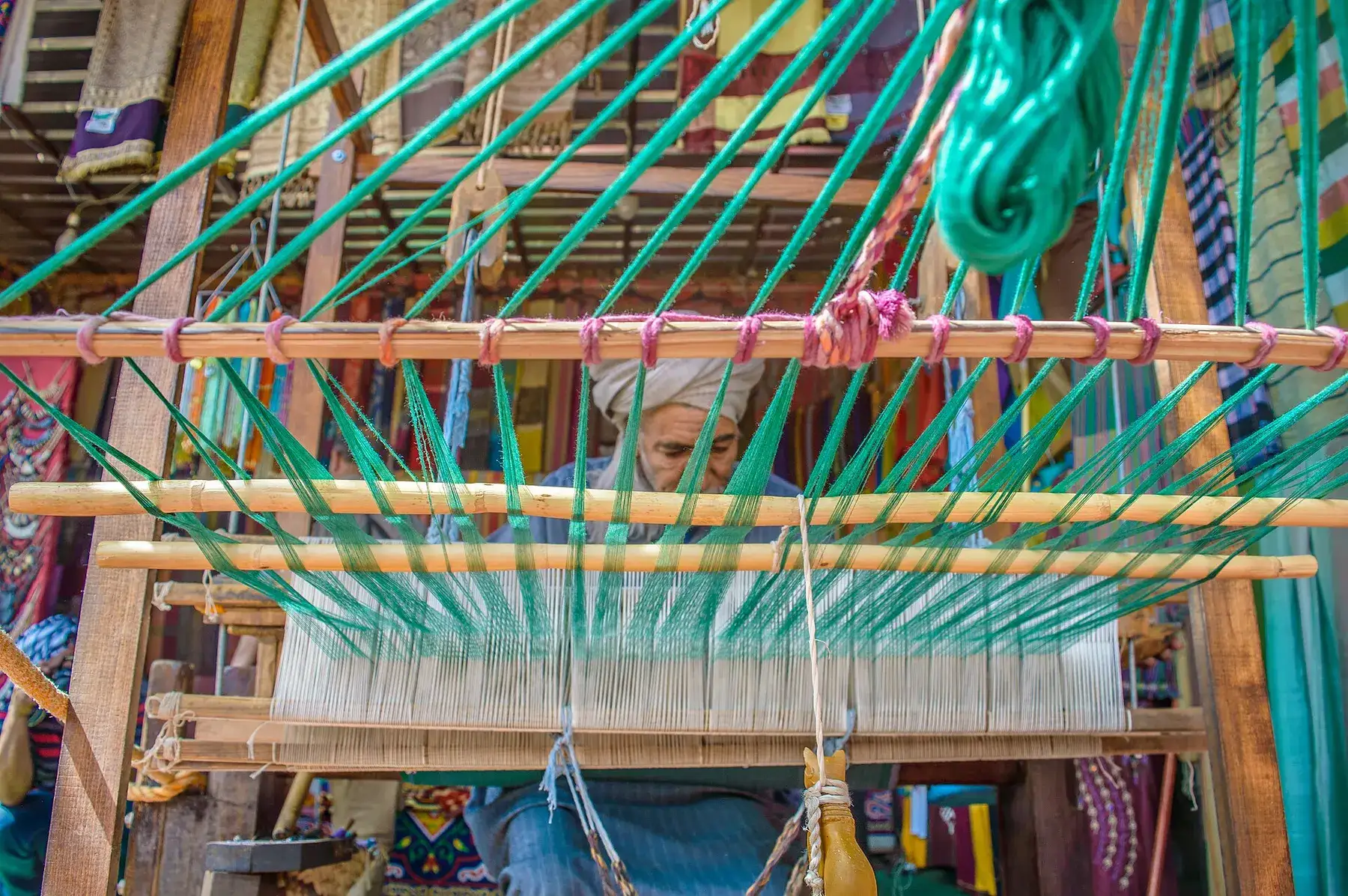
The looms of Naqada
A hand loom on the west bank north of Luxor, and a craft UNESCO lists as in urgent need of safeguarding.2020 the year UNESCO listed Upper Egypt's hand weaving as needing urgent safeguarding
Nerve: CuriousHalf day
Open the layerswhat happens · what it asks · what we confirm
What happens
- Sit beside a weaver at a hand loom and watch a shawl grow thread by thread.
- Learn how the loom is set up, which takes longer than the weaving.
- Throw the shuttle yourself for a few rows.
- See finished pieces and hear who still weaves, and why fewer do.
What it asks of you
Patience and a steady rhythm. No skill is assumed.
Before you go, we confirm
- A weaver or workshop that welcomes visitors, and how they are paid
- Transport from Luxor and the time it takes
- Whether pieces can be bought directly from the weaver
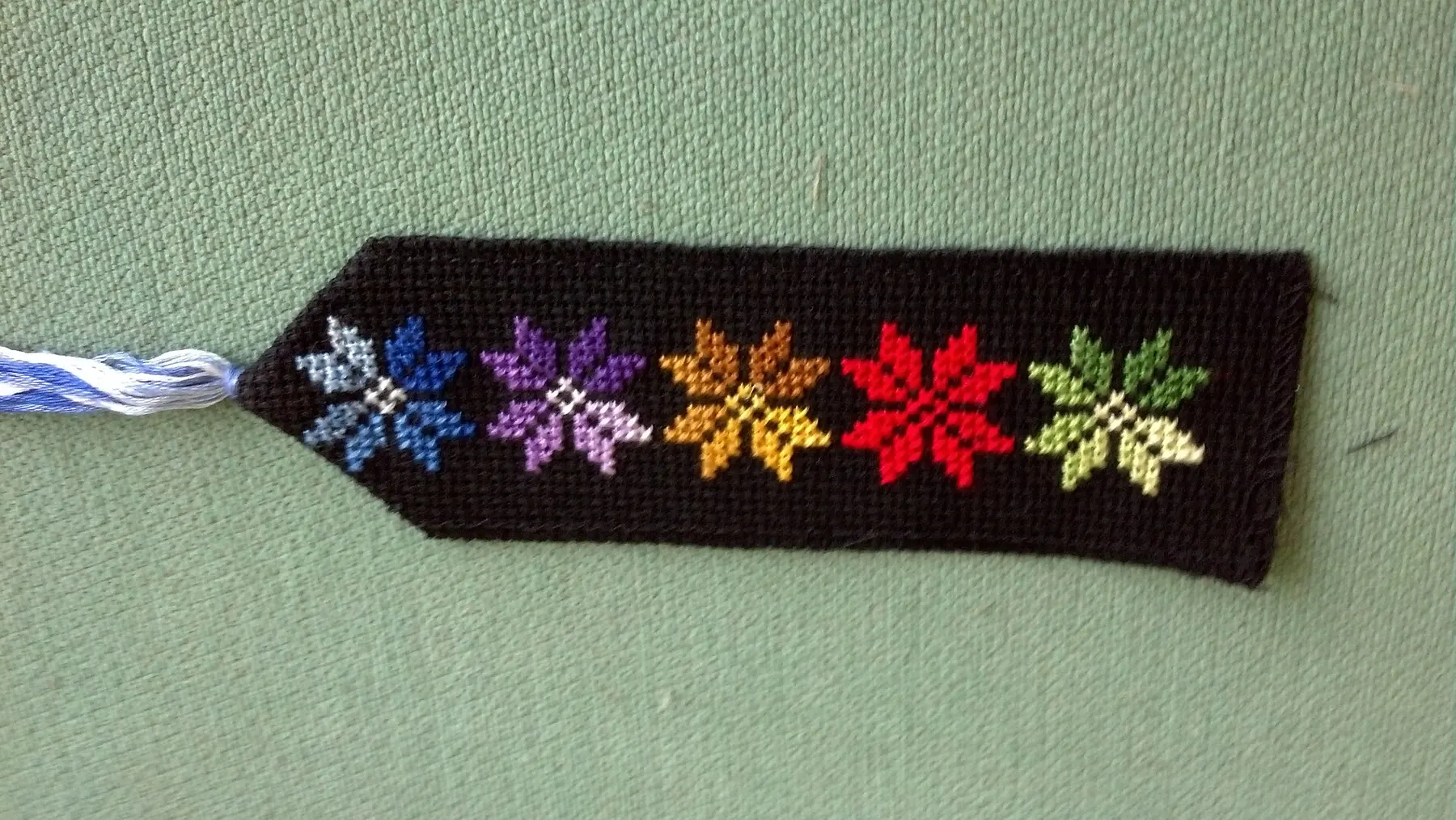
Bedouin embroidery
Cross-stitch with the women who keep the Sinai's designs, in the mountain town of St Catherine.1 Sinai tribe, the Jabaliya, is described as making non-geometric designs
Nerve: Curious2–3 hours
Open the layerswhat happens · what it asks · what we confirm
What happens
- Meet embroiderers and see the pieces a tribe is known for.
- Learn a traditional stitch and motif on a small square.
- Hear what each design means, and which are the Jabaliya's own.
- Buy, if you wish, directly from the women who made the work.
What it asks of you
Good light and a steady hand. No skill is assumed.
Before you go, we confirm
- A women's group that welcomes visitors, on their terms
- Whether men in your party may join
- How the women are paid for their time
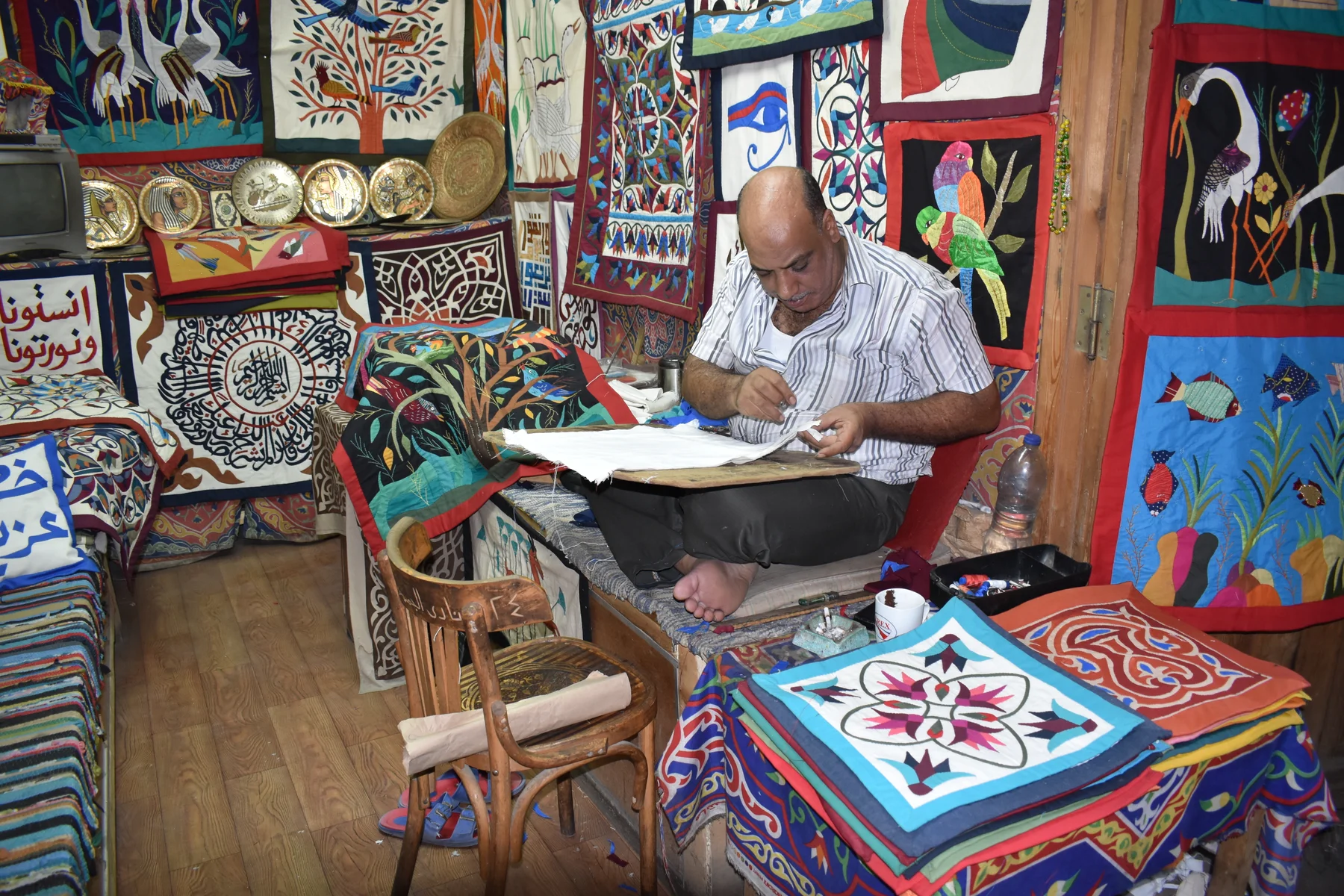
Khayamiya with the tentmakers
Appliqué by hand in Cairo's covered Street of the Tentmakers, where a panel takes weeks.c. 1650 when Radwan Bey built the covered street the tentmakers still work in
Nerve: Curious2–3 hours
Open the layerswhat happens · what it asks · what we confirm
What happens
- Walk in through Bab Zuwayla to the covered street.
- Sit beside a maker: the shape cut, the edge turned under, the stitch.
- Stitch a small motif of your own on a practice square.
- Look through finished panels and see the hours in them.
What it asks of you
Patience with a needle. You will be slow, and that is how you learn why a panel costs what it does.
Before you go, we confirm
- Which workshop and maker hosts
- Whether your motif can be finished and framed or sent on
- A time when the street is working, not closed
How an experience earns a place here
- A story, a skill or accessIf a marketplace already sells it as a ticket and there is nothing more to it, it is not here.
- Licensed people, checked before you goDivers, drivers and guides are confirmed for your date. Every page lists what we confirm first.
- Makers named when they agreeNo host appears here until they have agreed to be named. Every experience is a concept until then, and the page says so.
Ask about an experience
Tell us which ones and where you will be. Concept · on request means we still confirm the host, the date and the terms with you before anything is booked.
Your Egypt, your pace
Request a quote
Tell us your dates and party size. A quote will confirm the itinerary, total price, inclusions and cancellation terms before you decide.
Sending a request does not make a booking or reserve availability.
Photography credits (13)
FischerFotos, CC BY-SA 4.0; Alaazzpov, CC BY-SA 4.0; Olaf Tausch, CC BY 3.0; Zezinho68, CC BY-SA 4.0; David Dennis from Scotts Valley, CA, USA, CC BY-SA 2.0; Wikicomman, CC BY-SA 4.0; Lars Plougmann, CC BY-SA 2.0; Marc Ryckaert, CC BY 3.0; Roland Unger, CC BY-SA 3.0; Mohamed kamal 1984, CC BY-SA 4.0; Ahmed Emad H, CC BY-SA 4.0; PMATAS, CC BY-SA 4.0; Hatem Moushir, CC BY-SA 4.0


_04.jpg)


.jpg)


