Make · On request

Bread, and the oven it comes out of

Bread that waits for the sun.

Eish shamsi: sourdough left to rise in the sun, then baked in a domed clay oven.

LuxorHalf day
Ask about this experience
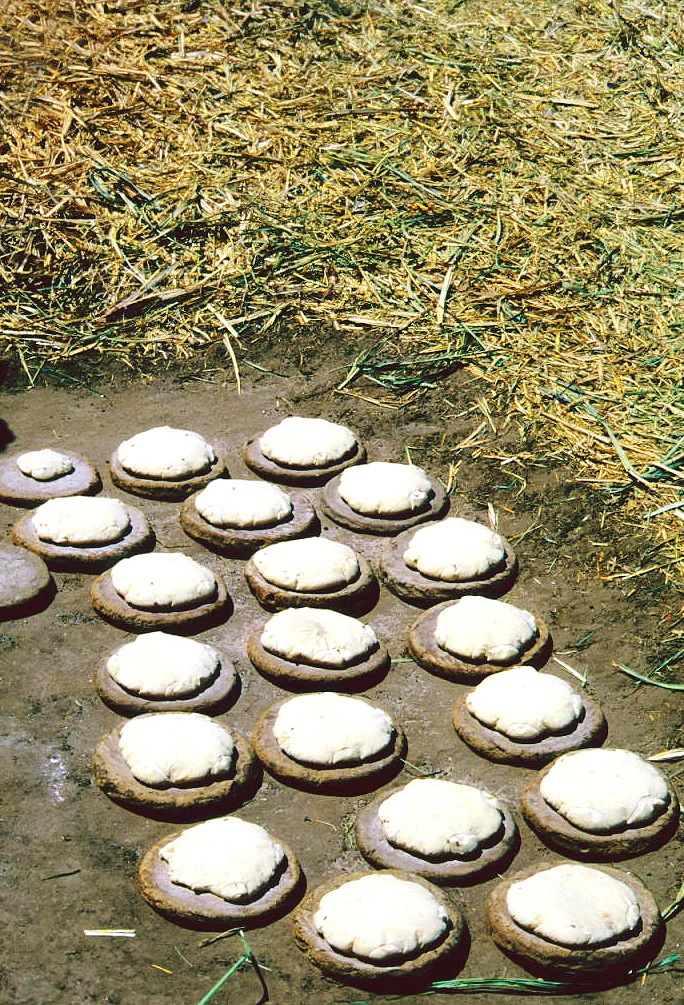
About two dozen pale rounds of dough, each on its own dark mud disc, set out on bare earth beside a heap of straw.

Luxor’s village bread is not the pocket bread of Cairo. Eish shamsi, “sun bread”, is a sourdough: a culture kept from the last batch, dough left overnight, then rounds set out on mud discs to rise in the sun before they go into a domed oven of Nile clay.

Just before baking, each round is slit around the edge with a straw, in a pattern that differs from household to household. You will be worse at it than everybody watching. That is most of the afternoon.

Eish shamsi takes two days. You arrive for the part that needs hands.

How it could run

A proposed shape, confirmed with you when it is arranged.

  1. Arrive after the dough has been left overnight.
  2. Shape rounds and set them on mud discs to rise in the sun, turning them once or twice.
  3. Cut the edge with a straw, in the household’s own pattern.
  4. Watch them go into the domed clay oven, and eat the first one out.
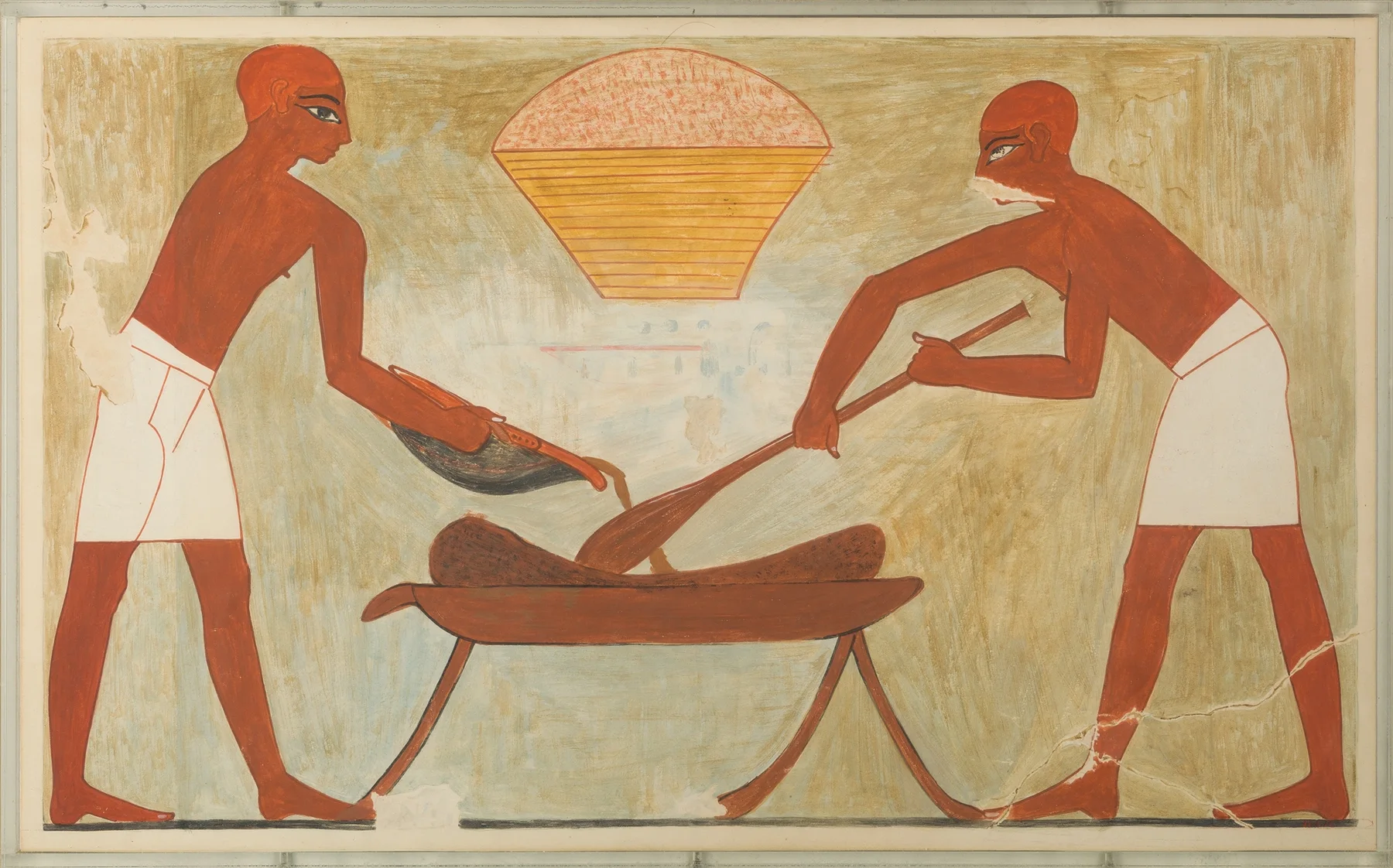
Painted facsimile: two men in white kilts at a trough on legs. One pours from a dark vessel onto a brown mass of dough; the other works it with a long paddle.
Tomb of Rekhmire (TT100), Dynasty 18, c. 1504–1425 BC. Facsimile by Nina de Garis Davies, The Met 31.6.16.
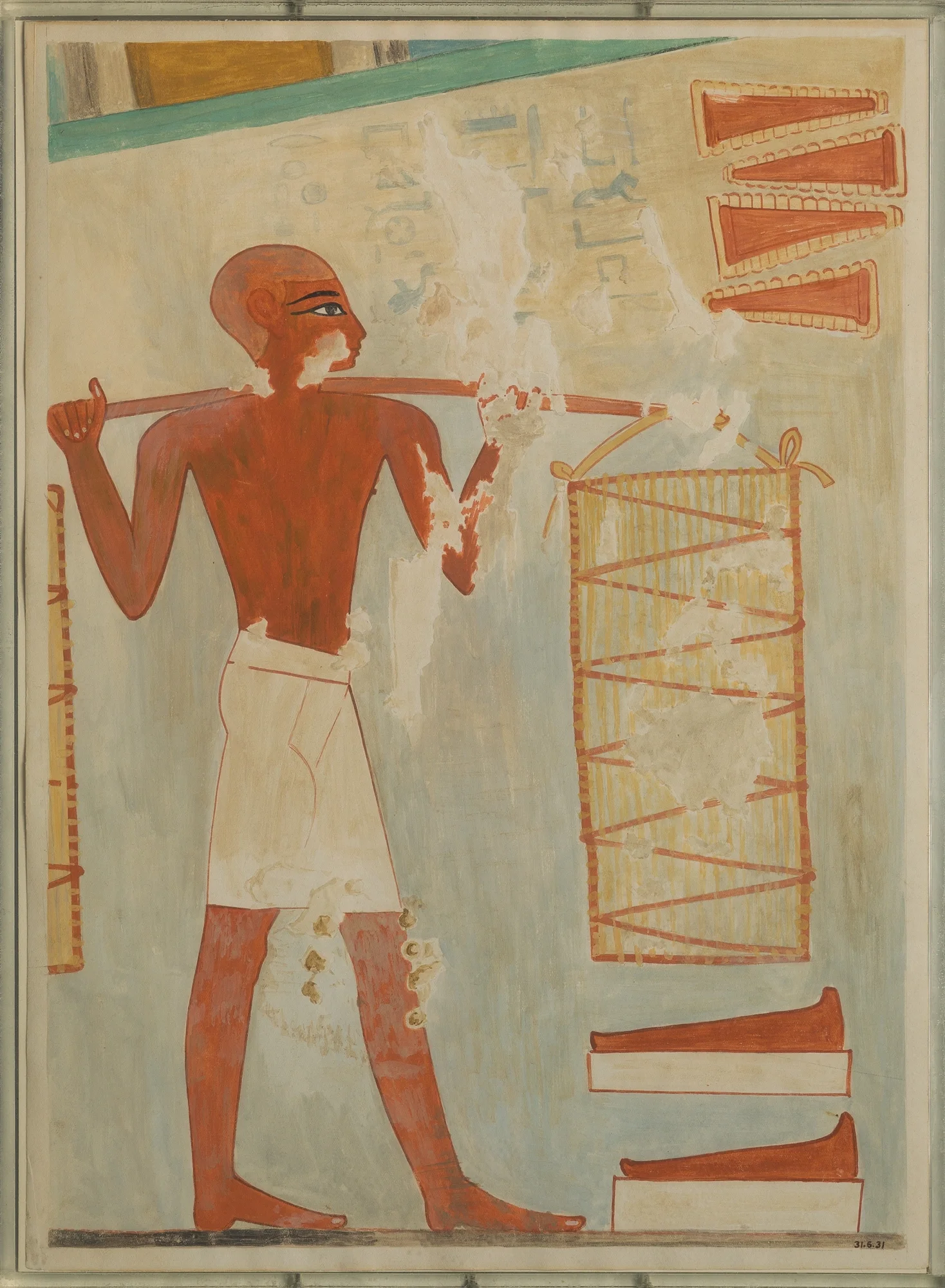
Painted facsimile: a man carries a pole on his shoulder with a tall lattice container hanging from it. Tall conical loaves are painted beside him.
Tomb of Rekhmire (TT100), Dynasty 18, c. 1504–1425 BC. Facsimile by Nina de Garis Davies, The Met 31.6.31.

Arranged on request, around your route.

Tell us when you will be in Luxor and we will confirm what is possible before anything is booked.

Pairs well with Kyphi, from the temple recipe.

Ask about it

Photo: LBM1948, CC BY-SA 4.0