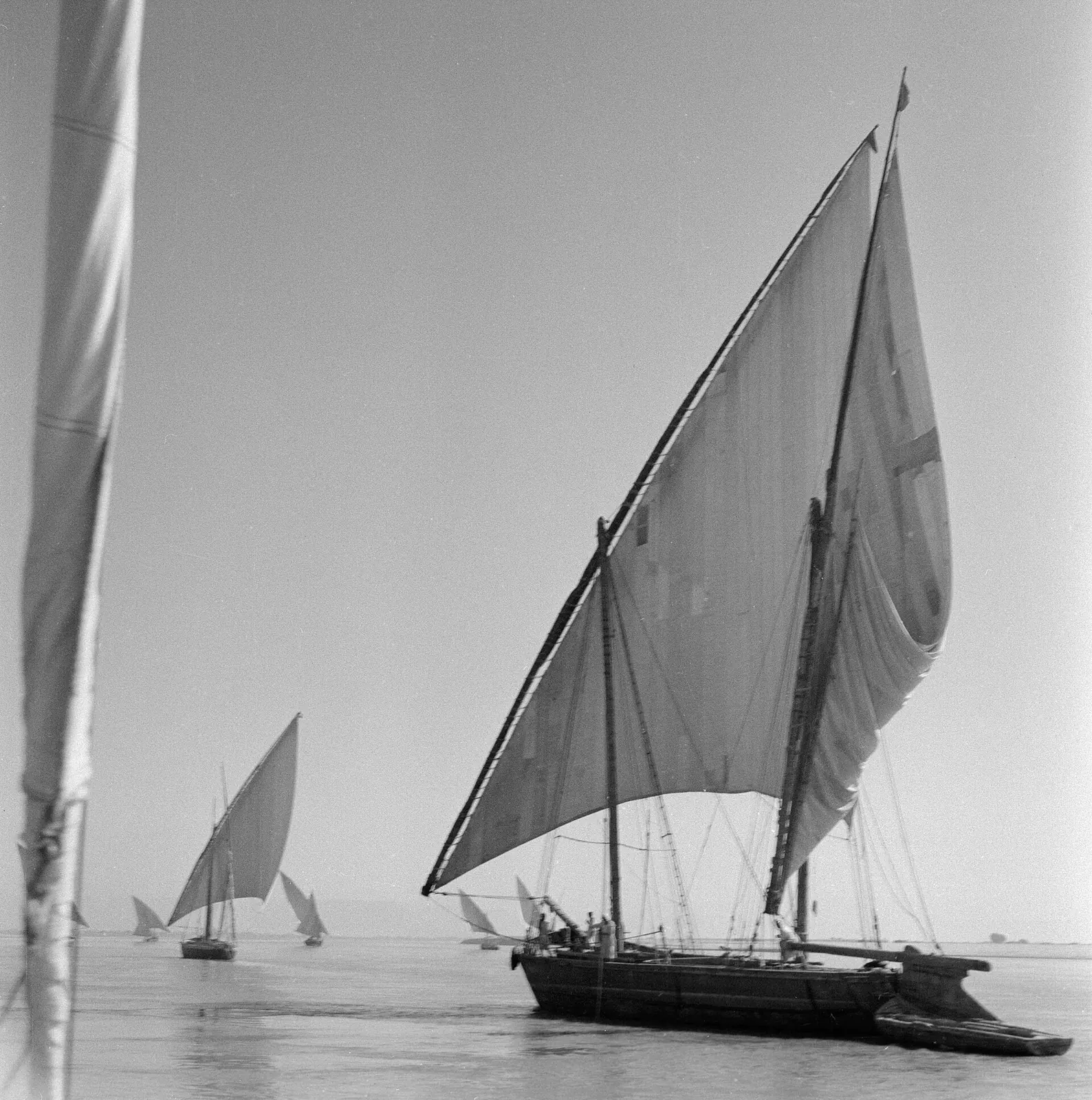
Almost every visitor sees the Nile from a boat built for visitors. The river is also a place of work — fishing, ferrying, the granite islands, the cataract that made Aswan a frontier in the first place.
A morning on the working river is quieter, slower and considerably more interesting than the cruise version, and it explains why every settlement in this country is a ribbon.
Aswan was Swenet, the southern frontier of ancient Egypt, where the First Cataract’s granite breaks the river into channels and whose quarries supplied monuments all the way downstream. The High Dam, built between 1958 and 1970, flooded Lower Nubia behind it and displaced the people who lived there; this stretch of river carries that history too.
Everyone sails a felucca in Aswan. This is the river on its own timetable.
How it could run
A proposed shape, confirmed with you when it is arranged.
- Go out early with a boat that works the river, not one built for visitors.
- Watch the morning’s work: fishing, ferrying, the channels between the granite islands.
- Land on an island or the west bank, if invited.
- Come back on the ferry the town uses.
