Make · On request

A morning at the potter’s wheel

Let the clay have a say.

Two villages, two ways with clay: hand-formed jars at al-Nazla, glazed wheel-thrown ware at Tunis.

FayoumHalf day
Ask about this experience
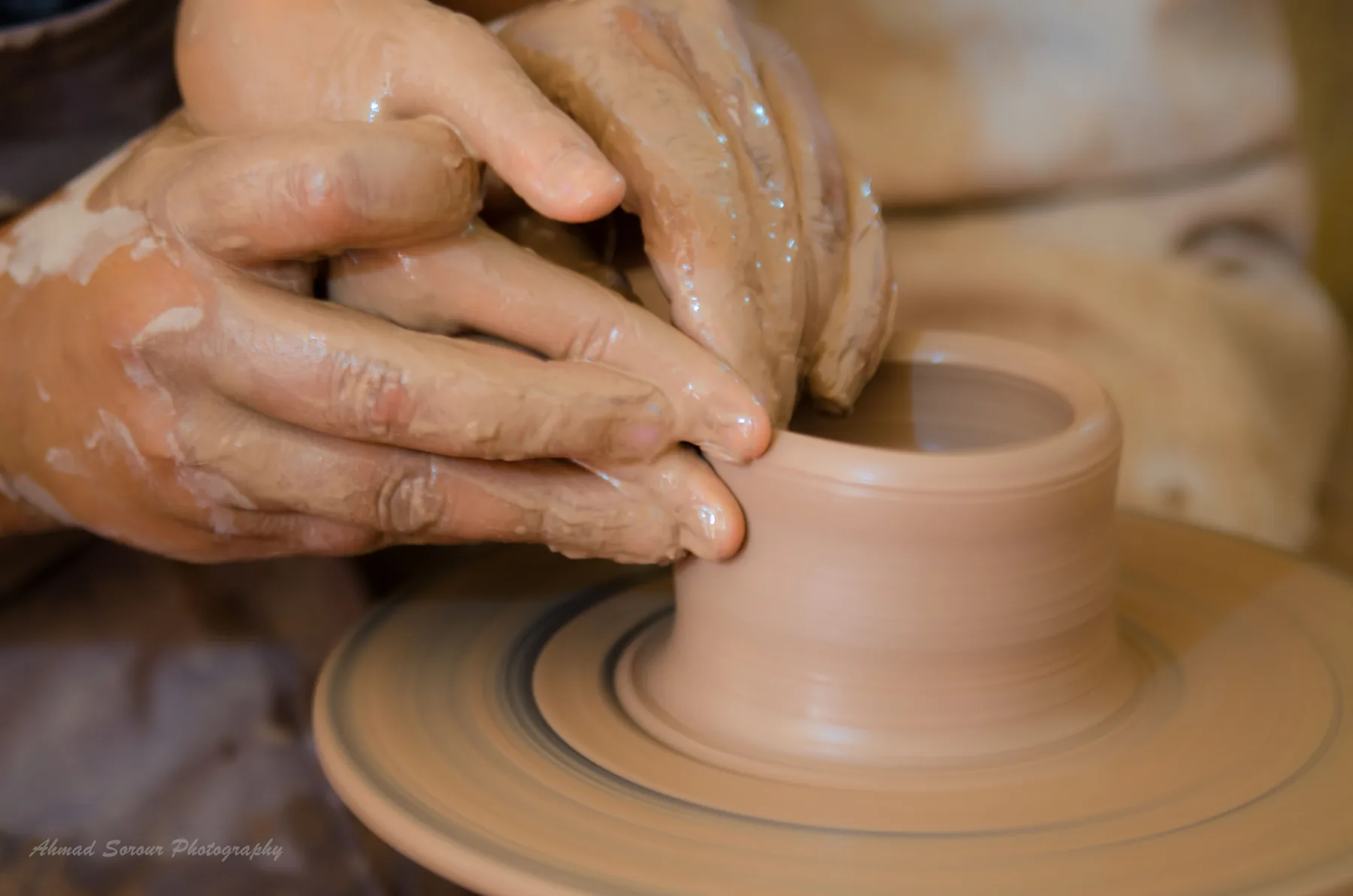
Two clay-covered hands shaping a small cylinder of clay on a turning wheel head.

Fayoum has more than one pottery tradition. At al-Nazla, one family has passed down the hand-forming of round, unglazed water jars by hammer and anvil, with straw or ash worked into the clay so the water inside is cooled by evaporation.

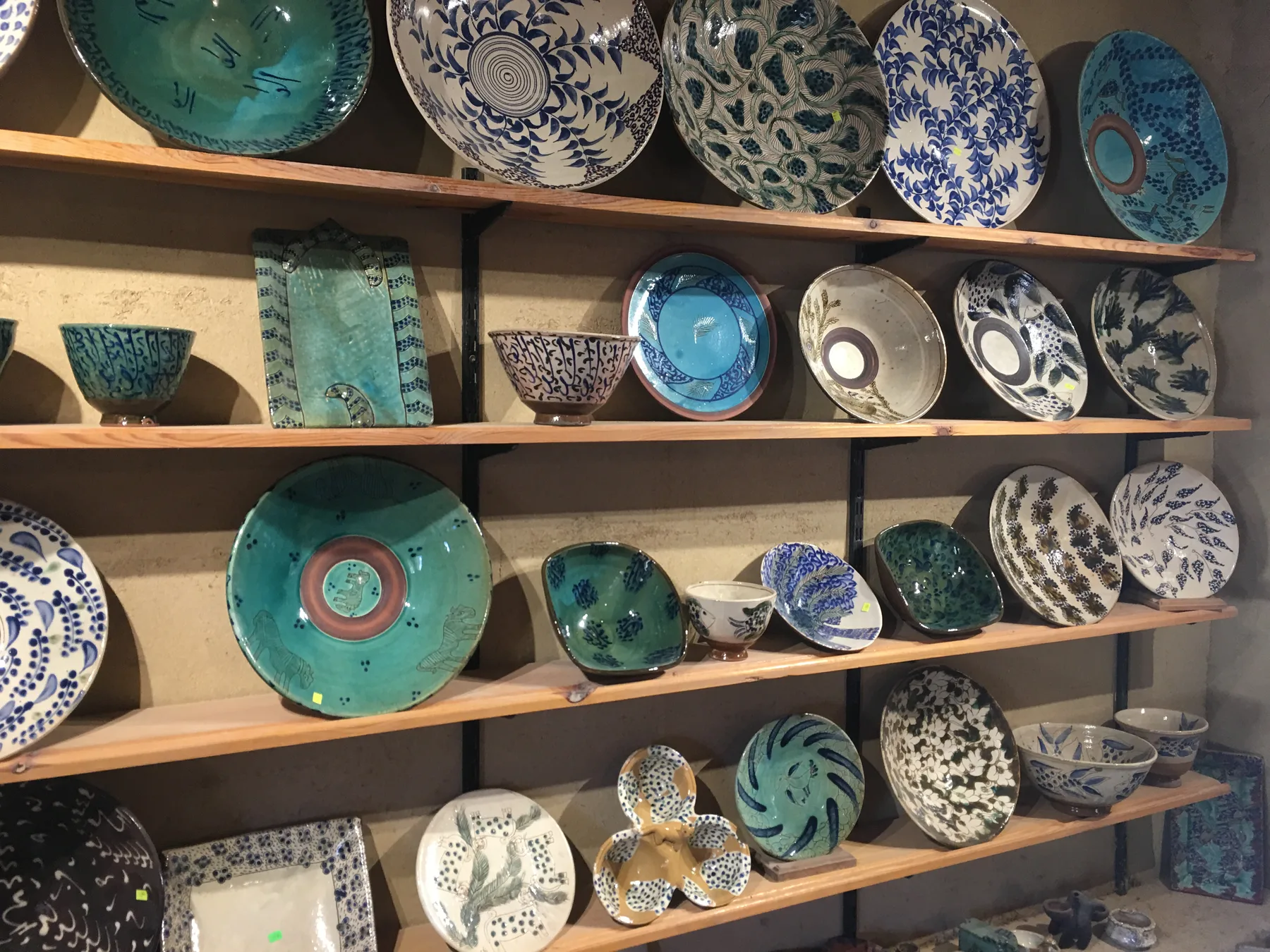
At Tunis, a school founded by Swiss potters in 1990 trained villagers to throw, decorate, glaze and fire, and the village now has more than twenty-five workshops. A morning at a wheel is enough to find the centre, lose it, and understand why neither way is quick.

Two villages, two opposite answers to the same material, in one morning.

How it could run

A proposed shape, confirmed with you when it is arranged.

  1. At al-Nazla, watch round water jars formed by hammer and anvil.
  2. At Tunis, sit at a wheel and find the centre of the clay.
  3. Open a first form, raise it, lose it, and try again.
  4. See how glazing and firing work, and whether a piece can be sent on to you.
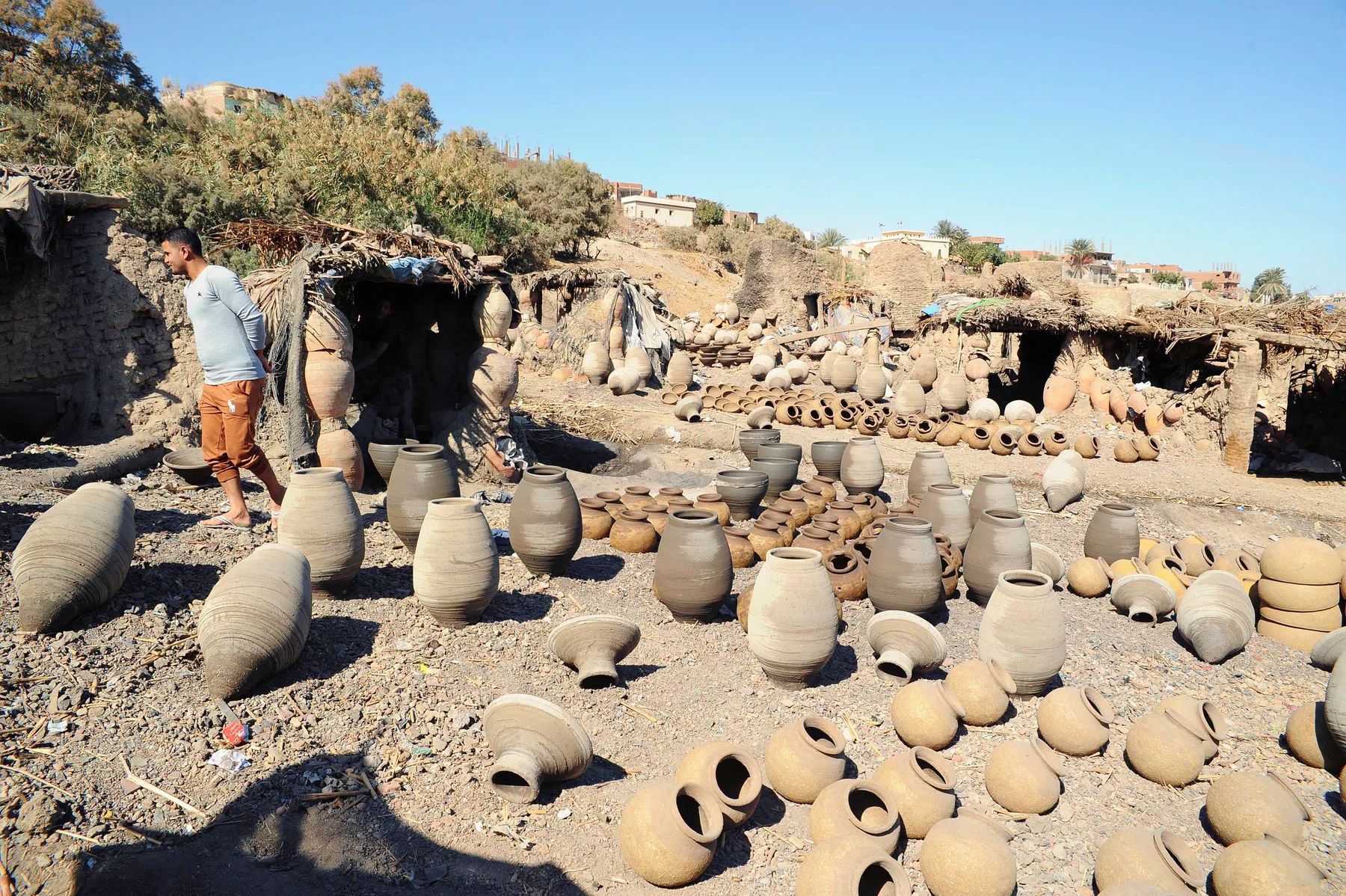
Unglazed jars drying on open ground outside reed-roofed work sheds. Tall grey jars with ringed sides stand in rows; smaller, paler round pots lie in the foreground. A man stands at the left.
al-Nazla, 2013. Documentary reference; not a confirmed partner.
Glazed bowls and plates on wooden shelves: turquoise, cream and white grounds, painted in blue and dark green with leaves, spots, letter-like marks and animals.
Tunis village, 2017. Documentary reference; not a confirmed partner.

Arranged on request, around your route.

Tell us when you will be in Fayoum and we will confirm what is possible before anything is booked.

Pairs well with The land, and what it puts on the table.

Ask about it

Photos: Ahmad Abdulfattah Sorour, CC BY-SA 4.0; Mohamed Kamal, CC BY-SA 4.0; Hatem Moushir, CC BY-SA 4.0