The Pharaoh and the Payday
A fictional pharaoh. A real historical episode. Year 29 of Ramesses III · New Kingdom.
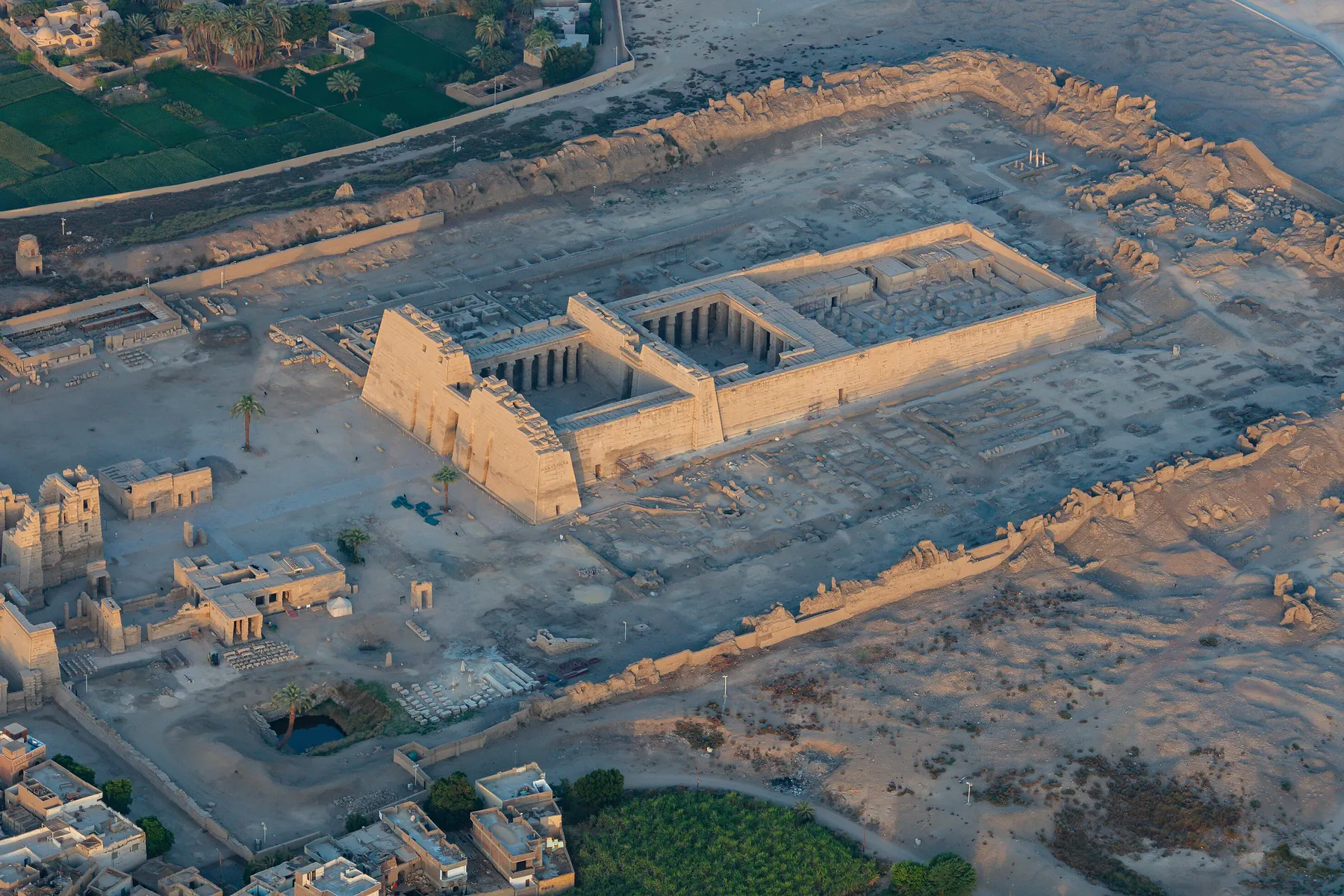

His magnificent version.
Our pharaoh is fictional. Medinet Habu is real. He would like you to believe he built it alone. Look along the bottom of the picture.
Fictional dialogue: “I built for eternity. Please direct all applause towards the crown.”
The Place of Truth.
The royal tombs were cut and painted by skilled workmen from the village now called Deir el-Medina. Two gangs, the Right Side and the Left Side. Scribes recorded the work, the absences and the pay.
Fictional dialogue: “Wonderful people. Remind me who they are?”
Payday slips.
Their monthly wages included their food: grain. Then payment came eight days late. Then twenty. Their scribe, Amennakhte, went to complain at the temple of Horemheb and came back with forty-six sacks, as interim rations.
Fictional dialogue: “There. Sorted.”
Eighteen days.
Year 29 of the king’s reign, three months before his great jubilee. Eighteen days past payday, and still nothing. The men put down their tools.
They marched.
Shouting that they were hungry, the men marched out of the village together and walked straight into the sacred enclosure of the king’s own mortuary temple.
“We’re hungry!” — Strike Papyrus, as translated by Toby Wilkinson
Fictional dialogue: “That is my temple. Who let them in?”
A sit-in. And pastries.
They sat down at the temple of Thutmose III and would not move. Officials came to listen but could fix nothing. At nightfall the men went home. The state’s reply arrived: a delivery of pastries.
Fictional dialogue: “I’m told they were excellent pastries.”
They did not go home.
Next morning they took their protest to the south gate of the Ramesseum, where the grain was stored. This time they stayed out all night, loudly.
Fictional dialogue: “They’ll be tired by morning. Surely.”
The police chief backed down.
At dawn a few men went inside the temple. The chief of police, Montumes, ordered them out. They refused. He withdrew to consult the mayor of Thebes.
They asked for the pharaoh.
Their complaint was taken down: they had come out of hunger and thirst. No clothing, no oil, no fish, no vegetables. Write to the pharaoh, and to the vizier.
“Send word to the pharaoh, our good lord!” — Strike Papyrus, as translated by Toby Wilkinson
Fictional dialogue: “…Me?”
Paid. For one month.
After hours of talks the officials gave way and handed over the previous month’s rations. The men went home fed. But the new month was already half gone, and its pay was nowhere in sight.
Fictional dialogue: “Splendid. Everybody home, then.”
Fire in the hills.
The protests went on for days, once as a march by torchlight. Two weeks later the men struck at the checkpoint to the Valley of the Kings. One workman threatened to damage a royal tomb.
Fictional dialogue: “Not the tomb. Anything but the tomb.”
“We won’t come back.”
On their fourth strike they said it was no longer only about grain: wrong had been done in Pharaoh’s place. For the jubilee they were paid on time. Afterwards, the pay failed again.
“We won’t come back. Tell that to your bosses!” — Strike Papyrus, as translated by Toby Wilkinson
Someone wrote it all down.
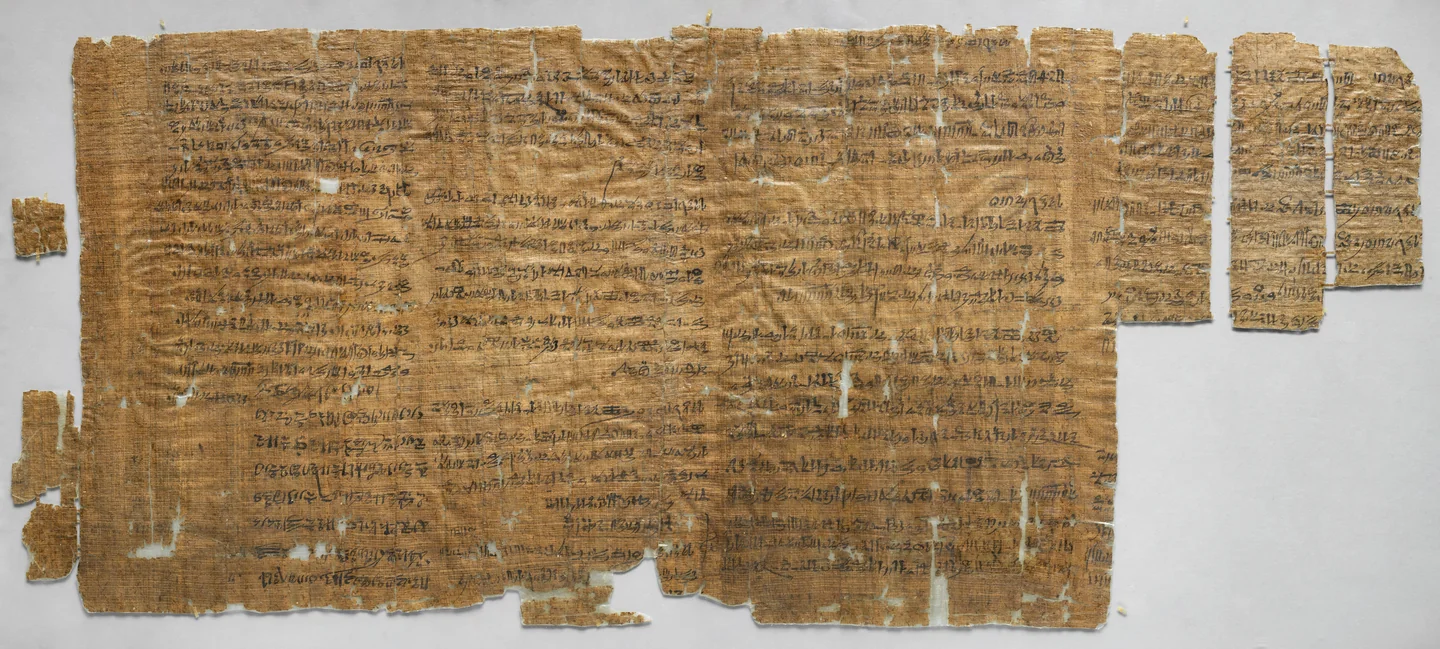
The scribe Amennakhte recorded the dispute. His papyrus survives in Museo Egizio, Turin. The king boasted in stone. The workers’ complaint survives in ink.
The temples they marched between.
Our interpretation: Medinet Habu, the Ramesseum and the workers’ village still stand on Luxor’s West Bank. Go for the monuments. Remember who made them, and who refused to work unpaid.
Fictional dialogue: “Perhaps the credits need a second line.”
The workers’ record
The complaint
They were asking for their pay.
The workers’ monthly wages included their food rations. When payment ran late, the scribe Amennakhte took a formal complaint to the Temple of Horemheb, within the Medinet Habu administrative complex. When it failed again, eighteen days past payday, the men stopped work and marched out.
The protest
Sit-ins, a night outside, a refusal.
They sat in at royal mortuary temples, spent a night demonstrating at the Ramesseum’s grain stores and refused an order from the chief of police to leave. Their complaint was written down and sent across the river: hunger, thirst, no clothing, oil, fish or vegetables, and a request that word go to the pharaoh and the vizier.
The payment
The overdue grain was distributed.
The record describes the authorities handing over the overdue rations after the stoppages. These were payments in supplies rather than a modern cash wage. The illustration does not measure a ration or reconstruct a particular delivery.
What happened next
One payment did not end the disputes.
The men struck again, including a night march by torchlight and a protest at the checkpoint to the Valley of the Kings. They were paid on time for the king’s jubilee; afterwards the system failed again and the strikes recurred.
Sources and limits
Nicholas Reeves and Richard H. Wilkinson
The Complete Valley of the Kings (1996), pp. 22–23. The strike account on p. 23 was checked against the scanned page.
Toby Wilkinson
The Rise and Fall of Ancient Egypt (2011), pp. 243–245, a narrative of the Turin Strike Papyrus after Edgerton (1951) and Gardiner’s edition (1948). The short quotations on stage are from his translation.
Richard H. Wilkinson
The Complete Temples of Ancient Egypt (2000), p. 194. Checked against the scanned page.
Museo Egizio, Turin · Cat.1880
The Turin Strike Papyrus, institutional catalogue description. Retrieved 1 October 2026.
Open the museum catalogueWhere the story draws a line
The pharaoh and his lines are fiction; he is not Ramesses III. The crowd is shadow theatre: anonymous symbolic figures, not a count of the strikers or a portrait of anyone. Buildings are stage flats, not reconstructions, and we do not mark an exact protest spot. Numbers on stage come from the sources: days late, days past payday, forty-six sacks. Quotations are short extracts from a published translation. We do not map them to lines on the papyrus image.
The temple photograph
Medinet Habu today: Diego Delso, CC BY-SA 4.0. The photograph is cropped for the stage. It shows the surviving temple today, not a reconstruction of a workers’ protest.
Open the Medinet Habu image recordThe papyrus photograph
Strike Papyrus: Museo Egizio, Turin, Cat.1880, CC0. The detailed image is a 4,800 px copy of the same 17,704 px master photograph. Zoom is limited to the image actually delivered.
Open the papyrus image record